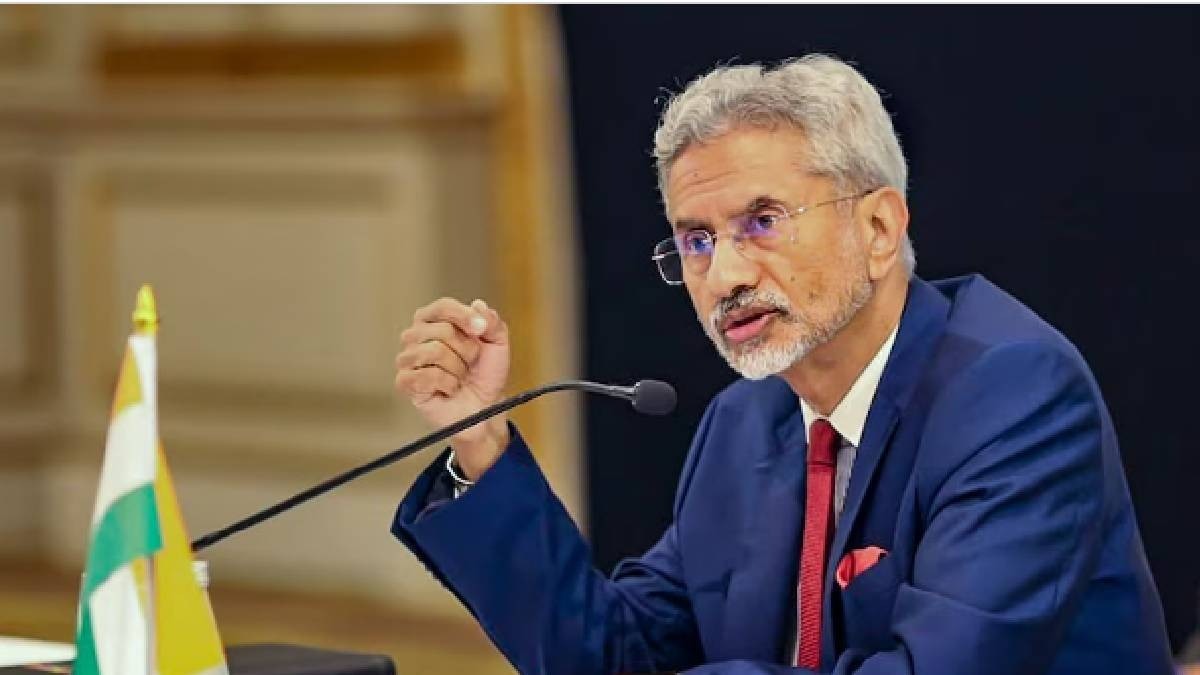
External Affairs Minister S Jaishankar emphasized that bilateral ties with Bangladesh must be rooted in mutual interest and criticized Pakistan's systematic use of terrorism.
- Bilateral relations require a 'mutual interest' test to be successful.
- India expects neighbors to respect its interests as much as India respects theirs.
- Pakistan was singled out for its systematic and sustained use of terrorism.
External Affairs Minister S Jaishankar, speaking at the Economic Times World Leaders Forum on Saturday, delivered a masterclass in diplomatic realism. Addressing the complexities of India's neighborhood, he asserted that any sustainable relationship must meet the fundamental test of "mutual interest."
Regarding the current state of affairs with Bangladesh, Jaishankar highlighted that neighborly relations cannot be one-sided. He noted that while India respects the interests of its neighbors, it expects the same level of reciprocity. "I am not expecting neighbors to only do what is in my interest. There has to be a reasonable degree of my recognising and respecting what is in their interest," he stated, emphasizing that common ground is the only way forward.
Why This Matters
BozokMedia analysis shows that Jaishankar's remarks come at a critical juncture in South Asian geopolitics. Following the collapse of the Sheikh Hasina government, India has been navigating a delicate diplomatic landscape. With Tarique Rahman's potential visit to New Delhi on the horizon, India is attempting to recalibrate its relationship with the new leadership in Dhaka while managing demands regarding the extradition of the former Prime Minister.
Diplomacy thrives only when there is a landing point of shared strategic objectives between two sovereign nations.
Turning his attention to Pakistan, the External Affairs Minister offered a scathing critique. He described Pakistan as a "unique" nation, not due to its geography, but due to its methodology of state-sponsored violence. He stated that no other country uses terrorism so systematically and in such a sustained manner to exert pressure on its neighbors.
Jaishankar further noted that as a minister in a democratic polity, he remains deeply sensitive to Indian public opinion, which is heavily influenced by the persistent threat of cross-border terrorism from Pakistan.
Historical Background
The relationship between India and Bangladesh has faced significant volatility recently. The transition of power in Dhaka two years ago led to a visible downturn in bilateral engagement. Tensions spiked further following a virtual interaction involving Sheikh Hasina in New Delhi, which the Bangladesh foreign ministry viewed as a provocation, leading to a period of diplomatic friction.
Frequently Asked Questions
1. What is Jaishankar's stance on the India-Bangladesh relationship?
He believes that for the relationship to work smoothly, it must be based on mutual respect and shared interests.
2. How did Jaishankar describe Pakistan's role in terrorism?
He described Pakistan as unique for using terrorism in a systematic and sustained manner to attack and pressure its neighbors.