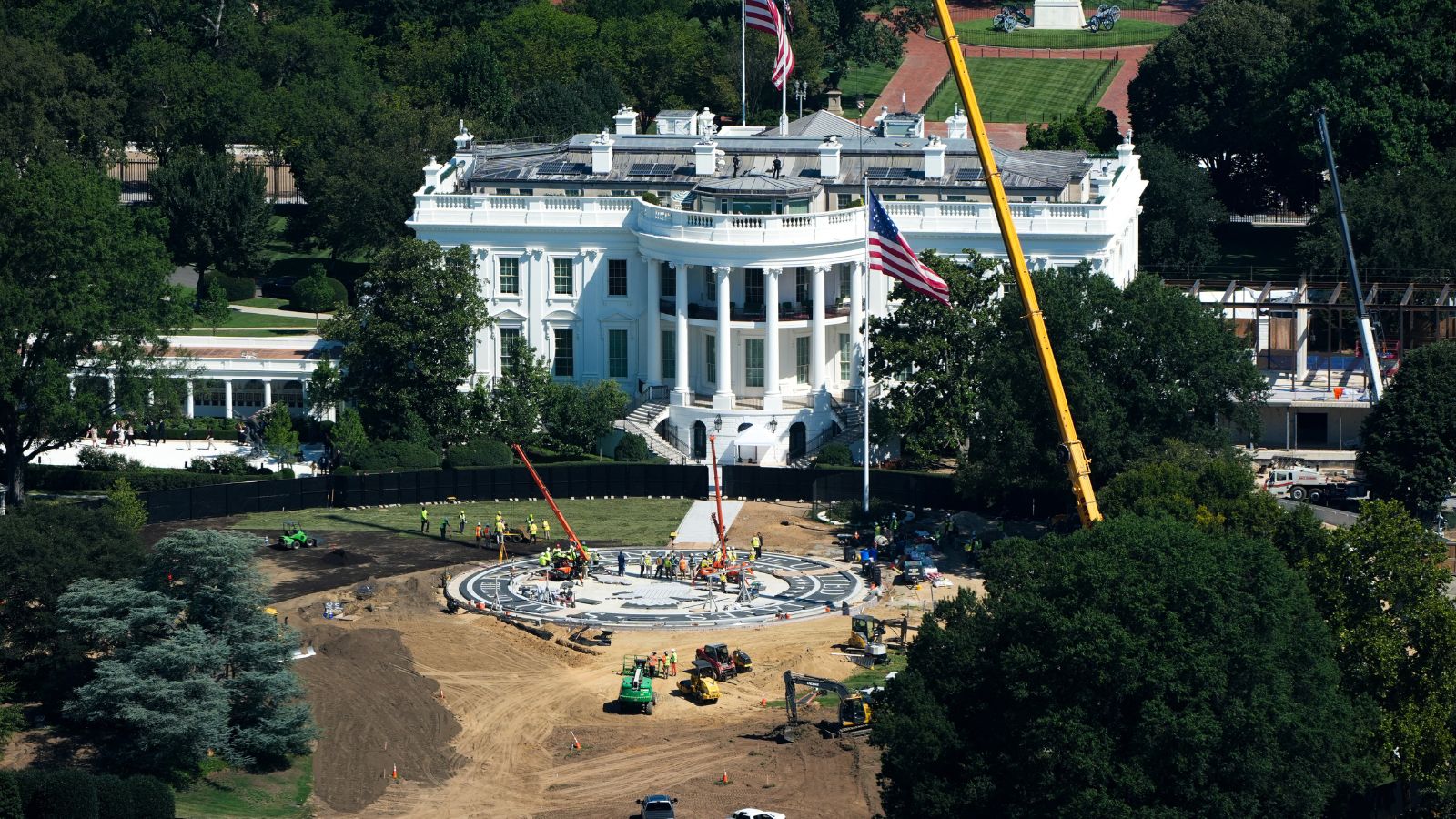
The US Supreme Court has granted an administrative stay allowing construction to continue on President Trump's massive $400 million White House ballroom project. The complex features high-tech underground bunkers, medical facilities, and missile shielding.
- The US Supreme Court issued an administrative stay to allow construction to proceed.
- The project includes a 90,000 sq. ft. ballroom and a massive underground military-grade complex.
- Features include bomb shelters, medical facilities, and drone/missile shielding.
- The National Trust for Historic Preservation is challenging the project over lack of Congressional approval.
In a significant legal development, the US Supreme Court has allowed the Trump administration to proceed with the construction of the ambitious $400 million White House ballroom. This decision pauses a lower court's order that had sought to halt the massive undertaking, which is being built on the site of the demolished East Wing.
A Fortress Beneath the Ballroom
The project is far more than a mere social venue. While the above-ground portion features a sprawling 90,000-square-foot ballroom, the true complexity lies beneath the surface. President Trump has described the project as an integrated unit that includes a sophisticated underground complex. This subterranean section is designed to house bomb shelters, full-scale medical facilities, and advanced shielding technology to protect against drones and missiles.
The Justice Department argues that this integrated military complex is a vital necessity given the evolving national security threats.
The Legal Battle Over Heritage
The construction has faced fierce opposition from the National Trust for Historic Preservation. The group filed a lawsuit alleging that the administration demolished the historic East Wing—originally built in 1902 under Theodore Roosevelt—without obtaining the necessary approval from Congress. A key point of contention in the courts has been the legal status of the President; appellate courts have noted that a President is a 'temporary tenant' of the White House, not its owner, and lacks the authority to fundamentally reshape it without legislative consent.
Why This Matters
BozokMedia analysis shows that this case represents a profound tension between executive authority and legislative oversight. The outcome will set a precedent for how much a sitting President can alter the physical and structural landscape of the White House under the guise of national security.
The Justice Department has characterized the previous injunctions as 'unlawful,' arguing that halting construction on such a critical security asset leaves the President and staff vulnerable. Meanwhile, the administration continues to push forward, with the project reported to be 65 percent complete.
Frequently Asked Questions
1. Is the construction permanently approved?
No, the Supreme Court has issued an 'administrative stay,' which allows work to continue while the legal merits of the case are further reviewed.
2. What is the main argument against the project?
Critics argue that the administration is bypassing Congress and destroying historic landmarks without legal authorization.