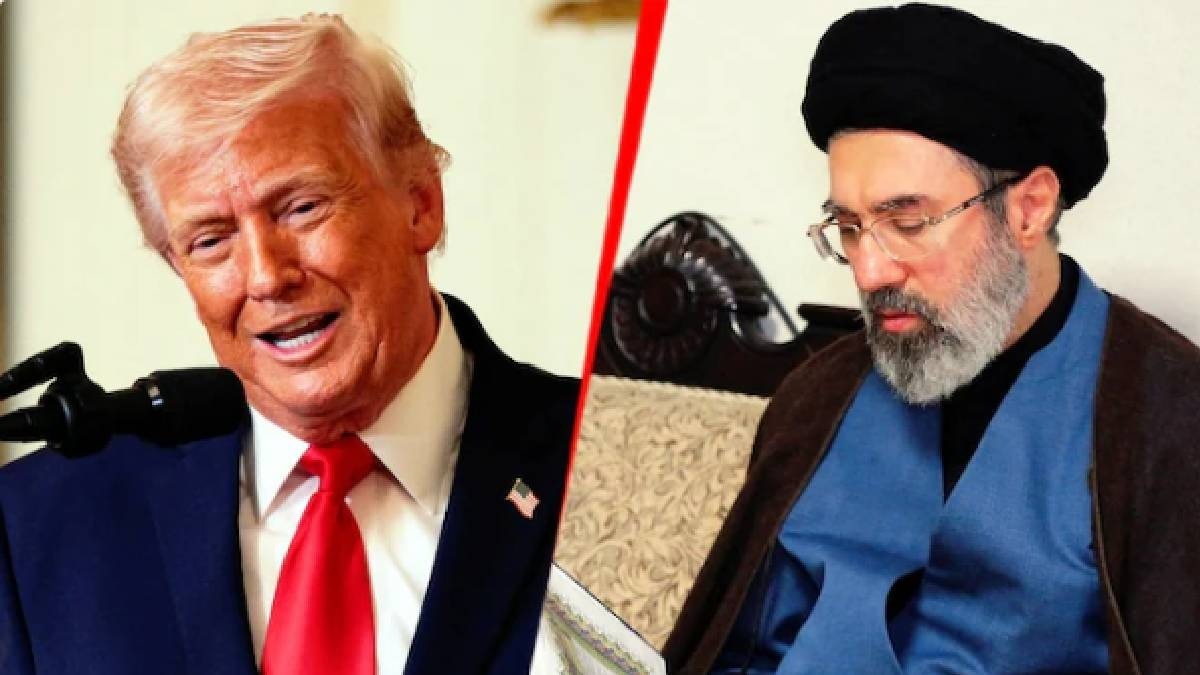
Tensions between the US and Iran have reached a boiling point after President Donald Trump claimed control over the Strait of Hormuz. Iran has responded with threats of devastating multi-domain attacks.
- President Trump claimed the Strait of Hormuz is effectively US territory under his control.
- Iran's military leadership warned of 'crushing and painful' responses across land, sea, air, and cyber domains.
- US Treasury Secretary Scott Bessent announced the most severe financial sanctions in history against Iran.
- Global oil prices surged, with Brent crude hitting $94.39 per barrel.
The six-month-long confrontation between the United States and Iran has escalated into a high-stakes geopolitical standoff. The tension reached a fever pitch following provocative statements by President Donald Trump, who asserted that the strategic Strait of Hormuz is now viewed as American territory under his full control.
In a swift and aggressive response, Major General Ali Abdollahi, Chief of Staff of the Iranian Armed Forces, declared that Tehran is prepared to strike back on all fronts. He emphasized that the Iranian military is fully mobilized across land, sea, air, air defense, and cyberspace to crush any new American threats with 'unbearable pain.'
Why This Matters
BozokMedia analysis shows that the Strait of Hormuz is the world's most critical maritime chokepoint. With approximately one-fifth of the world's total oil trade passing through this narrow corridor, any disruption here has immediate and catastrophic implications for global energy security and economic stability.
The escalation in the Strait of Hormuz represents a dangerous shift from economic warfare to potential direct military confrontation.
On the economic front, US Treasury Secretary Scott Bessent has signaled the implementation of unprecedented financial sanctions aimed at destabilizing the Iranian regime. This 'all-out economic campaign' seeks to sever Iran's remaining financial lifelines. However, China, a major buyer of Iranian oil, has criticized this approach, stating that excessive pressure is not a solution to diplomatic disputes.
The market reaction has been instantaneous. Following the threats, crude oil prices spiked significantly, with Brent Crude climbing to $94.39 per barrel and WTI reaching $87.06 per barrel. The volatility is compounded by a sharp decline in vessel traffic through the Strait, as shipping companies navigate the growing risks.
| Metric | Pre-Conflict Level | Current Level (Post-Threat) |
|---|---|---|
| Brent Crude Price | ~$80 | $94.39 |
| Vessel Traffic (Daily) | High | Extremely Low (7 ships) |
| US Approval Rating | Stable | Lowest in current term |
Frequently Asked Questions
1. What did Donald Trump claim regarding the Strait of Hormuz?
Trump claimed that he has full control over the Strait of Hormuz and its surrounding areas, effectively treating it as US territory.
2. How is the global economy being affected?
The primary impact is a significant surge in global oil prices due to fears of supply disruptions in the strategic waterway.
