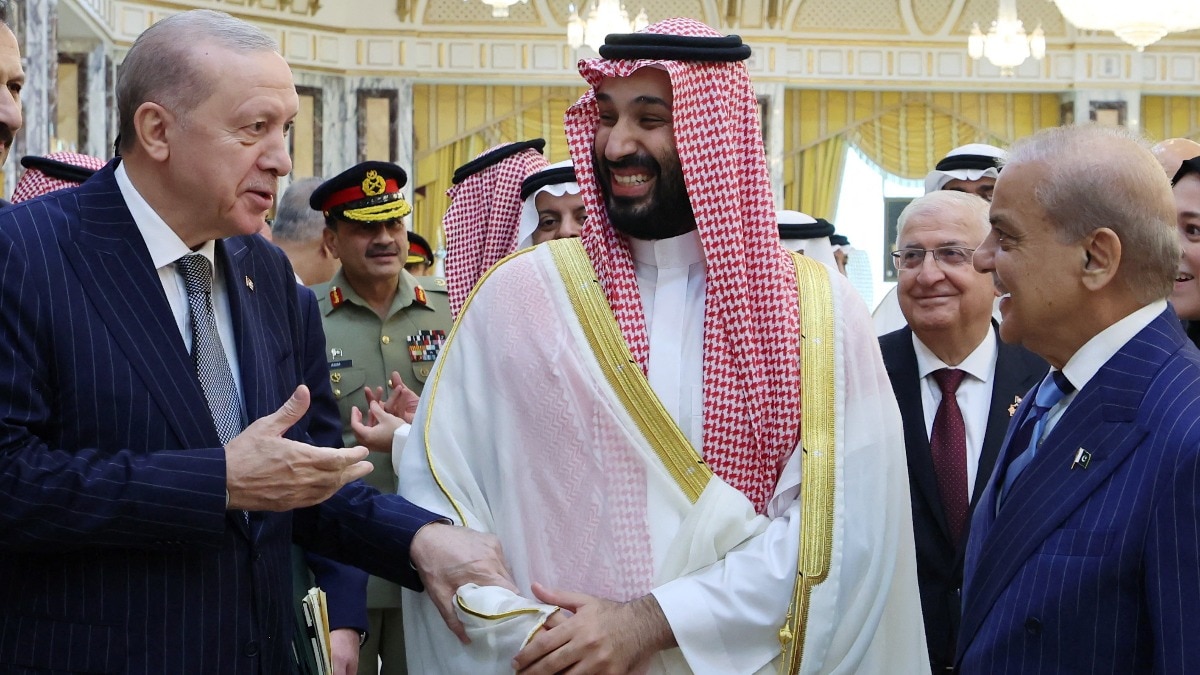
In a potential geopolitical shift, Iran has reportedly received an invitation to join the Makkah Defence Pact formed by Saudi Arabia, Pakistan, and Turkey.
- Iran has reportedly been invited to join the Makkah Defence Pact, a strategic alliance of Saudi Arabia, Pakistan, and Turkey.
- The pact operates on a collective defense principle similar to NATO's Article 5.
- Tehran has maintained a neutral stance toward the framework, viewing regional security umbrellas as a positive development.
The geopolitical landscape of the Middle East is on the verge of a seismic shift. Reports suggest that Iran has been invited to join the Makkah Defence Pact, a newly formed military alliance comprising Saudi Arabia, Pakistan, and Turkey. While official confirmation from the respective foreign ministries is still pending, the news has sent ripples through global diplomatic circles.
Mehdi Rahimi, head of the Iranian parliament's Khaneh Mellat news agency, indicated that the invitation is currently under review in Tehran. Rahimi characterized the potential move as a victory for Iran, noting that the nation has long advocated for a regional security framework to ensure stability without external interference.
The Architecture of the Makkah Pact
Signed on August 7, the Makkah Joint Defence Agreement establishes a formidable mutual-defense mechanism. Under this treaty, an armed attack against any one of the signatory nations is considered an attack against all. Turkish Foreign Minister Hakan Fidan has explicitly compared this principle to NATO's Article 5, emphasizing that the goal is collective deterrence rather than aggression against any specific state.
Iran's potential integration into this pact could represent the most significant realignment in Middle Eastern security architecture in decades.
BozokMedia analysis shows that this pact is designed to foster closer military coordination, cooperation in defense industries, and joint military exercises. While the primary architects are Saudi Arabia, Pakistan, and Turkey, other nations like Egypt and even Bangladesh have shown interest in participating in the framework's economic or security dimensions.
Why This Matters
The inclusion of Iran is particularly significant due to the historical rivalry between Tehran and Riyadh. For years, these two powers have clashed through proxy conflicts, most notably in Yemen involving the Houthi movement. Although diplomatic ties were restored in 2023 through Chinese mediation, recent escalations involving drone and missile strikes have kept the relationship fragile.
If Iran joins the pact, it would signal a monumental shift from confrontation to collective regional responsibility. It would move the region closer to a self-reliant security model, reducing the necessity for heavy involvement from Western powers like the United States.
Frequently Asked Questions
1. What is the main goal of the Makkah Defence Pact?
The pact aims to strengthen regional security through mutual defense, closer military cooperation, and collective deterrence.
2. Has Iran officially joined the alliance?
As of now, the invitation is reported and under review; no official confirmation has been released by the Iranian Foreign Ministry.
