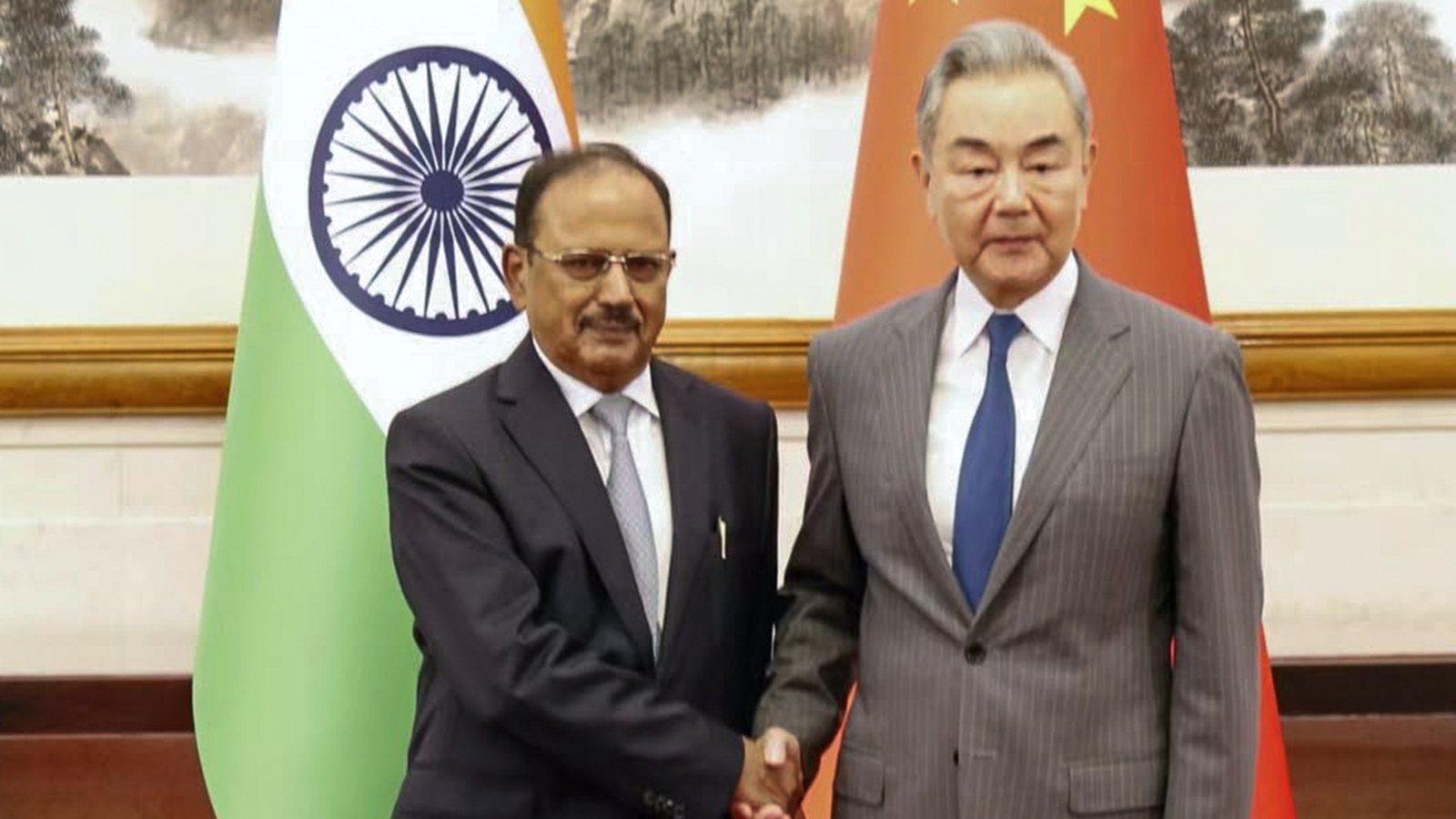
NSA Ajit Doval and Chinese Foreign Minister Wang Yi held crucial talks in Beijing to advance boundary delimitation and maintain peace along the border. The meeting signals a potential thaw in bilateral relations ahead of the BRICS summit.
- NSA Ajit Doval and FM Wang Yi discussed advancing boundary delimitation and transboundary cooperation.
- The discussions emphasized maintaining peace and tranquility in border areas.
- The high-level engagement paves the way for potential high-profile visits, including President Xi Jinping to India.
In a significant diplomatic move, National Security Advisor Ajit Doval and Chinese Foreign Minister Wang Yi convened in Beijing to discuss the sensitive issue of boundary delimitation. The Indian embassy confirmed that the leaders explored ways to make tangible progress on demarcating borders while sustaining ongoing transboundary cooperation.
During the discussions, Doval highlighted that the steady return to normalcy in bilateral relations is a direct consequence of both nations maintaining peace and tranquility in the border regions. The Indian side reiterated that stability at the border is non-negotiable for the continued progress of economic and political ties.
Why This Matters
BozokMedia analysis shows that this engagement marks a critical pivot from military standoff to diplomatic maneuvering. As the world's two most populous nations, any resolution in the India-China border dispute has profound implications for global supply chains, regional security in the Indo-Pacific, and the collective voice of the Global South.
The resumption of normalcy in bilateral ties is contingent upon the effective management of differences at the border.
In addition to Wang Yi, Doval met with Chinese Vice President Han Zheng. The Chinese leadership urged India to approach the relationship from a "strategic and long-term perspective," emphasizing the need to manage differences properly to ensure stable development.
The Ministry of External Affairs (MEA) noted that the two Special Representatives engaged in a candid and in-depth exchange. They expressed satisfaction with the resumption of cross-border exchanges, including the Kailash Manasarovar Yatra and trade through designated border passes, which serves as a litmus test for improving relations.
Historical Background
The border dispute between India and China has been a flashpoint for decades, characterized by territorial disagreements in sectors like Ladakh and Arunachal Pradesh. Following the intense standoffs in recent years, leaders have sought to implement consensuses reached in Kazan (2024) and Tianjin (2025) to restore stability and trust.
Frequently Asked Questions
1. What was the primary focus of the Doval-Wang Yi meeting?
The primary focus was advancing boundary delimitation negotiations and ensuring peace in border areas.
2. How does this impact the upcoming BRICS summit?
This meeting sets a constructive stage for the BRICS summit, potentially facilitating a visit by President Xi Jinping to India.