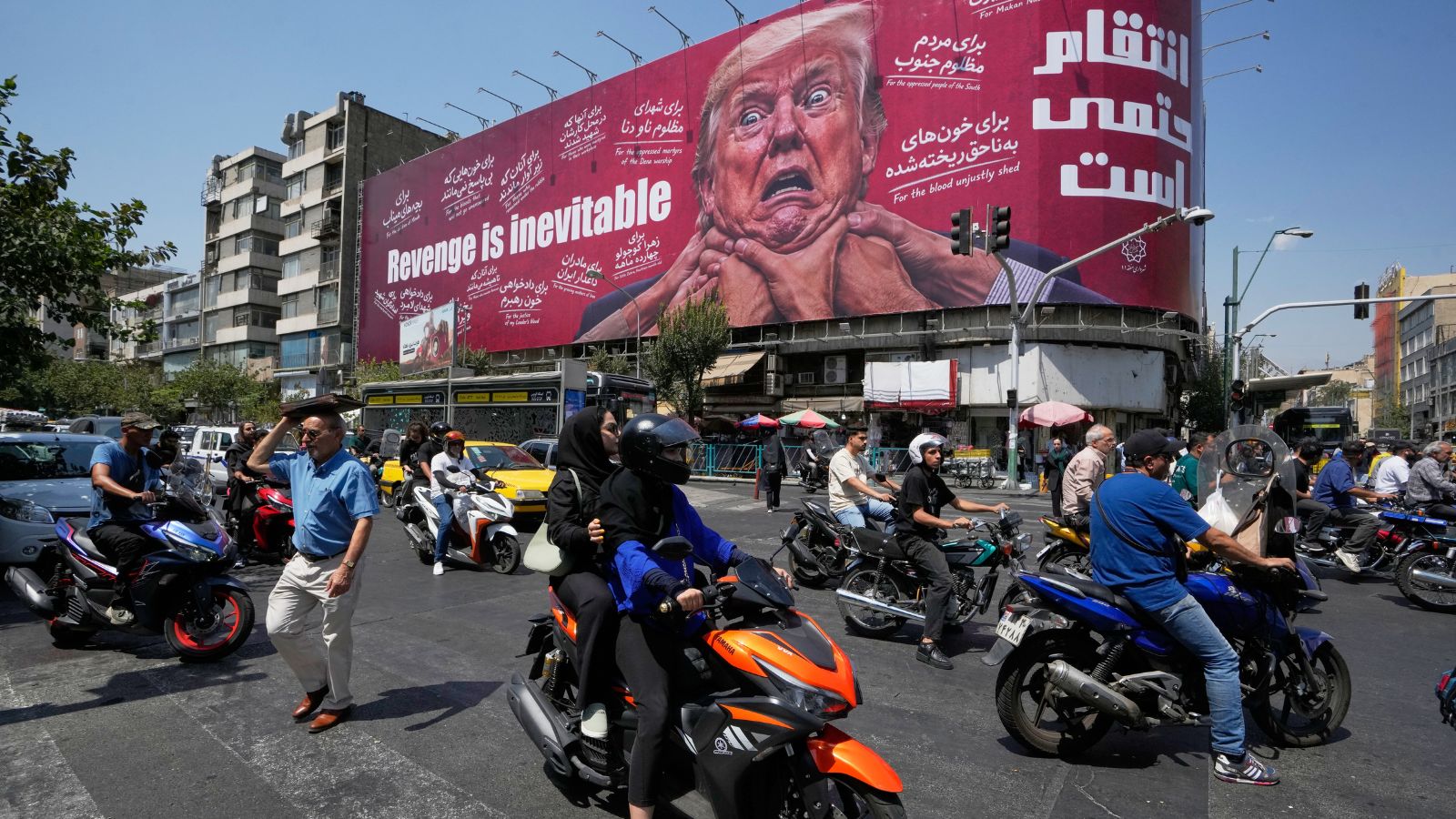
US Treasury Secretary Scott Bessent has announced aggressive new sanctions to sever Tehran's financial lifelines. Iran has retaliated with threats to halt Gulf oil exports and treat supporting nations as enemy combatants.
- New sanctions target digital assets, technology, gold, aviation, and shipping.
- Iran warns that any nation backing the US sanctions will be viewed as an act of war.
- The Pentagon maintains that military strikes in the Strait of Hormuz remain a viable option.
In a move that signals a dramatic escalation in geopolitical tensions, the United States has launched a comprehensive new round of sanctions against Iran. US Treasury Secretary Scott Bessent confirmed that the objective is to completely sever all financial lifelines supporting the regime in Tehran. President Donald Trump is reportedly urging US allies to align with these measures to ensure the total economic isolation of the Iranian government.
The scope of these sanctions is unprecedented in its breadth. US officials have identified five critical sectors for targeted restrictions: digital assets, advanced technology, gold, aviation, and shipping. Furthermore, the sanctions target Iran's primary oil revenues and approximately 60 specific entities, vessels, and individuals accused of providing the financial scaffolding for the regime.
Why This Matters
BozokMedia analysis shows that this is a strategic attempt to weaponize the global financial system to force a regime shift or severe concessions. By targeting digital assets and gold, the US is closing the loopholes Iran previously used to bypass traditional banking sanctions. However, the volatility this introduces to the energy market could trigger a global inflationary spike, affecting emerging economies heavily dependent on oil imports.
"The shift from diplomatic negotiation to total financial strangulation often precedes a kinetic military conflict in high-stakes geopolitics."
Tehran has responded with fierce defiance. Iranian government spokeswoman Fatemeh Mohajerani stated that the leadership would navigate the coming "economic hardships," but the security apparatus has taken a more aggressive tone. Security Chief Mohsen Rezaei warned that Iran could halt all oil exports through the Gulf if the economic pressure continues unabated.
Adding to the volatility, Rezaei explicitly stated that any country siding with Washington’s sanctions would be treated as an active participant in an act of war against Iran. This puts US allies in a precarious position, forcing them to choose between diplomatic loyalty to Washington and the risk of regional conflict.
The military dimension remains a critical concern. US Defense Secretary Pete Hegseth has stated that Washington has not ruled out military strikes against Iran, specifically mentioning the Strait of Hormuz as a potential flashpoint if the situation deteriorates further.
Historical Background
The friction between the US and Iran dates back to the 1979 Islamic Revolution. The relationship reached a new low when the US unilaterally withdrew from the Joint Comprehensive Plan of Action (JCPOA) in 2018. The current administration's approach is an intensified version of the 'Maximum Pressure' campaign, designed to collapse the regime's internal stability through external economic ruin.
| Dimension | US Strategy | Iran's Counter-Strategy |
|---|---|---|
| Economic | Financial Isolation | Threatening Oil Supply Chain |
| Security | Potential Military Strikes | Defining Sanctions as 'Act of War' |
| Diplomatic | Pressure on Allies | Seeking Non-Western Trade Partners |
Frequently Asked Questions
Q1: Which sectors are targeted by the new US sanctions?
A: The sanctions target digital assets, technology, gold, aviation, shipping, and oil revenues, along with 60 specific entities.
Q2: What is Iran's response to these measures?
A: Iran has threatened to stop Gulf oil exports and considers any country supporting the sanctions as an enemy in a state of war.
