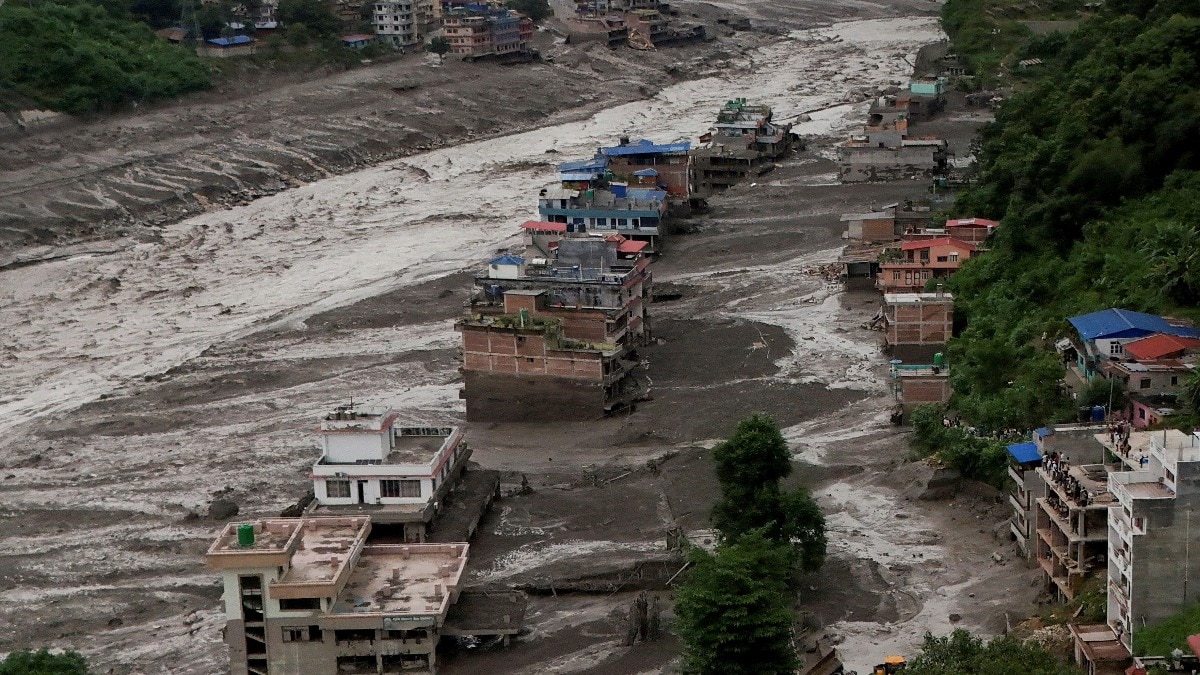
Sudden catastrophic flooding in Nepal has caused massive destruction, prompting investigations into three major theories. India's Bihar and Uttar Pradesh remain on high alert as the Gandak river route faces rising water levels.
- Massive destruction in Nepal's Rasuwa, Nuwakot, Dhading, and Chitwan districts.
- Three primary theories: Debris dam burst, earthquake-induced landslide, and Glacial Lake Outburst Flood (GLOF).
- High alert issued for Bihar (6 districts) and Uttar Pradesh in India.
Sudden and devastating floods struck Nepal on Wednesday morning, causing widespread destruction within mere hours. Key districts including Rasuwa, Nuwakot, Dhading, and Chitwan reported broken bridges and significant damage to power infrastructure. The sudden surge of water originating near the Tibetan border has raised alarms across the border in India, specifically along the Narayani-Gandak river route.
The Three Leading Theories Behind the Deluge
As authorities investigate the sudden influx of water, three scientific possibilities have emerged as the primary suspects:
- Theory 1: Debris Damming: There is a possibility that massive amounts of ice, rocks, and debris slid from the mountains, temporarily blocking the river's path. This created a natural dam, and when the pressure became too great, the obstruction burst, releasing a massive wall of water.
- Theory 2: Earthquake-Triggered Landslides: A 4.4 magnitude earthquake was recorded in the region shortly before the flooding. According to Nepal's Foreign Minister Shishir Khanal, preliminary reports suggest that the quake may have triggered landslides or avalanches that choked the river.
- Theory 3: Glacial Lake Outburst Flood (GLOF): This is perhaps the most critical theory. Meteorologists noted that rainfall in Rasuwa was minimal (less than 7mm) over the last 24 hours, suggesting the water did not come from rain but from the sudden bursting of a high-altitude glacial lake.
The lack of significant rainfall in the region strongly points toward a geological or glacial event rather than a typical monsoon-driven flood.
Why This Matters: BozokMedia Analysis
BozokMedia analysis shows that this event highlights the increasing vulnerability of the Himalayan ecosystem. The interconnectedness of the river systems means that a geological event in Nepal has immediate transboundary implications for India's socio-economic stability in the Gangetic plains.
The Threat to India: Bihar and Uttar Pradesh on Alert
The Trishuli river joins the Kali Gandaki to form the Narayani, which enters India near Valmikinagar and becomes the Gandak River. This direct hydrological link has put the Central Water Commission on high alert.
| State | Affected/Watch Districts | Preparedness Level |
|---|---|---|
| Bihar | West Champaran, East Champaran, Gopalganj, Saran, Muzaffarpur, Vaishali | High (NDRF/SDRF Deployed) |
| Uttar Pradesh | Maharajganj, Kushinagar | Alert (Monitoring Active) |
In Bihar, West Champaran is expected to be the first major district to encounter the flood surge. NDRF teams have already been deployed to sensitive zones like Bettiah and Muzaffarpur.
Frequently Asked Questions
1. Is there an immediate threat to India?
Yes, authorities are closely monitoring the Gandak river levels as the surge from Nepal moves toward the plains of Bihar and UP.
2. Why wasn't it caused by heavy rain?
Meteorological data shows very low rainfall in the affected areas, making glacial bursts or landslide-induced damming more likely causes.