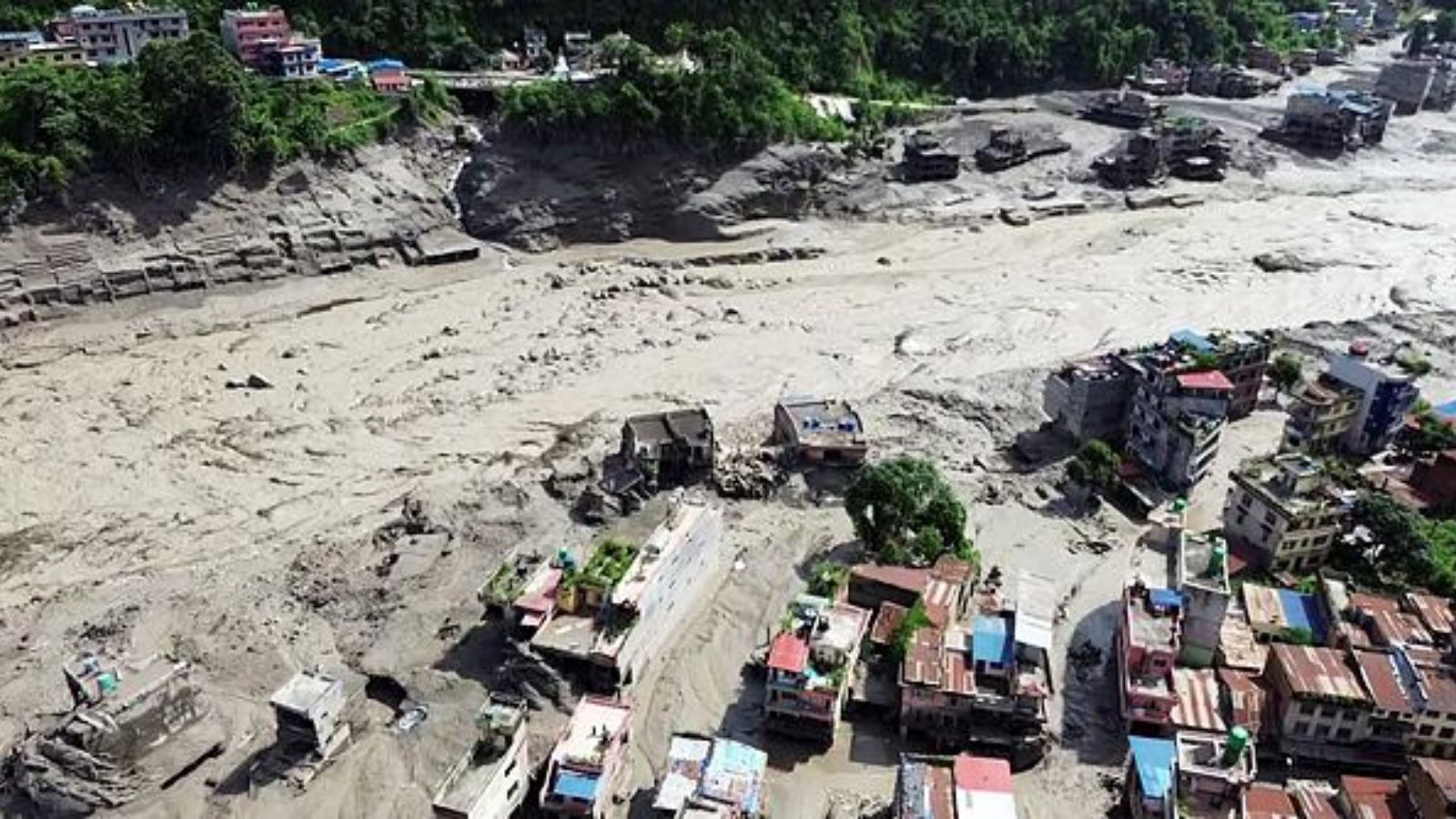
Devastating flash floods in Nepal's Rasuwa district have left nearly 400 people missing, including 105 Indian nationals. Prime Minister Narendra Modi has reached out to Nepal's leadership, promising full humanitarian support.
- Massive flash floods hit Nepal's Rasuwa and Dhading districts via the Bhote Koshi River.
- 105 Indians and 37 NRIs are among the 400 people reported missing.
- PM Modi has offered full humanitarian assistance to Nepal.
- Indian Embassy has released emergency helpline numbers for affected citizens.
A catastrophic flash flood triggered by an outburst in the Bhote Koshi River has wreaked havoc across Nepal's border districts. The sudden surge of water and debris swept through villages in Rasuwa and Dhading, causing widespread destruction to settlements and critical infrastructure, including several hydropower projects.
The scale of the tragedy is immense, with the Nepal Tourism Board reporting that 384 travelers—including 291 foreigners—are currently missing. Among them, 105 Indian citizens and 37 Non-Resident Indians (NRIs) are unaccounted for. A significant number of these Indians were pilgrims on the sacred Kailash Manasarovar Yatra heading towards Tibet.
Why This Matters
BozokMedia analysis shows that this disaster highlights the extreme vulnerability of the Himalayan region to sudden geological and climatic shifts. The destruction of hydropower projects and the loss of international tourists pose a significant threat to the local economy and regional stability, necessitating immediate cross-border coordination.
"The people of India stand in solidarity with their sisters and brothers in Nepal at this difficult time," stated PM Narendra Modi.
In a swift diplomatic response, Prime Minister Narendra Modi spoke with Nepal's Prime Minister Balendra Shah to convey condolences and assure unconditional support. The Indian government has mobilized its resources, with the Indian Embassy actively coordinating with Nepalese authorities to facilitate rescue operations and provide information to affected families.
Historical Background
The Himalayan belt is increasingly prone to 'Glacial Lake Outburst Floods' (GLOFs) and sudden flash floods due to erratic monsoon patterns and melting glaciers. Such events have historically disrupted trade and pilgrimage routes between India and Nepal, requiring robust disaster management frameworks.
Frequently Asked Questions
Question 1: What are the helpline numbers for Indians in Nepal?
Answer: The Indian Embassy has provided +977 985 131 6807 and +977 970 910 7500 for assistance.
Question 2: Which nationalities are most affected?
Answer: While Indians are heavily affected, tourists from the US, UK, Malaysia, South Africa, Australia, and the Netherlands are also among the missing.