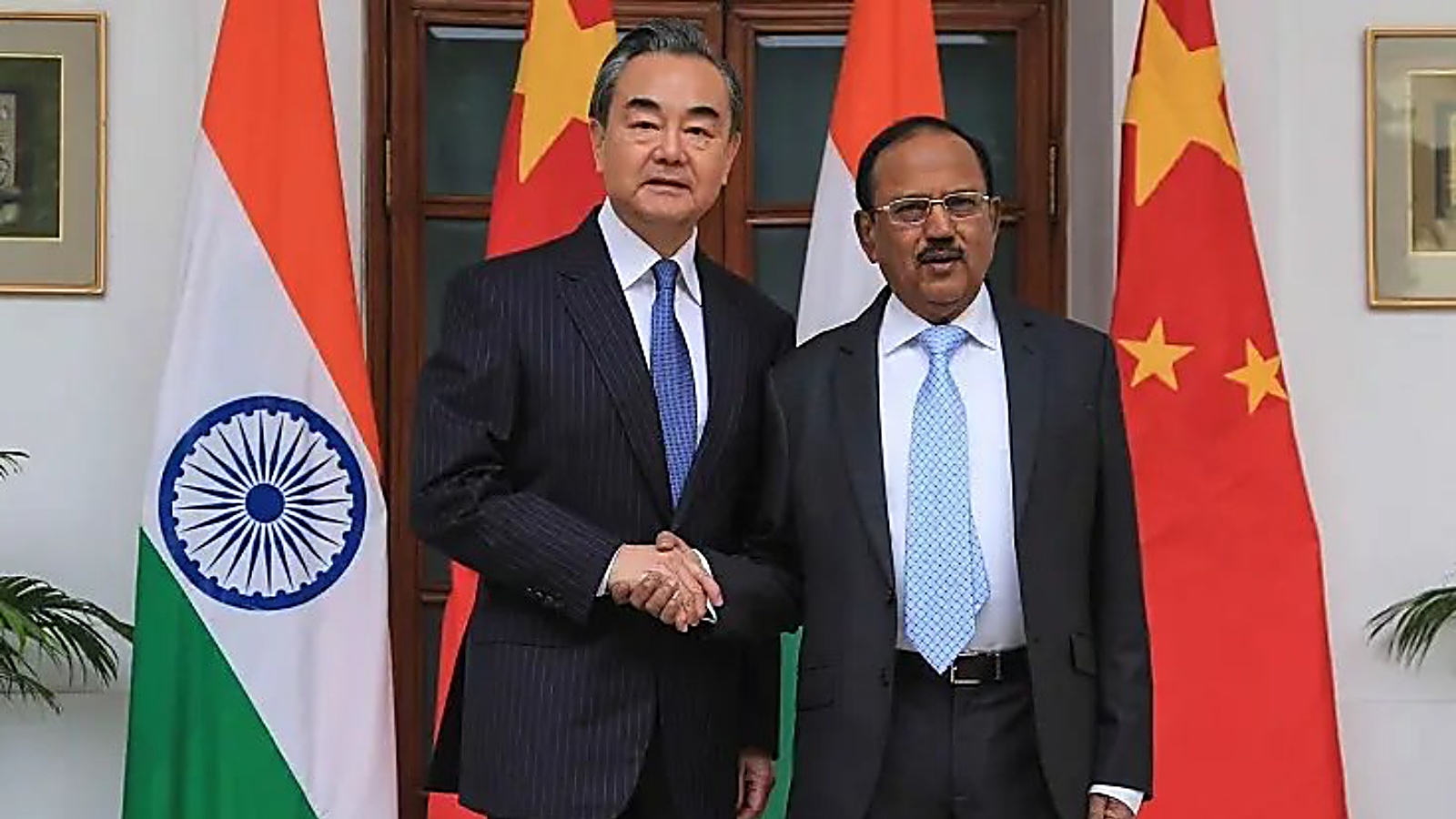
In a major diplomatic move, India and China have agreed to advance boundary delimitation talks and establish two new military hotlines in the eastern and middle sectors. The consensus follows high-level talks between NSA Ajit Doval and Chinese Foreign Minister Wang Yi in Beijing.
- Agreement to pursue 'early and substantial harvest' in boundary delimitation and management.
- Establishment of two new military hotlines in the Eastern and Middle sectors.
- Addition of two new meeting points for military commander-level discussions.
- Commitment to hold trans-border river meetings and continue SR-level talks in 2027.
Beijing/New Delhi: In a significant step toward de-escalating long-standing tensions, India and China have decided to accelerate discussions aimed at achieving an "early and substantial harvest" regarding boundary delimitation and border management. This development follows the 25th round of Special Representative (SR) level talks held in Beijing between National Security Advisor (NSA) Ajit Doval and Chinese Foreign Minister Wang Yi.
The high-level meeting resulted in eight key outcomes and a broad consensus. Both nations reaffirmed their commitment to maintaining peace and tranquility in the border areas, adhering to the 2005 Agreement on Political Parameters and Guiding Principles for the settlement of the boundary question.
Strengthening Border Communication
To prevent misunderstandness and miscalculations along the Line of Actual Control (LAC), the two sides have agreed to enhance military-to-military communication. A major highlight of the talks is the decision to set up two additional military hotlines specifically for the Eastern and Middle sectors. Furthermore, two new meeting points have been designated for General Level Mechanism and Senior Highest Military Commander (SHMC) meetings.
The introduction of specialized hotlines in the Eastern and Middle sectors is a critical tactical move to reduce the risk of accidental escalation.
Broader Cooperation and River Management
Beyond military protocols, the talks touched upon trans-border cooperation. The Indian side expressed appreciation for China's efforts in facilitating the Kailash-Mansarovar Yatra (KMY). Additionally, both nations agreed to strengthen border trade following the reopening of three designated trading points. A crucial technical agreement involves the Expert-Level Mechanism on Trans-border Rivers, with a meeting scheduled for September to discuss hydrological data sharing, which is vital for managing rivers like the Brahmaputra.
Why This Matters
BozokMedia analysis shows that this shift from confrontation to structured management indicates a desire by both powers to stabilize their relationship. By creating institutionalized channels—such as the new hotlines and meeting points—the two nations are attempting to build a predictable framework that can withstand localized friction without escalating into a full-scale conflict.
Historical Background
The boundary dispute between the world's two most populous nations has seen multiple phases of tension, most notably the 2020 Galwan Valley clash. Since then, the Working Mechanism for Consultation and Coordination (WMCC) has been the primary vehicle for dialogue, aiming to manage the complex and disputed terrain of the Himalayas.
Frequently Asked Questions
1. What are the new military communication channels?
The agreement includes two new military hotlines in the Eastern and Middle sectors and two new meeting points for commander-level talks.
2. When is the next major round of SR talks scheduled?
The two sides have agreed to hold the 26th round of Special Representative-level talks in India in 2027.