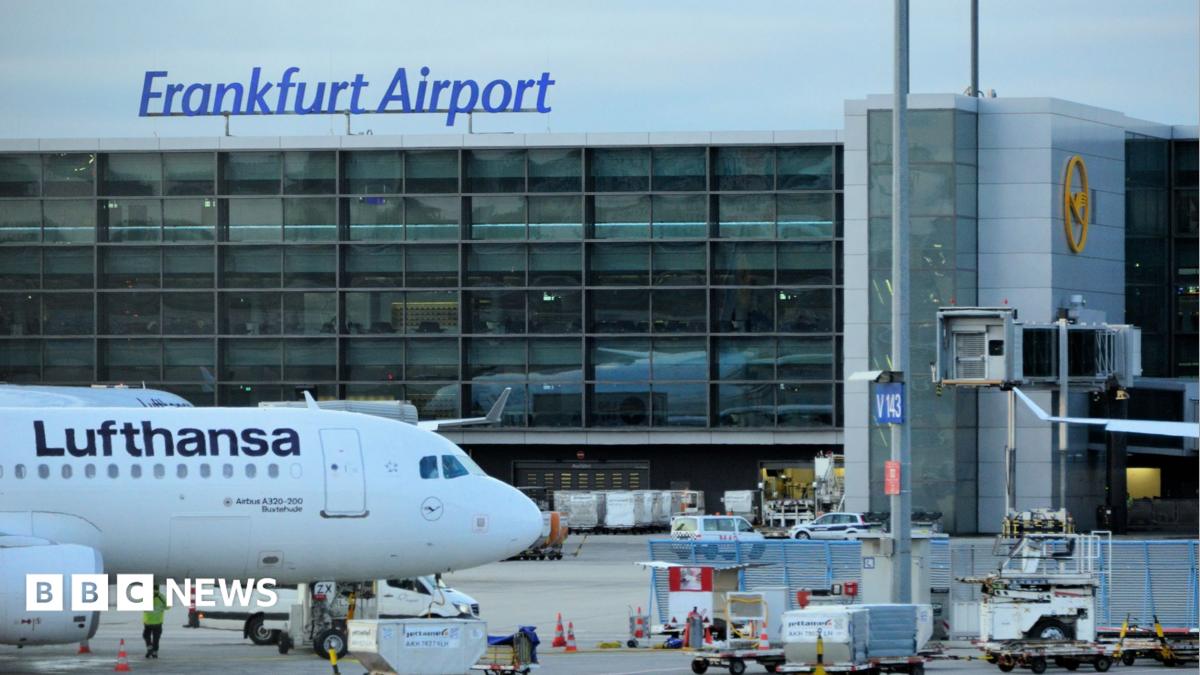
A rare malaria outbreak at Germany's busiest airport, Frankfurt, has claimed the life of one worker and left five others undergoing medical treatment.
- One airport employee has died due to a malaria infection at Frankfurt Airport.
- Five additional workers are currently receiving medical care for the disease.
- Health officials suspect mosquitoes were transported into Germany via an aircraft.
- Traps have been deployed at the airport to identify the mosquito species.
A tragic outbreak of malaria at Frankfurt Airport, Germany's primary aviation hub, has resulted in the death of one employee and the infection of five others. This rare occurrence has sent shockwaves through the public health community, as malaria transmission within a non-endemic European country is highly unusual.
A spokesperson for the airport operator, Fraport, confirmed the fatality to the BBC, stating that comprehensive information has been disseminated to all staff members. The spokesperson urged any employee experiencing symptoms to seek immediate medical consultation to prevent further complications.
Why This Matters
BozokMedia analysis shows that this incident highlights a critical vulnerability in global aviation security—the unintentional transport of biological vectors. While malaria is typically associated with long-haul travelers returning from tropical regions, the lack of a travel history among these workers suggests a localized transmission cycle initiated by mosquitoes arriving on an international flight.
The absence of travel history in local malaria cases necessitates a radical shift in how we monitor biological risks at international transit hubs.
The Robert Koch Institute, Germany's federal agency for disease control, noted that the infections occurred between July 4 and July 6. The institute emphasized that a delayed diagnosis, often caused by the assumption that malaria only affects travelers, can lead to severe and life-threatening complications. Investigations are currently underway to analyze captured mosquitoes to determine their exact species and geographic origin.
Historical Context
This is not an isolated incident for the Frankfurt hub; the last recorded case of airport-related malaria occurred in 2023, also at Frankfurt Airport. This pattern suggests that the massive scale of international transit makes major airports potential entry points for various tropical diseases, necessitating heightened epidemiological surveillance.
Frequently Asked Questions (FAQs)
1. How did the mosquitoes reach Germany?
Public health officials believe the mosquitoes were likely brought into the country via an arriving aircraft from a malaria-endemic region.
2. Is malaria curable?
Yes, malaria is both preventable and curable if diagnosed and treated promptly, though it can be fatal if left unchecked.