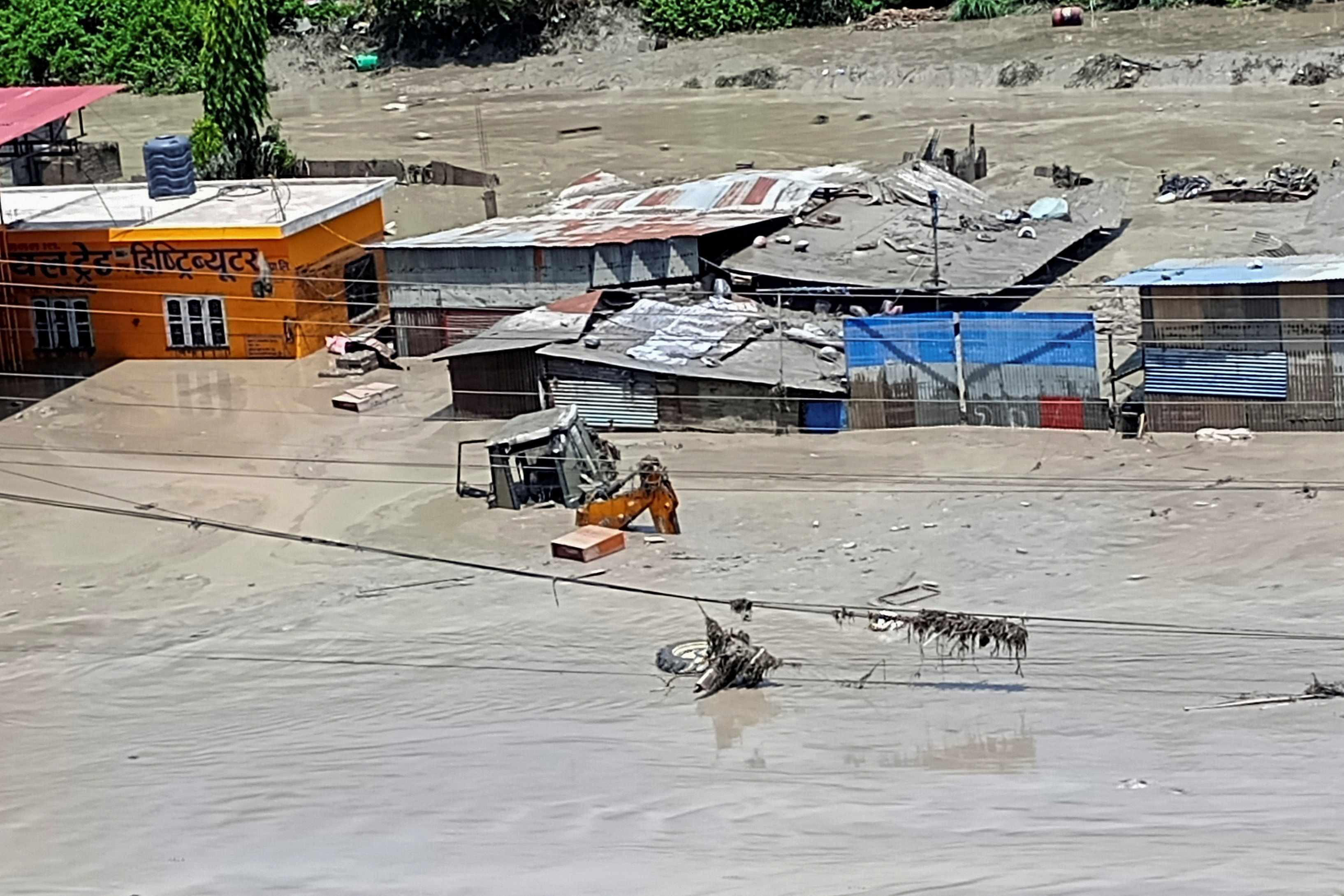
A devastating flash flood in Nepal's Rasuwa district near the Tibet border has claimed at least eight lives and left 33 security personnel missing. The disaster has severely impacted infrastructure, including roads, bridges, and hydropower projects.
- At least eight fatalities confirmed following the Bhote Koshi river flash flood.
- 33 security personnel, including Nepal Police and Armed Police Force, are currently missing.
- Major damage reported to roads, bridges, and hydropower infrastructure in Rasuwa, Nuwakot, and Dhading.
- Nepal Army has deployed MI-17 helicopters for emergency rescue and medical aid.
A catastrophic flash flood struck the Bhote Koshi river in Nepal's Rasuwa district near the Tibet border on Wednesday, causing widespread destruction and loss of life. The sudden surge of water has devastated local villages and crippled essential infrastructure, including roads, bridges, and critical hydropower projects.
According to Nepalese authorities, the death toll currently stands at eight. However, the situation remains critical as 33 security personnel are reported missing. This includes 26 members of the Nepal Police and seven from the Armed Police Force (APF). Rescue operations are underway, but the scale of the disappearance suggests a high-intensity impact on those patrolling or working near the riverbanks.
Why This Matters
BozokMedia analysis shows that the increasing frequency of flash floods in the Himalayan corridors is a direct consequence of erratic weather patterns and glacial instability. For Nepal, these events represent a dual threat: a humanitarian crisis involving loss of life and a significant economic blow to the nation's burgeoning hydropower sector, which is vital for its energy independence.
The suddenness of these Himalayan flash floods leaves almost zero lead time for evacuation, making them one of the deadliest natural hazards in the region.
The floodwaters did not remain confined to the Rasuwa district; they surged downstream, affecting the Nuwakot and Dhading districts. The impact on infrastructure has been profound, with reports of entire villages and construction sites being washed away by the torrent. Residents in the vicinity of the Bhote Koshi river have been ordered to evacuate to higher ground immediately.
In response to the emergency, the Nepal Army has mobilized its assets, deploying MI-17 helicopters to navigate the difficult terrain. One helicopter has been specifically tasked with transporting medical teams to the most isolated and hard-hit areas. However, rescue teams have faced significant hurdles, as high water levels and floating debris have made helicopter landings extremely hazardous.
Historical Background
Nepal's mountainous geography makes it highly susceptible to hydro-meteorological disasters. The Bhote Koshi river basin, characterized by steep gradients and heavy monsoon rainfall, has a history of sudden inundations. In recent years, scientists have warned that climate change is accelerating the melting of Himalayan glaciers, increasing the risk of GLOFs (Glacial Lake Outburst Floods) and flash floods.
Frequently Asked Questions
Question 1: How many security personnel are missing?
Answer: A total of 33 security personnel, comprising 26 Nepal Police and 7 Armed Police Force members, are currently missing.
Question 2: Which districts are most affected by the flood?
Answer: The primary impact is in Rasuwa, with downstream flooding affecting Nuwakot and Dhading districts.

