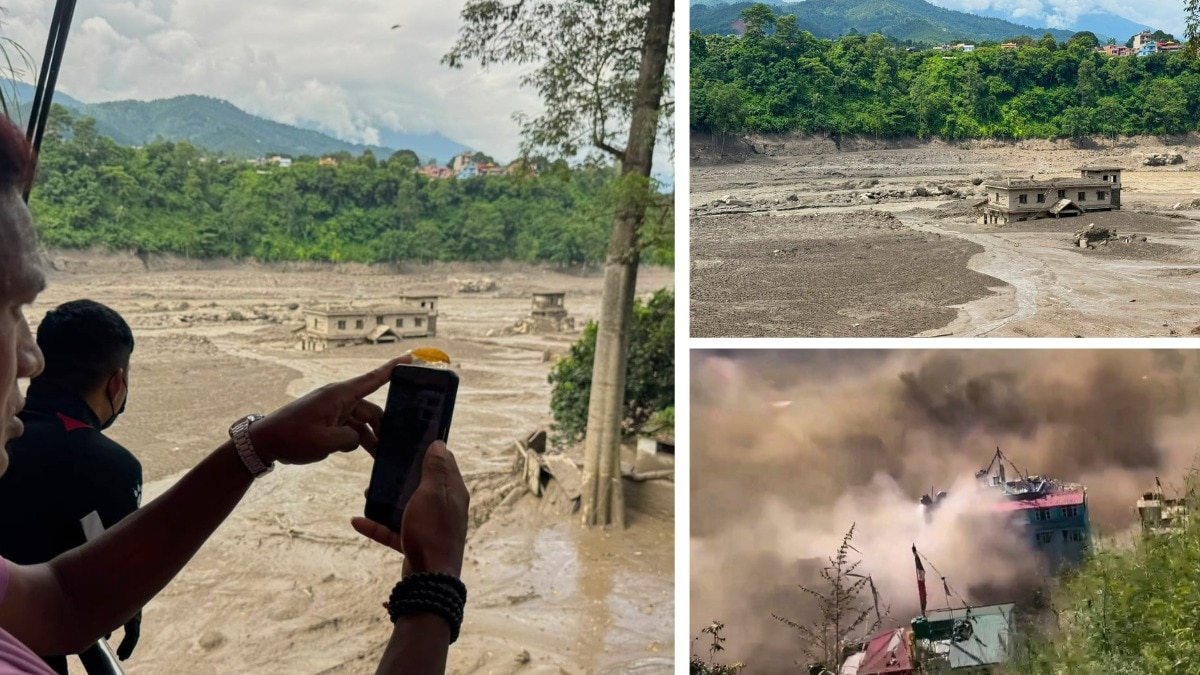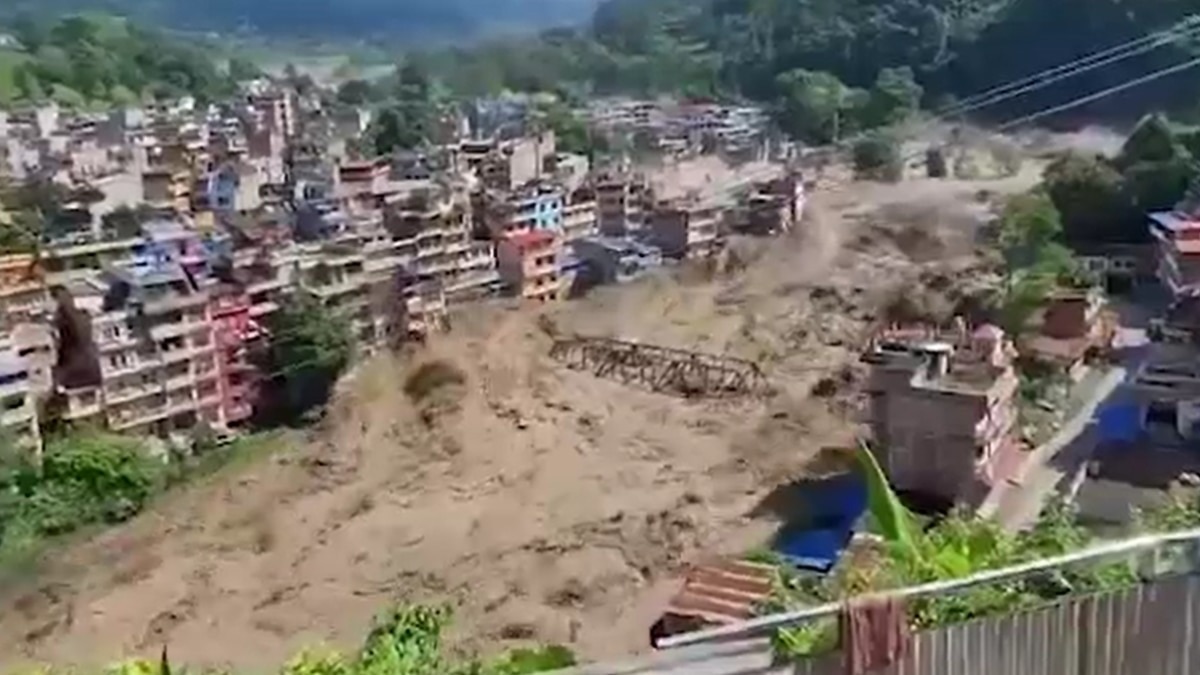
Sudden flash floods originating from Tibet have caused catastrophic destruction in Nepal's Rasuwa district, claiming 8 lives and damaging 13 hydropower projects. A massive rescue operation involving 15 helicopters is currently underway.
- Sudden flash floods from Tibet have caused massive destruction in Nepal's Rasuwa district.
- At least 8 fatalities have been confirmed so far.
- 15 helicopters (7 Army, 8 other agencies) are deployed for rescue operations.
- 13 hydropower projects have been significantly impacted by the floods.
- High alert issued in Bihar, India, due to potential rising water levels in the Gandak River.
A devastating flash flood, triggered by heavy rainfall and sudden surges from the Tibetan side, has wreaked havoc across Nepal's Rasuwa district. The Bhote Koshi River (Lende Khola) overflowed with immense force, causing unprecedented damage to the Timure market and the Rasuwa border customs area. Tragically, authorities have confirmed that 8 people have lost their lives in the deluge, while many more remain missing as search operations continue.
The scale of the disaster is evident from the massive debris and the sight of vehicles being swept away by the raging currents. Beyond the immediate loss of life, the flood has dealt a significant blow to Nepal's energy infrastructure, with 13 hydropower projects reported to be affected. Damage to dams, powerhouses, and essential access roads has been extensive, though a full economic assessment is pending ground inspections.
Why This Matters
BozokMedia analysis shows that the increasing frequency of such flash floods in the Himalayan region is a direct consequence of erratic weather patterns and climate change. For a nation like Nepal, which relies heavily on hydropower for its economy, these disasters represent a dual threat to both human life and national economic stability.
Brigadier General Rajaram Basnet, spokesperson for the Nepal Army, stated that rescue operations are being conducted on a war footing to evacuate stranded citizens.
In response to the crisis, the Nepal Army and various emergency agencies have mobilized a massive rescue fleet. A total of 15 helicopters—7 belonging to the Nepal Army and 8 from other agencies—have been deployed to reach remote and inaccessible areas. Brigadier General Rajaram Basnet confirmed that 25 individuals have already been rescued from affected areas like Busi and Tusu. Additionally, a medical center has been established at the Fish Training Camp to provide emergency healthcare to the injured.
To prevent further casualties, the Kathmandu Traffic Police have suspended all vehicular movement on routes leading from Kathmandu to Rasuwa, Nuwakot, Chitwan, and Dhading. Local authorities have issued high-level alerts to residents living in low-lying areas near the riverbanks.
Frequently Asked Questions
1. How many helicopters are currently involved in the Nepal rescue mission?
A total of 15 helicopters are currently operational, including 7 from the Nepal Army and 8 from other emergency agencies.
2. Is India affected by the floods in Nepal?
Yes, authorities in Bihar, India, have issued a high alert for districts like West Champaran, East Champaran, Gopalganj, and Muzaffarpur due to the potential rise in the Gandak River's water levels.