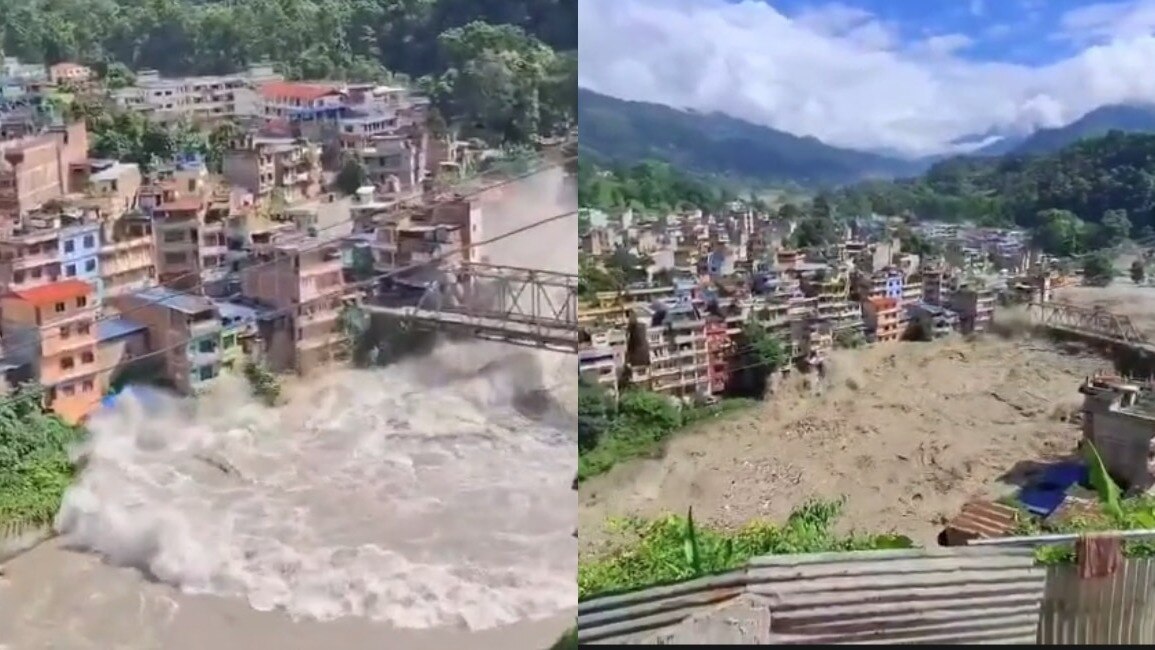
A devastating flash flood triggered by an earthquake and landslide near the Nepal-Tibet border has claimed 157 lives and left over 750 people missing, including many Indian nationals.
- Disaster triggered by a 5.2-magnitude earthquake and subsequent landslide.
- Death toll reaches 157, with 750+ people still missing.
- Over 130 Indian nationals, including Kailash Mansarovar pilgrims, reported missing.
- Critical hydropower projects and 19 bridges destroyed.
A catastrophic flash flood has ripped through central Nepal, following a seismic event near the Nepal-Tibet border. According to the US Geological Survey, a 5.2-magnitude earthquake triggered massive landslides, sending a torrent of mud and debris into the Bhote Koshi River. The resulting deluge has claimed at least 157 lives and left hundreds more missing.
Widespread Destruction and Infrastructure Collapse
The districts of Rasuwa and Dhading have borne the brunt of the disaster. The floodwaters surged through the Bhote Koshi and eventually entered the Trishuli River, affecting a massive corridor stretching nearly 200 km from Kathmandu. The destruction of infrastructure is immense; authorities report that at least 19 motorable bridges have been washed away, and vital road links to the Rasuwagadhi border crossing have been severed.
Why This Matters
BozokMedia analysis shows that this event is a significant blow to Nepal's energy sector. The Independent Power Producers’ Association Nepal confirmed that eight operational hydropower projects, totaling 354 MW of capacity, have been damaged. This loss of power generation capability could have long-term implications for the regional economy and energy stability.
The intersection of seismic activity and glacial instability creates a high-risk environment for sudden, high-magnitude flood events in the Himalayas.
The disaster has profound implications for India, with over 130 Indian nationals reported missing. Many of these individuals were part of the Kailash Mansarovar Yatra. Furthermore, the Isha Foundation has expressed deep concern as several of its members remain unaccounted for. India has responded by providing relief supplies and coordinating rescue efforts to assist its citizens.
Historical Background
The Himalayan region is one of the most seismically active zones in the world. Historically, the region has faced frequent landslides and Glacial Lake Outburst Floods (GLOFs). As global temperatures rise, the melting of Himalayan glaciers has increased the frequency and intensity of such flash floods, making traditional disaster management protocols even more critical.
Frequently Asked Questions
1. How many Indian citizens are missing?
At least 130 Indian nationals are reported missing, including several pilgrims on the Kailash Mansarovar route.
2. Which infrastructure has been most affected?
Hydropower projects and transport infrastructure, including 19 bridges and major highways, have suffered extensive damage.