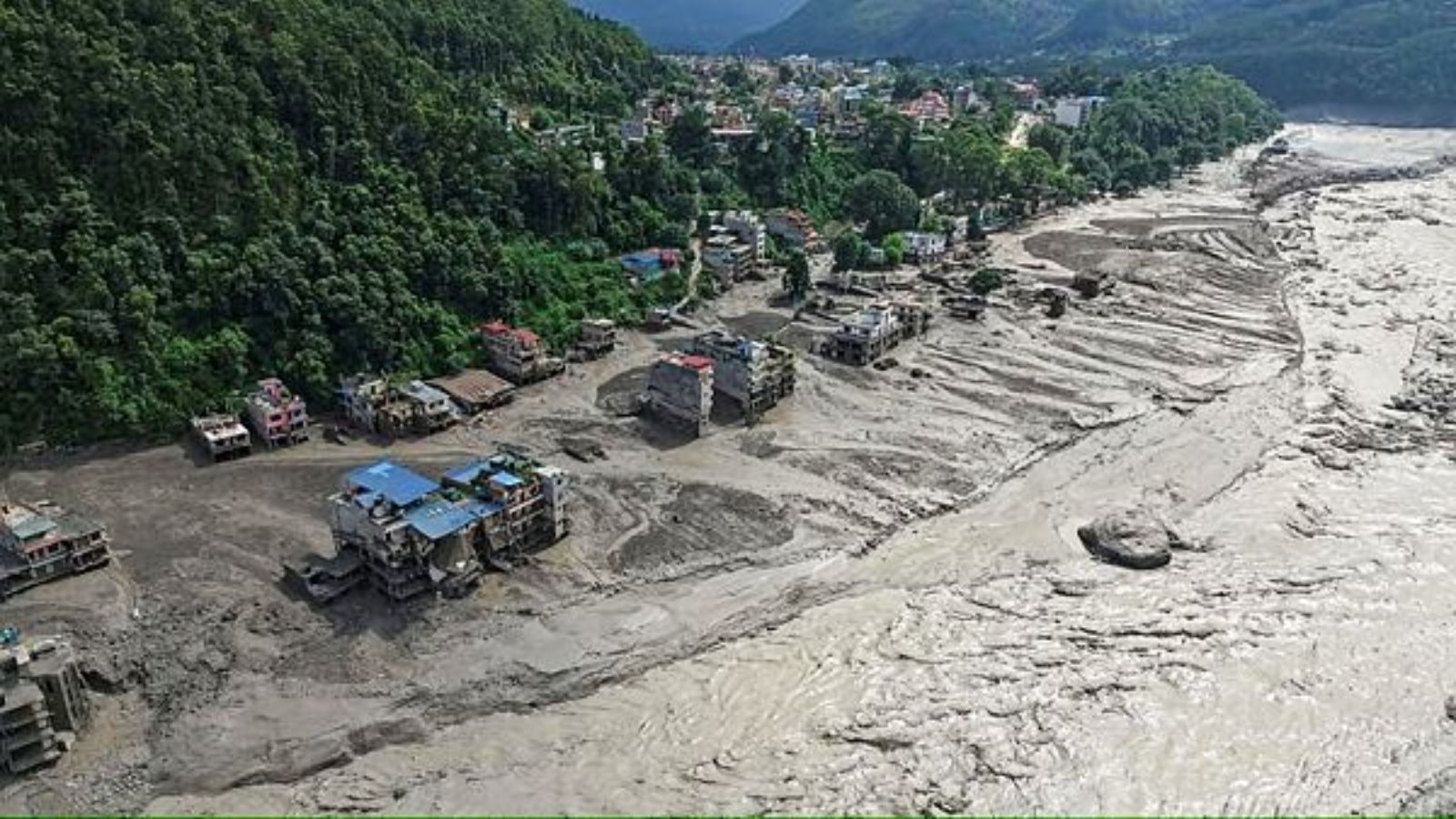
A catastrophic flash flood triggered by a seismic event in Tibet has devastated central Nepal, claiming at least 160 lives and leaving 750 people missing. The disaster has crippled infrastructure and impacted numerous international tourists, including many from India.
- A massive flash flood from Tibet tore through central Nepal, killing 160 and leaving 750 missing.
- The disaster was likely triggered by an 8:37 AM earthquake in the Tibet region.
- Over 133 Indian nationals and 37 NRIs are among the missing.
- 19 bridges and multiple major hydropower projects have been destroyed.
A devastating flash flood originating from Tibet has ripped through central Nepal, resulting in a massive loss of life and property. As of the latest reports, the death toll has reached 160, with an alarming 750 individuals reported missing. The disaster has decimated towns, washed away critical bridges, and severely damaged the nation's hydropower infrastructure, spreading across the Bhote Koshi and Trishuli river systems.
The Seismic Trigger
Nepal's Foreign Minister Shisir Khanal informed Parliament that an earthquake struck the Tibet region at approximately 8:37 AM local time. Just three minutes later, catastrophic flooding was reported, suggesting that the tremors may have triggered a glacial outburst. The floodwaters surged through the border districts of Rasuwa and Dhading, moving rapidly through Nuwakot, Chitawan, Gorkha, and Tanahu, causing unprecedented destruction.
The rapid succession of a seismic event followed by a glacial outburst creates a lethal combination for downstream communities.
Infrastructure and Economic Impact
The economic toll is staggering. The Independent Power Producers' Association Nepal reported that eight operational hydropower projects, with a combined capacity of 354 MW, along with five under-construction projects, have sustained damage. Key projects like the Rasuwagadhi Hydropower Project and Upper Trishuli 3A are among those affected. Furthermore, the destruction of 19 motorable bridges and the 42-km road linking Betrawati to the Rasuwagadhi border crossing has paralyzed regional connectivity.
International Implications and Missing Persons
The disaster has a significant international dimension, with 133 Indian nationals and 37 NRIs listed among the missing. This includes approximately 50 Indians on the Kailash Manasarovar Yatra. Sadhguru, founder of the Isha Foundation, noted the uncertainty regarding members from their immigration center. Tourists from the US, UK, Australia, and several other nations are also missing, highlighting the global impact of this regional catastrophe.
Why This Matters
BozokMedia analysis shows that this event underscores the extreme vulnerability of the Himalayan corridor to climate-induced and seismic disasters. The destruction of power infrastructure and transport links doesn't just affect local lives; it disrupts regional energy security and cross-border trade, necessitating a more robust trans-border disaster management framework.
Historical Background
The Himalayan region is a tectonic hotspot. Historically, the area has been prone to Glacial Lake Outburst Floods (GLOFs), which are increasingly being exacerbated by rising global temperatures and melting glaciers, making flash floods a recurring and intensifying threat to the mountain nations.
Frequently Asked Questions
Question 1: What caused the flash flood in Nepal?
Answer: It is believed that an earthquake in Tibet triggered a glacial outburst, sending a surge of water into Nepal's river systems.
Question 2: Is India providing assistance?
Answer: Yes, Prime Minister Narendra Modi has assured humanitarian assistance, and India has already dispatched the first tranche of relief supplies.