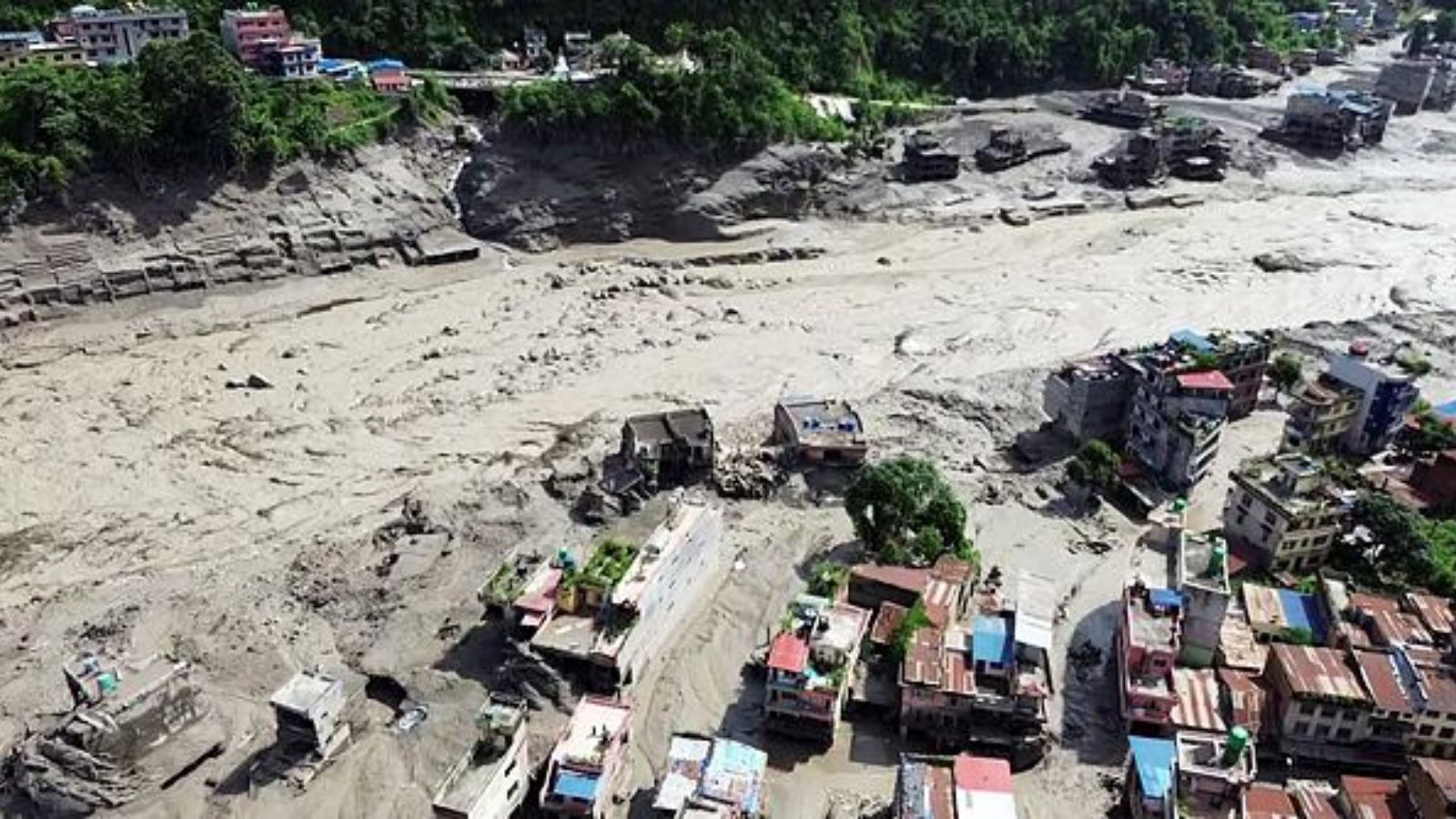
A glacial lake outburst in Nepal has sent massive surges down the Bhotekoshi and Trishuli rivers, threatening Bihar's Gandak river system. Authorities have opened all 36 gates of the Valmikinagar barrage as a precaution.
- A glacial lake outburst in Tibet caused a 3-meter surge in the Bhotekoshi River.
- All 36 gates of the Gandak Barrage in Valmikinagar, Bihar, have been opened.
- NDRF and SDRF teams are on standby for potential evacuations.
- The Central Flood Control Cell in Patna has been activated 24/7.
The state of Bihar is currently on high alert following a catastrophic flash flood in Nepal triggered by a glacial lake outburst. The surge, which occurred in the Bhotekoshi River, has significantly raised water levels in the Trishuli river basin, directly impacting the Gandak River system. In a proactive move to manage the sudden influx of water, Bihar officials confirmed that all 36 gates of the Valmikinagar barrage have been opened.
The outburst reportedly took place around 9:00 AM near the Tibet border, causing a sudden three-meter surge in the Bhotekoshi. This surge is expected to cause an unprecedented increase in the discharge of the Gandak River downstream. By midday, the discharge at the Valmikinagar barrage was recorded at 86,000 cusecs and was trending upward, signaling a critical situation for the low-lying areas of Bihar.
Why This Matters
BozokMedia analysis shows that the interconnectedness of Himalayan river systems means that geological or climatic events in Nepal have immediate and potentially devastating consequences for the Indian plains. The management of barrage gates and the speed of evacuation are the only variables standing between controlled flooding and a humanitarian disaster.
The suddenness of glacial lake outbursts makes them one of the most unpredictable and dangerous hydrological events in the region.
Chief Minister Samrat Choudhary has convened emergency meetings with the Chief Secretary and the Disaster Management Department. He has directed officials to maintain a 'high alert' status and ensure that residents living near embankments are alerted via public-address systems. National Disaster Response Force (NDRF) and State Disaster Response Force (SDRF) teams are already being deployed to high-risk zones.
Historical Background
The Gandak River has historically been a lifeline for Bihar's agriculture, but it has also been a source of seasonal devastation. While monsoon flooding is predictable, the phenomenon of Glacial Lake Outburst Floods (GLOF) is an emerging threat exacerbated by global warming, making traditional flood management strategies even more critical.
Frequently Asked Questions
Question 1: What should residents do if they live near the river embankments?
Answer: Residents should monitor official announcements and follow evacuation orders from local authorities immediately.
Question 2: How can flood-related emergencies be reported in Bihar?
Answer: You can use the toll-free number 1800-345-6145 or the specific contact numbers provided by the Central Flood Control Cell.