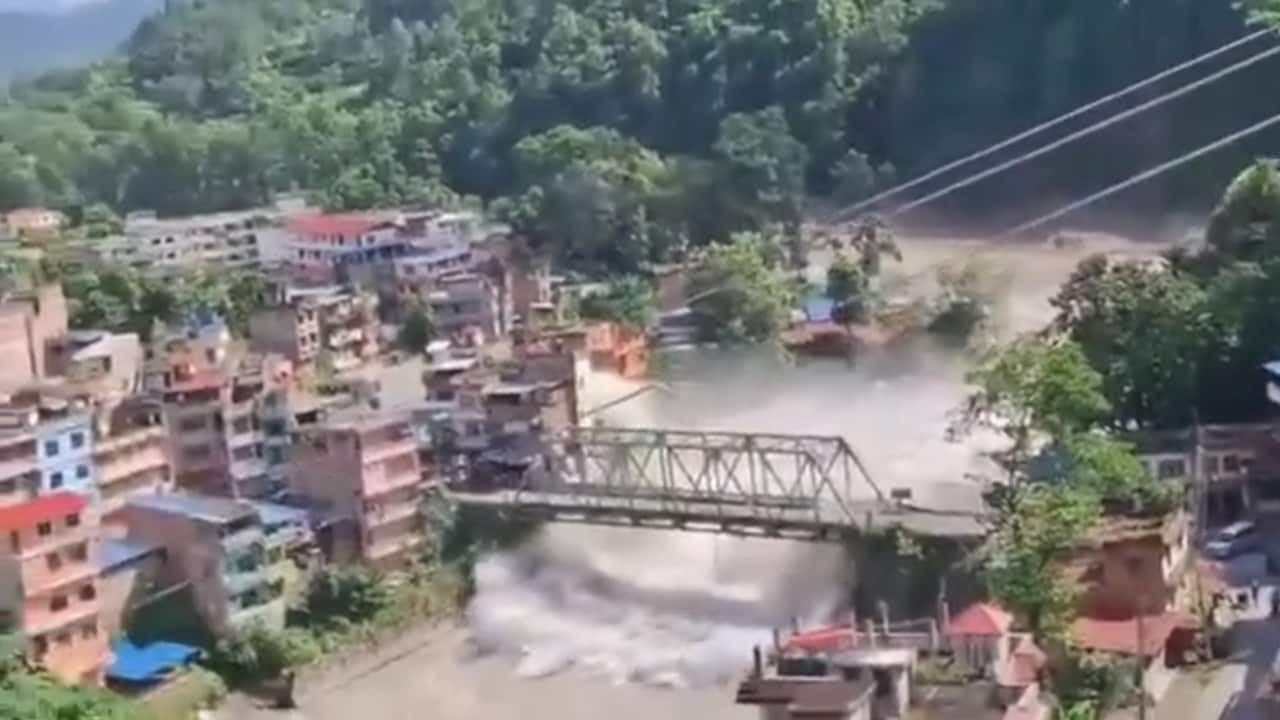
A sudden surge of muddy water in the Bhote Koshi River has triggered devastating floods in Nepal, claiming over 150 lives and leaving many missing.
- Sudden surge in Bhote Koshi River triggered massive flooding.
- Death toll has officially climbed past 150 victims.
- Nepal Army, Police, and helicopter units are leading search-and-rescue.
- Close coordination between Indian and Nepali authorities for relief.
The scale of devastation in Nepal continues to grow as catastrophic floods, triggered by a sudden and violent surge of muddy water along the Bhote Koshi River, sweep through affected regions. The official death toll has now climbed past 150, with authorities warning that the number could rise significantly as search operations continue in debris-strewn areas.
Emergency response teams, including the Nepal Army, local police, and specialized helicopter units, are engaged in a race against time. The terrain, made treacherous by thick mud and debris, has complicated efforts to reach isolated communities. Aerial surveillance and rescue missions are being prioritized to extract survivors from high-risk zones.
Why This Matters
BozokMedia analysis shows that the increasing frequency of flash floods in the Himalayan corridor is a direct consequence of shifting weather patterns and rapid environmental changes. Such disasters put immense pressure on regional stability and require sophisticated, cross-border disaster management frameworks.
The speed at which the Bhote Koshi rose left virtually no window for evacuation, turning a natural event into a massive humanitarian crisis.
In a display of regional solidarity, Indian authorities are working in close coordination with their Nepali counterparts. This bilateral cooperation is crucial for streamlining medical supplies, technical expertise, and logistical support. Emergency helplines have been established to assist families searching for information regarding their loved ones.
Historical Background
Nepal's topography, characterized by steep mountains and fast-flowing river systems, makes it inherently prone to flash floods. Historically, the monsoon season brings heavy precipitation that can turn mountain streams into torrents within minutes, a phenomenon that has become more unpredictable in recent years due to global climate shifts.
Frequently Asked Questions
Question 1: Who is leading the rescue efforts in Nepal?
Answer: The Nepal Army, police, and dedicated helicopter teams are conducting the primary search and rescue operations.
Question 2: Is there international assistance involved?
Answer: Yes, Indian authorities are working closely with Nepal to coordinate emergency responses and relief.

