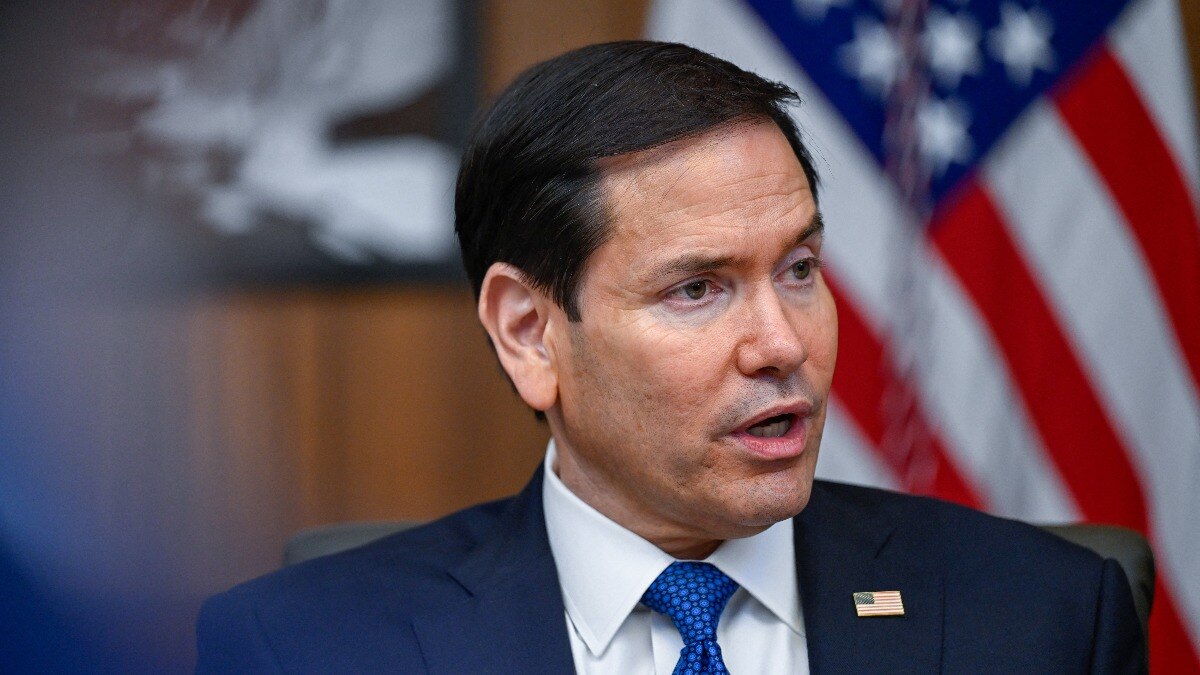
US Secretary of State Marco Rubio has informed allies that Washington is not currently planning new military strikes against Iran. Instead, the US is pivoting towards economic sanctions and naval pressure in the Strait of Hormuz.
- The United States is not currently preparing for new direct military attacks on Iran.
- Strategy has shifted from direct military action to economic sanctions and maritime pressure.
- US naval presence is increasing in the Strait of Hormuz to secure oil routes.
- Iran and Oman are discussing a temporary maritime corridor for shipping safety.
In a significant diplomatic development, US Secretary of State Marco Rubio has informed foreign ministers of allied nations that the United States is not planning any immediate new military strikes against Iran. This move signals a strategic pivot in Washington's approach to the Middle East tensions.
According to high-level reports, the US is moving away from the prospect of kinetic warfare and is instead focusing on a strategy of economic containment and naval dominance. The goal is to squeeze the Iranian economy and limit its ability to manipulate global energy markets through the Strait of Hormuz.
Why This Matters
BozokMedia analysis shows that this "U-turn" is not a sign of weakness but a calculated move to avoid a full-scale regional war. By utilizing economic sanctions and maritime blockades, the US aims to force Tehran to the negotiating table without the massive human and political costs of a direct military invasion.
The US strategy is shifting from missile exchanges to a war of attrition through sanctions and naval control.
The US Navy is currently intensifying its operations in the Strait of Hormuz, focusing on clearing sea mines to ensure the safe passage of oil tankers. US officials claim these maneuvers have already begun to undermine Iran's ability to threaten global oil supplies. However, Rubio maintained that the military option remains on the table should Iran initiate hostilities.
On the defensive side, Iran is preparing to implement new navigation and maintenance fees for vessels passing through the Strait. This move is seen as a way to reclaim economic leverage. Meanwhile, Oman and Iran are in discussions to establish a temporary maritime corridor to enhance shipping security amidst the rising tensions.
Adding a layer of regional complexity, Pakistan has emerged as a potential mediator. Recent high-level visits by Pakistani military leadership to Tehran suggest an attempt to bridge the gap between Washington and Tehran, potentially acting as a diplomatic buffer in the volatile region.
| Feature | Previous Approach | New US Strategy |
|---|---|---|
| Primary Tool | Direct Military Action | Economic Sanctions |
| Focus Area | Land/Air Strikes | Maritime/Financial Pressure |
| Primary Goal | Regime Deterrence | Economic Containment |
Frequently Asked Questions
1. Is the US planning to invade Iran?
No, Secretary Marco Rubio stated that there are currently no plans for new military attacks.
2. How is the US applying pressure on Iran?
The US is using economic sanctions and increased naval presence in the Strait of Hormuz to exert pressure.