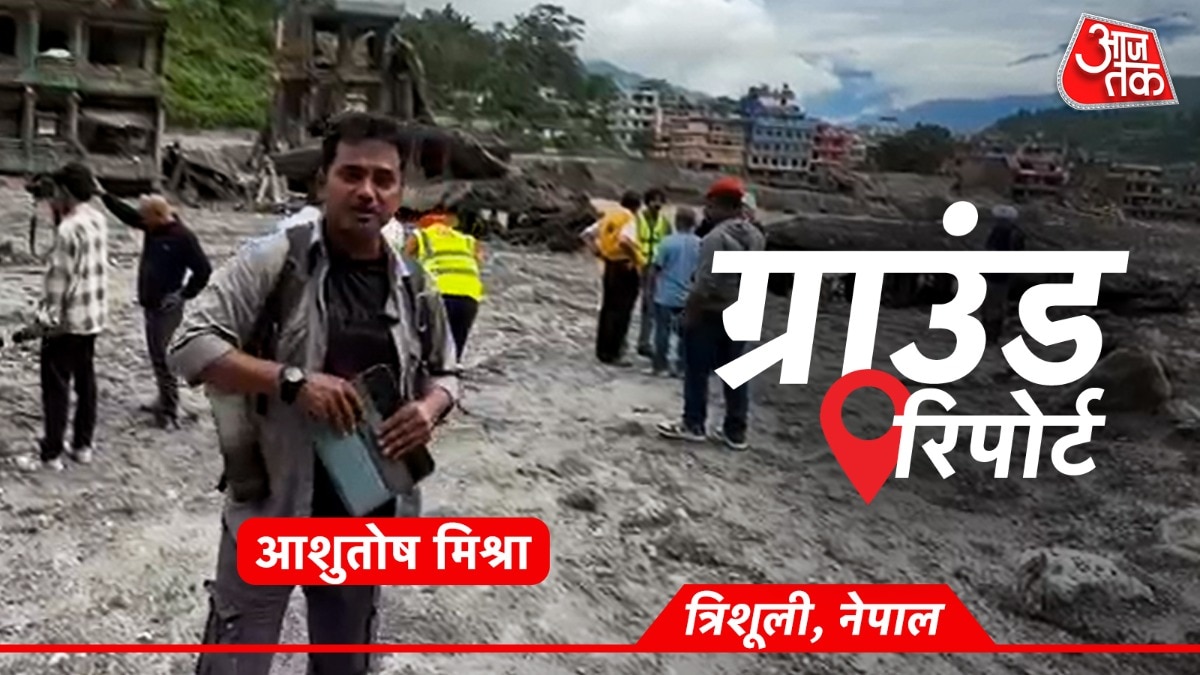
A combination of a powerful Western Disturbance and a massive 2,000-foot glacier burst has triggered catastrophic flash floods across Nepal, leaving many missing.
- A massive 2,000-foot wide glacier burst combined with heavy rains from a Western Disturbance caused the floods.
- Over 130 Indians, including Kailash Mansarovar pilgrims, are reported missing.
- Satellite imagery confirms the suddenness and scale of the flash floods.
Nepal is currently grappling with a catastrophic flooding event that has caused unprecedented destruction across its mountainous terrain. Recent investigations and satellite imagery suggest a dual-threat scenario: the arrival of a strong Western Disturbance and the sudden, violent bursting of a 2,000-foot-wide glacier. Witnesses described the event as feeling 'like a bomb exploded' as a massive wall of water swept through the valleys.
The Mechanics of the Disaster
The disaster was triggered when intense precipitation from the Western Disturbance hit the already unstable Himalayan slopes. This heavy rainfall likely contributed to the sudden collapse of a massive glacier. The resulting flash flood moved with such velocity and force that local residents had almost no time to evacuate, with some forced to cling to trees to survive the rising waters.
Why This Matters
BozokMedia analysis shows that the intersection of extreme weather patterns and glacial instability is becoming a recurring nightmare for the Himalayan region. As global temperatures rise, the structural integrity of glaciers is compromised, making them highly susceptible to heavy rainfall events caused by shifting atmospheric disturbances.
The scale of the water release from a 2,000-foot glacier burst represents a catastrophic shift in regional hydrological stability.
The human cost of this disaster is immense. Beyond the local Nepali population, there is significant concern for Indian nationals. Reports indicate that over 130 Indians, including pilgrims on the Kailash Mansarovar circuit, are currently untraceable, complicating search and rescue operations in the rugged terrain.
Historical Background
The Himalayan region has seen an increase in Glacial Lake Outburst Floods (GLOFs) over the last decade. As glaciers retreat due to climate change, they leave behind unstable lakes held by moraines, which can burst suddenly under the pressure of heavy rains or seismic activity, leading to downstream devastation.
Frequently Asked Questions
Question 1: What caused the sudden floods in Nepal?
Answer: The floods were caused by a combination of heavy rainfall from a Western Disturbance and a massive glacier burst.
Question 2: Are there many casualties reported?
Answer: While exact numbers are being verified, over 130 Indians, including pilgrims, are reported missing.