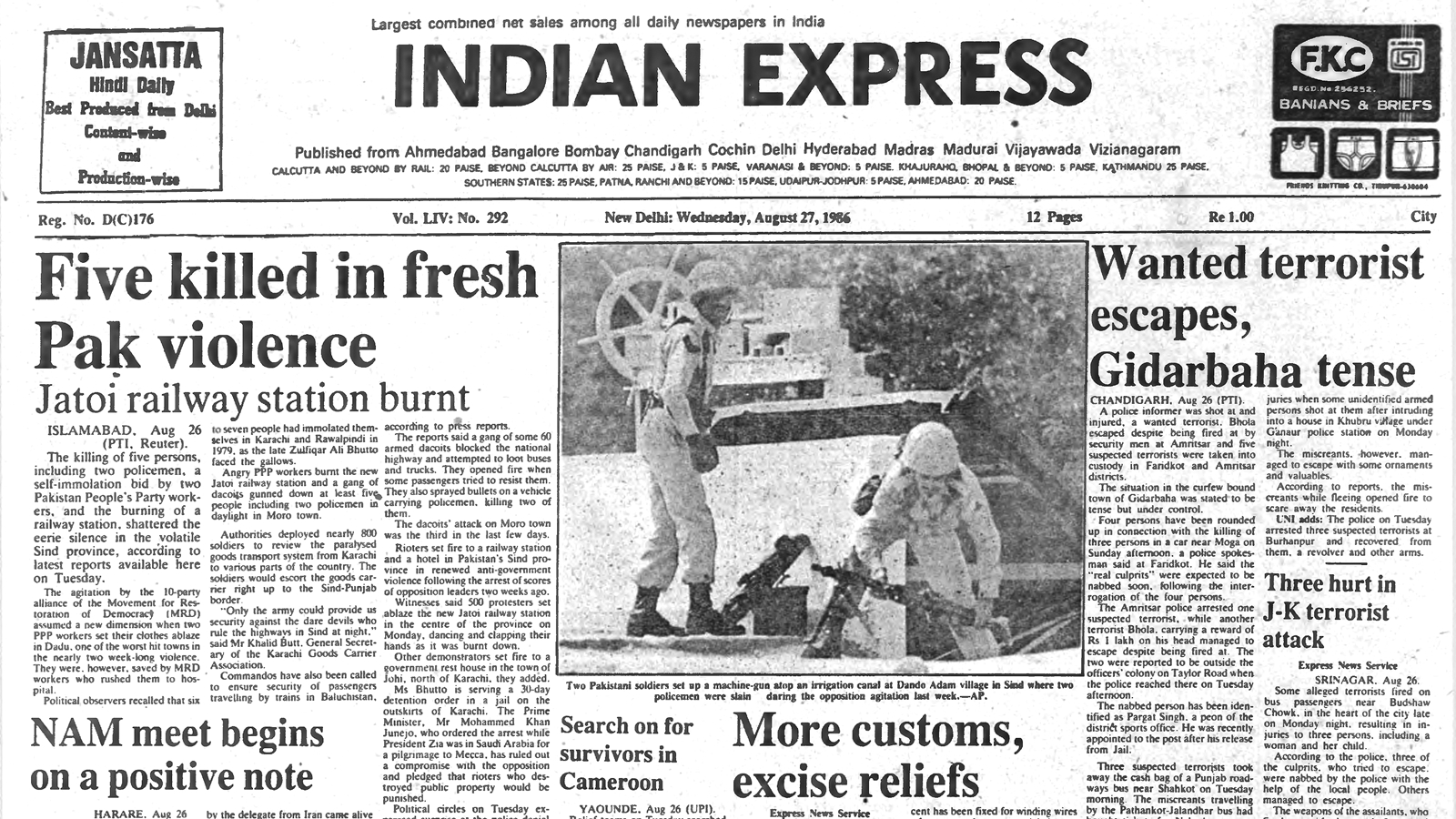
A deep dive into the historical events of August 27, 1986, spanning from the violent political agitations in Pakistan's Sindh province to the catastrophic volcanic gas release in Cameroon.
- Fatal violence in Pakistan's Sindh province involving PPP workers.
- Massive death toll in Cameroon due to a toxic gas release from Lake Nyos.
- Security operations and terrorist activities reported in Punjab, India.
Looking back at the headlines of August 27, 1986, the world was witnessing a confluence of political upheaval and sudden natural catastrophes. In Pakistan, the volatile Sindh province was engulfed in violence as the 10-party alliance of the Movement for the Restoration of Democracy (MRD) intensified its agitation. The situation reached a breaking point in towns like Dadu, where the social fabric was torn by unrest.
Reports from that era indicate that five individuals, including two police officers, lost their lives during the clashes. In a harrowing display of desperation, two workers from the Pakistan People’s Party (PPP) attempted self-immolation by setting themselves ablaze, adding a grim dimension to the nearly two-week-long unrest. Railway stations were also targeted in arson attacks, leaving the province in a state of chaos.
Why This Matters
BozokMedia analysis shows that the mid-1980s were a defining period for democratic movements in South Asia. The Sindh agitation was not merely a local riot but a significant challenge to the prevailing political structures of the time, reflecting deep-seated regional tensions.
The intersection of political dissent and extreme civil unrest in the 80s shaped the modern political landscape of Pakistan.
Simultaneously, a massive humanitarian crisis unfolded in Cameroon. A sudden explosion at the bottom of a volcanic lake, known as Lake Nyos, released a massive pocket of toxic gas. This silent killer swept through lakeside communities, killing at least 2,000 people and leaving the landscape devastated, resembling the aftermath of a "neutron bomb." President Paul Biya expressed grave concerns over the rising death toll.
In India, the security situation in Punjab remained tense. In Amritsar, a police informer was shot at by a wanted terrorist named Bhola. Security forces were actively engaged in counter-terrorism operations, leading to the custody of several suspects in the Faridkot and Amritsar districts. The curfew-bound town of Giddarbaha remained under heavy surveillance as authorities attempted to restore order.
Frequently Asked Questions
Question 1: What triggered the violence in Sindh in 1986?
Answer: The violence was driven by the agitation of the Movement for the Restoration of Democracy (MRD) against the existing political regime.
Question 2: What caused the disaster in Cameroon?
Answer: A volcanic explosion at the bottom of Lake Nyos released a deadly cloud of toxic gas that suffocated nearby residents.