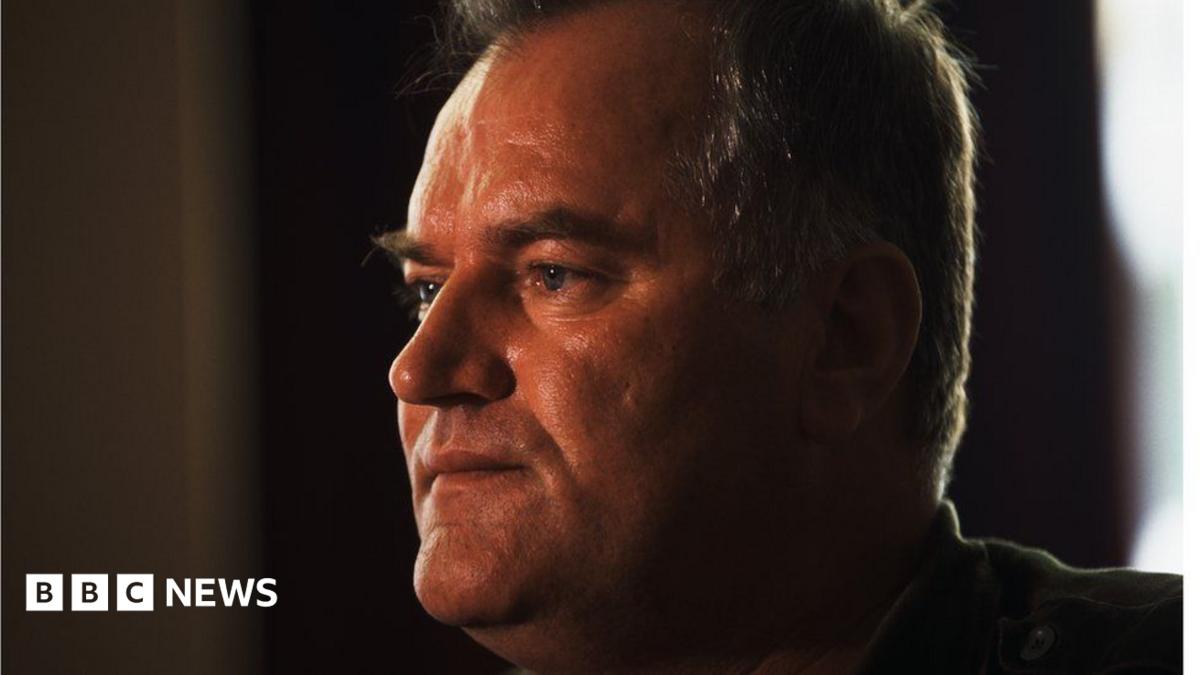
Bosnian Serb commander Ratko Mladić, the man responsible for the Srebrenica genocide and the siege of Sarajevo, has died at the age of 84.
- Ratko Mladić, known as the 'Butcher of Bosnia,' has died at age 84.
- He led the brutal ethnic cleansing campaigns during the 1990s Yugoslav wars.
- He was a primary architect of the Srebrenica genocide, resulting in 8,000 deaths.
- Convicted of war crimes and crimes against humanity at The Hague.
Ratko Mladić, the bull-necked commander of the Bosnian Serb army, has died at the age of 84. Known widely as the 'Butcher of Bosnia,' Mladić was the driving force behind a campaign of systematic 'ethnic cleansing' that tore Yugoslavia apart in the 1990s. His actions resulted in some of the bloodiest atrocities witnessed in Europe since the era of Nazi Germany.
Driven by a fanatic vision of a 'Greater Serbia,' Mladić viewed the Muslim population as invaders. He used propaganda to incite fear, telling his followers that their neighbors planned to commit horrific acts against Serbs. This manufactured hatred fueled a war of extermination that left tens of thousands dead.
Why This Matters
BozokMedia analysis shows that the legacy of Mladić serves as a grim case study in how military leadership can be weaponized to facilitate genocide. His ability to command absolute, almost religious devotion from his troops highlights the terrifying efficiency of ethnic nationalism when integrated with military might.
"Borders are drawn in blood, and states marked out with graves," Mladić famously remarked, embodying his nihilistic approach to warfare.
One of his most enduringly dark legacies was the Siege of Sarajevo. For 1,425 days, Mladić's forces surrounded the Bosnian capital, raining shells and sniper fire upon civilians. This prolonged blockade remains one of the longest and most savage sieges in modern warfare history, claiming over 13,000 lives.
The peak of his brutality occurred in the summer of 1995 in Srebrenica. Despite the town being designated a 'safe area' by the United Nations, Mladić's troops overran the enclave. In the days that followed, approximately 8,000 Bosniak men and boys were systematically executed and buried in unmarked graves.
Throughout his later years and his trial at The Hague, Mladić displayed a chilling lack of remorse. Even when faced with the weight of international law, he maintained a defiant stance, often treating the proceedings with contempt for the victims' families.
Frequently Asked Questions
Question 1: What was the 'ethnic cleansing' referred to in the context of Bosnia?
Answer: It refers to the systematic forced removal and mass killing of ethnic groups, primarily Bosniaks, to create ethnically homogenous territories.
Question 2: Where was Ratko Mladić tried?
Answer: He was tried and convicted by the International Criminal Tribunal for the former Yugoslavia (ICTY) in The Hague.


