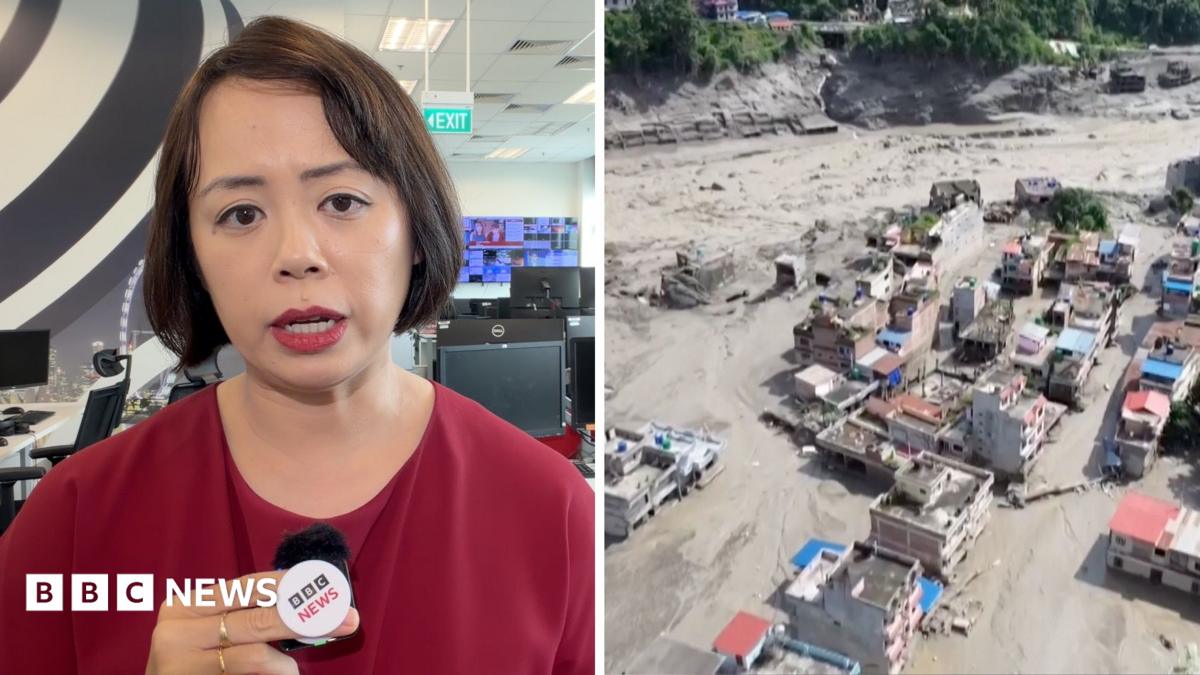
Devastating flash floods along the Nepal-Tibet border have claimed at least 270 lives, with over 800 people still missing. Experts point to a sudden glacial collapse as the primary trigger.
- At least 270 deaths confirmed and 800+ people missing in Nepal-Tibet floods.
- US Geological Survey identifies 'glacial collapse' as the primary cause.
- Rising temperatures and climate change are accelerating Himalayan glacier melt.
The border regions between Nepal and Tibet are reeling from catastrophic flash floods that have left a trail of destruction in their wake. While initial reports suggested that seismic activity or an earthquake might have triggered the deluge, new scientific evidence provides a much more complex and alarming explanation. According to the US Geological Survey (USGS), the disaster was caused by a 'glacial collapse'—a phenomenon where a glacier or a significant portion of it disintegrates suddenly.
The human cost of this disaster is staggering. Official reports confirm that at least 270 individuals have perished, and the search for more than 800 missing persons continues amidst difficult terrain and ongoing instability. The sudden release of water and debris from the collapsing glacier created a powerful surge that overwhelmed downstream communities, destroying homes, infrastructure, and livelihoods.
Why This Matters
BozokMedia analysis shows that this event is a stark manifestation of the escalating climate crisis in high-altitude regions. The Himalayas, often referred to as the 'Third Pole,' are experiencing unprecedented warming, making the region highly susceptible to sudden geological and hydrological shifts.
The sudden disintegration of glaciers is a direct consequence of an increasingly unstable Himalayan cryosphere.
While the exact trigger for this specific glacial collapse remains under investigation, the scientific community is sounding the alarm. Scientists warn that climate change and rising global temperatures are causing Himalayan glaciers to melt at an unprecedented and accelerating rate. This melting creates instability within the glacial structures, making them prone to sudden, catastrophic collapses.
Historical Background
The Himalayan region has a history of Glacial Lake Outburst Floods (GLOFs), which have periodically caused devastation in Nepal, India, and Bhutan. However, the frequency and intensity of these events have increased significantly in recent decades, linked directly to the global warming trend that is destabilizing mountain ecosystems worldwide.
Frequently Asked Questions
1. What caused the sudden flooding in Nepal and Tibet?
The US Geological Survey suggests a glacial collapse was the primary trigger for the flash floods.
2. Is climate change related to this disaster?
Yes, scientists indicate that rising temperatures are causing glaciers to melt faster, increasing the risk of such collapses.