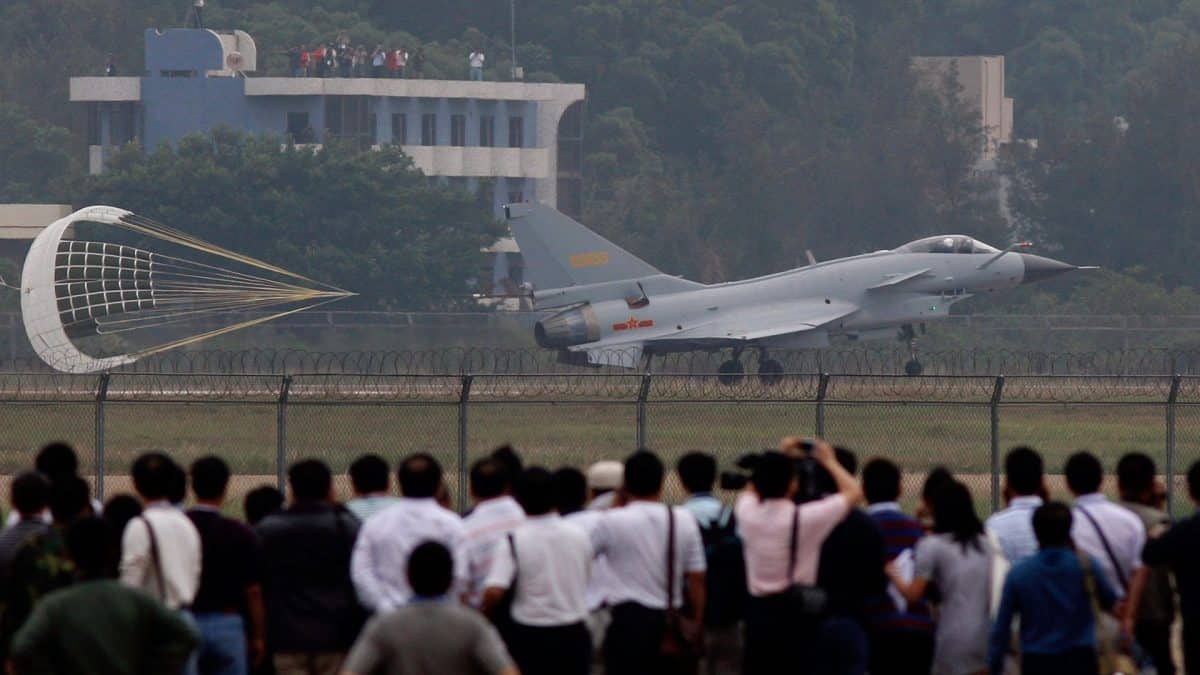
Bangladesh has announced plans to purchase Chinese-made J-10 fighter jets, citing their performance against India's Rafale fighters during Operation Sindoor. The decision marks a major shift in Dhaka's defense procurement policy following the 2024 political transition.
- Bangladesh to purchase Chinese Chengdu J-10 fighter jets.
- Dhaka cites J-10's performance against Indian Rafale jets during Operation Sindoor.
- The deal represents a major pivot in Bangladesh's defense strategy post-Sheikh Hasina's ouster.
Bangladesh is set to purchase Chinese-made J-10 fighter jets, with the country's leadership citing the aircraft's performance against the Indian Air Force's Rafale during Operation Sindoor as a primary reason. Zahed Ur Rahman, an adviser to Prime Minister Tarique Rahman, confirmed the decision, highlighting a significant shift in Dhaka's defense procurement and geopolitical alignment.
"When India and Pakistan were at war, India’s Dassault Rafale was downed, and it was done by the Chinese J-10. This information is now established," Rahman stated, according to local reports. He further emphasized that the Chinese fighter is significantly cheaper than comparable European jets, such as the Eurofighter Typhoon and the French Rafale, making it a highly cost-effective choice.
Negotiations between Bangladesh and China have reportedly advanced, and a draft agreement has already been prepared. The government plans to proceed with the acquisition this year, contingent upon adequate budget allocations; otherwise, the deal will be deferred to the next fiscal year. The J-10 is a single-engine, multirole 4.5-generation fighter aircraft manufactured by Chengdu Aircraft Industry Group.
Why This Matters
BozokMedia analysis shows that this acquisition signifies a profound shift in South Asian geopolitics. By opting for Chinese military hardware, Bangladesh is distancing itself from India's sphere of influence and aligning closer with Beijing and Islamabad's defense ecosystem. This defense pivot reflects the new regime's effort to establish an independent foreign and defense policy after the political transition of 2024.
"The acquisition of the J-10 by Bangladesh is not just a modernization effort, but a calculated geopolitical statement signaling Dhaka's defense autonomy post-2024."
| Feature | J-10CE (China) | Dassault Rafale (France) |
|---|---|---|
| Engine Type | Single-engine | Twin-engine |
| Generation | 4.5 Gen | 4.5 Gen |
| Cost | Affordable / Low | Very High |
During the Operation Sindoor conflict, Pakistan claimed its J-10CE fleet successfully downed multiple Indian aircraft, including three Rafales. While India confirmed losing multiple aircraft during the conflict, it rejected the claim of losing six jets and did not specify the types of aircraft lost. Reports suggest that the Indian losses were primarily due to a miscalculation of the range of the Chinese-made PL-15 missiles fired by the J-10s, which operate at a range of 200 km rather than the assumed 150 km.
In addition to the fighter jets, Bangladesh also plans to acquire attack helicopters, VIP transport helicopters, and unmanned aerial vehicles (drones) as part of a comprehensive military modernization program. Rahman described the ouster of former Prime Minister Sheikh Hasina in 2024 as Bangladesh's "second independence," stating that such a defense deal with China would have been impossible under the previous administration.
Frequently Asked Questions
Q1: Why did Bangladesh choose the Chinese J-10 over European fighters?
A1: Bangladesh cited both the cost-effectiveness of the J-10 compared to Rafale and Typhoon, and its operational performance during Operation Sindoor.
Q2: What is Operation Sindoor?
A2: Operation Sindoor was a military conflict between India and Pakistan where Pakistan fielded J-10CE fighters against Indian Rafale jets.