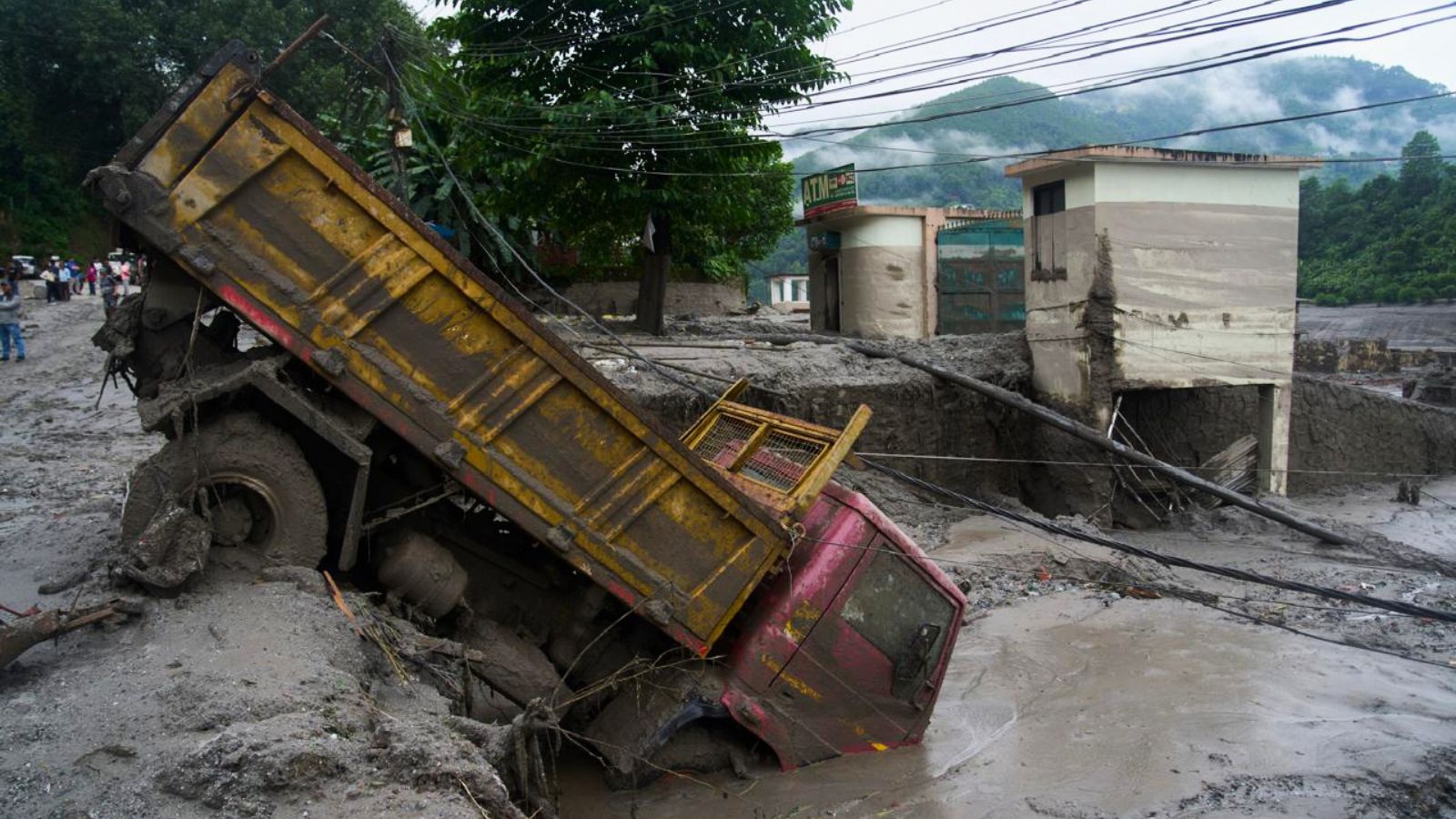
A catastrophic barrier lake formed by recent flash floods in Nepal's Rasuwa district is nearing a breach, raising fears of fresh flooding across the Nepal-China border. The disaster has already claimed 475 lives.
- Embankment of a barrier lake in Rasuwa, Nepal, is at risk of breaching.
- The disaster was triggered by a massive glacial collapse near Langtang Lirung peak.
- Confirmed death toll has reached 475, with over 550 missing in Tibet.
- Nepal Army rescued 900 people, including 92 Indian nationals.
The humanitarian crisis in Nepal has escalated following reports that the embankment of a barrier lake, formed from debris during recent flash floods, is under extreme pressure. Located near the Nepal-China border in the Rasuwa district, the rising water levels have prompted urgent warnings from both Nepali and Chinese authorities.
The lake was created following a massive mudslide and glacial collapse on Wednesday. Chinese authorities had previously issued warnings that a breach in this embankment could trigger devastating new floods in the region. Currently, the lake holds approximately 2 million cubic metres of water, with an additional 3 million cubic metres expected to flow in within the next three days.
Why This Matters
BozokMedia analysis shows that the instability of these barrier lakes represents a significant geological threat to the Himalayan corridor. As glacial melting accelerates due to global warming, the frequency of such 'sudden-onset' disasters is increasing, complicating international rescue coordination.
The seismic shockwave from the initial collapse, equivalent to a 5.2 magnitude earthquake, underscores the immense kinetic energy released during Himalayan glacial failures.
The catastrophe was triggered by a massive glacial collapse near the Langtang Lirung peak. This event sent a colossal section of ice and rock crashing down the valley, generating a powerful seismic shockwave. The scale of destruction is immense, with confirmed fatalities reaching 475, while more than 550 people remain missing on the Tibetan side of the border.
Historical Background
This disaster bears chilling similarities to the 2021 Chamoli disaster in India, where a glacial burst led to widespread destruction. However, the formation of large barrier lakes in high-altitude debris fields poses a unique, ongoing threat, as these natural dams are often structurally unstable and prone to sudden failure.
Rescue operations have faced significant hurdles. Due to the imminent risk of a breach, China temporarily paused rescue efforts in Tibet to prevent further landslides. Similarly, in Nepal, operations were halted for critical periods as residents scrambled to higher ground. Despite the inclement weather, the Nepal Army has successfully evacuated 900 individuals from the hardest-hit districts of Rasuwa and Nuwakot, including 92 Indian tourists and pilgrims.
Frequently Asked Questions
Question 1: What caused the flash floods in Nepal?
Answer: The floods were triggered by a massive glacial collapse and ice avalanche near the Langtang Lirung peak.
Question 2: Are there foreign nationals affected?
Answer: Yes, among the 900 people rescued, 92 were Indian nationals and 27 were from other countries.

