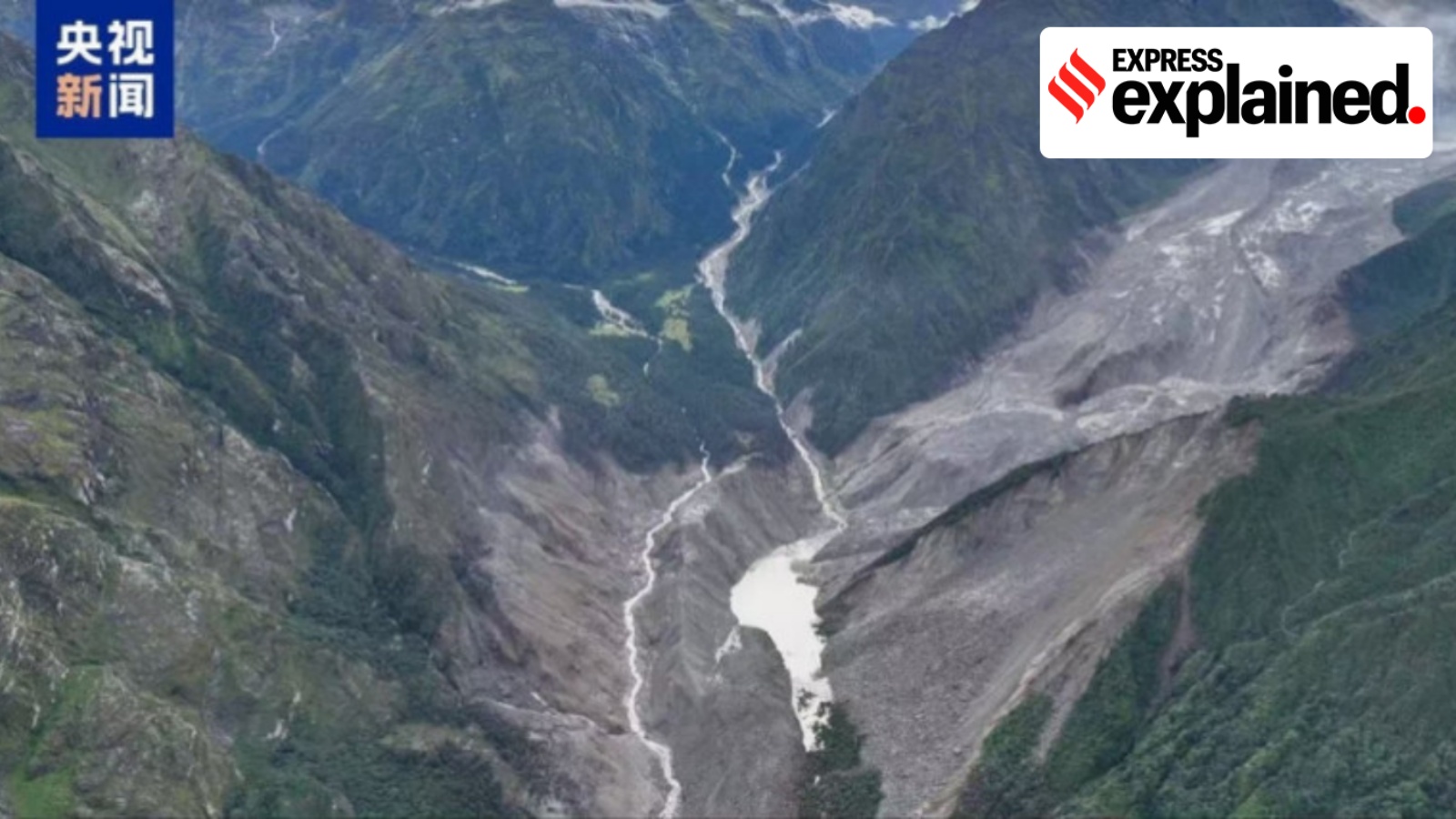
A significant barrier lake formed near the Nepal-Tibet border has breached, raising fears of catastrophic downstream flooding. Learn the science behind landslide lakes and why they pose a deadly threat to the Himalayan region.
- A significant barrier lake formed on the Tibetan side has breached, threatening Nepal with a second wave of devastating floods.
- Barrier lakes (landslide lakes) are created when landslide debris completely blocks a river's course.
- A breach can trigger a Landslide Lake Outburst Flood (LLOF), which is extremely destructive.
- Historical data shows these disasters can cause massive loss of life and cross-border damage reaching thousands of kilometers downstream.
As Nepal continues to struggle with the aftermath of recent floods that claimed hundreds of lives, a fresh and even more terrifying threat has emerged. A "significant barrier lake" formed on the Tibetan side has reportedly breached its banks. According to Chinese state media, this lake was likely created by a glacial collapse that caused an ice-and-rock debris blockage at the confluence of the Chhochen and Purepu Tsangpo rivers.
The Nepal Police issued an urgent warning, confirming that the water barrier on the Tibetan side has breached. With an estimated volume of 2 million cubic metres—and an additional 3 million cubic metres expected to flow in—the risk of a catastrophic release of water was exceptionally high.
What is a Barrier Lake?
While often referred to by authorities as a barrier lake, scientists more commonly call it a landslide dam or lake. As per the US Geological Survey (USGS), these form in river valleys when landslides, triggered by earthquakes or heavy rainfall, deposit debris that completely obstructs a stream or river.
These temporary lakes accumulate massive amounts of water without an outlet. If the pressure becomes too great, the dam can fail, leading to a Landslide Lake Outburst Flood (LLOF). This is similar to a Glacial Lake Outburst Flood (GLOF) but is triggered by landslide material rather than glacial moraines.
Why This Matters
BozokMedia analysis shows that the Himalayan terrain, characterized by steep mountains and narrow valleys, is highly susceptible to these events. The unpredictable nature of LLOFs makes them one of the most dangerous natural hazards in the region.
The breach of a landslide dam is a geological time bomb that can devastate entire river basins in a matter of hours.
The scale of destruction can be unprecedented. In 1786, a massive LLOF in China's Sichuan Province traveled 1,400 km downstream, resulting in an estimated 100,000 deaths. Such events are not contained by political borders.
In the context of South Asia, the 2000 Yigong landslide in Tibet created a dam that, upon breaching, sent catastrophic floods through 500 km of Arunachal Pradesh in India, leaving 50,000 people homeless. Similarly, the Satluj and Spiti rivers in Himachal Pradesh have faced significant damage from such cross-border disasters in the past.
Frequently Asked Questions
1. How does an LLOF differ from a GLOF?
An LLOF is caused by landslide debris blocking a river, whereas a GLOF is caused by the melting of glaciers or the failure of moraine dams.
2. Can these floods affect India?
Yes, because major Himalayan rivers flow through Tibet, Nepal, and eventually into India, a breach in the upper reaches can cause massive flooding in Indian states like Assam, Arunachal Pradesh, and Himachal Pradesh.

