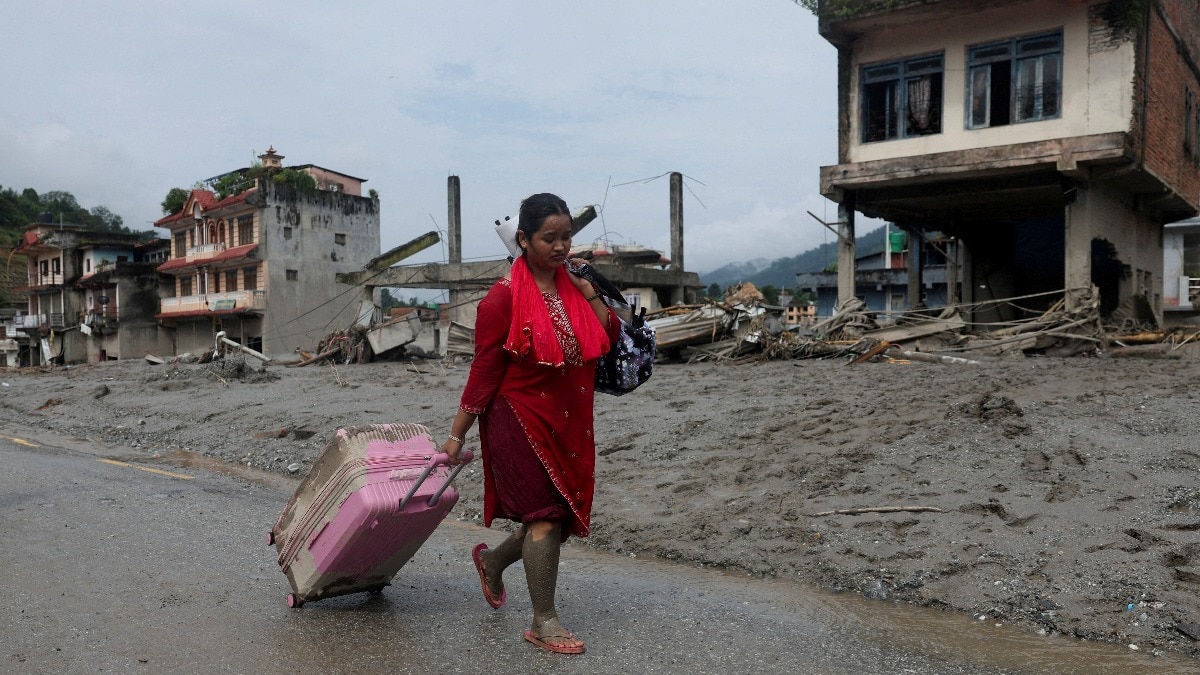
Finance Minister Swarnim Wagle warns that Nepal requires between $4 billion and $5 billion to rebuild following catastrophic floods triggered by a glacier collapse.
- Glacier collapse killed over 600 people in Nepal and Tibet.
- Reconstruction costs estimated at $4-$5 billion (10% of GDP).
- Major damage to hydropower infrastructure and border towns.
Nepal's Finance Minister, Swarnim Wagle, announced on Saturday that the country may require between $4 billion and $5 billion to rebuild following this week's catastrophic flooding. This staggering figure represents approximately one-tenth of Nepal's entire economy.
The disaster was triggered on Wednesday when a massive glacier collapse unleashed a torrent of rock, ice, mud, and debris through the Himalayan river systems. The resulting flash floods and mudslides have claimed more than 600 lives across Nepal and China's Tibet region, with over 2,000 individuals still reported missing.
Scale of Destruction
The floods have leveled entire towns in border areas, sweeping away critical bridges and road networks. Perhaps most significantly for the nation's economy, major hydropower stations have sustained heavy damage. Since hydropower accounts for more than 12% of Nepal's national generating capacity, this loss poses a direct threat to the country's energy security and economic stability.
The initial estimate of $4-$5 billion is a preliminary figure as the government continues to assess the full extent of loss and damage.
Why This Matters: BozokMedia Analysis
BozokMedia analysis shows that this disaster hits Nepal at its most vulnerable points: tourism, remittances, and energy. The destruction of hydropower assets isn't just a logistical issue; it is a systemic economic blow that could hamper industrial growth and increase reliance on imported energy for the foreseeable future.
Historical Context: 2015 vs. 2026
While the current reconstruction bill is estimated to be lower than the 2015 magnitude-7.8 earthquake—which cost roughly $9 billion and killed nearly 9,000 people—the impact of the current floods is uniquely tied to the country's climate vulnerability and its reliance on river-based energy.
| Feature | 2015 Earthquake | 2026 Floods (Est.) |
|---|---|---|
| Estimated Cost | $9 Billion | $4-$5 Billion |
| Casualties | ~9,000 | 600+ (2,000+ missing) |
| Primary Impact | Housing & Infrastructure | Hydropower & River Systems |
Frequently Asked Questions
Question 1: How many people are still missing?
Answer: More than 2,000 people remain unaccounted for following the floods.
Question 2: Why is the hydropower sector so important here?
Answer: Hydropower accounts for over 12% of Nepal's generating capacity and is a key driver of its economy.

