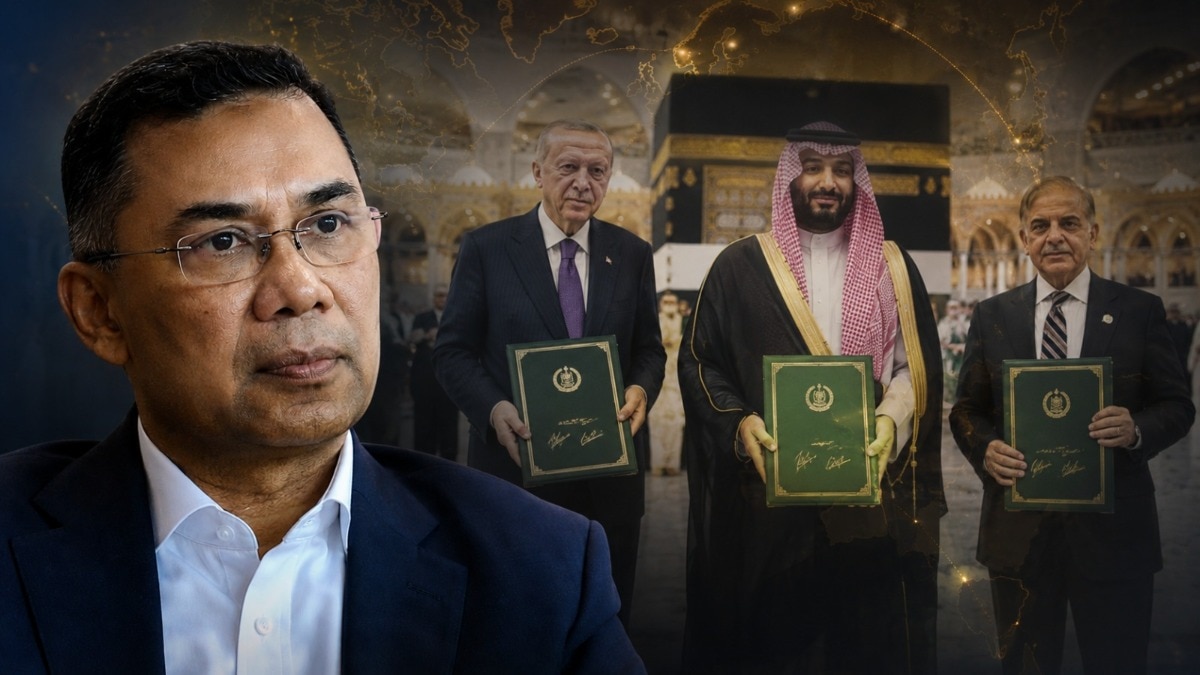
Bangladesh has signaled its willingness to join the Mecca Joint Defence Agreement if invited, asserting that such a move will not compromise its existing international partnerships.
- Bangladesh is considering joining the Mecca Joint Defence Agreement.
- The pact was signed by Saudi Arabia, Turkey, and Pakistan on August 7.
- Dhaka maintains that this move will not limit its engagement with other global partners.
- Foreign Minister Khalilur Rahman described the pact as an internal 'Muslim family' matter.
DHAKA, BANGLADESH: In a significant diplomatic development, the government of Bangladesh has announced that it would positively consider joining the Mecca Joint Defence Agreement if formally invited. The statement, made by State Minister for Foreign Affairs Humaiun Kobir, suggests a potential shift in the nation's long-standing foreign policy doctrine.
Speaking at a media briefing following discussions with the Saudi Ambassador, Kobir emphasized that Bangladesh's approach to security remains integrated and flexible. He noted that entering a specific security sphere does not preclude the nation from contributing to other international alliances. "We will balance our international relations," Kobir asserted, aiming to reassure global partners, including India, of Dhaka's continued neutrality in other spheres.
Why This Matters
BozokMedia analysis shows that Bangladesh's potential entry into a collective defense pact represents a departure from its traditional policy of strict non-alignment. The Mecca Pact, signed by Saudi Arabia, Turkey, and Pakistan, operates on a collective security principle: an attack on one is an attack on all. This could fundamentally alter the strategic landscape of South and West Asia, potentially involving Bangladesh in regional conflicts that were previously outside its direct scope.
"The Mecca Pact offers strategic depth to its members, but for a country like Bangladesh, it carries the risk of entanglement in non-local military confrontations."
The agreement was forged on August 7 at the Al-Safa Palace in Mecca, amidst escalating tensions in West Asia. The tripartite alliance aims to strengthen collective deterrence against aggression. While Bangladesh's Foreign Minister Khalilur Rahman dismissed external concerns by calling the pact an internal matter of the "Muslim family," the geopolitical implications are far-reaching.
Historical Background
For decades, Bangladesh has navigated the complexities of global politics by maintaining a balanced stance, often avoiding formal military alliances to preserve its sovereignty and economic interests. However, under the current administration, there is a visible push toward a more assertive foreign policy, characterized by Prime Minister Tarique Rahman's leadership, which seeks to move away from what officials term a "subservient" past.
In New Delhi, the Indian External Affairs Ministry has stated it is closely monitoring all developments that impact its security. Experts suggest that if Bangladesh joins a bloc involving Pakistan and Turkey, it could complicate the bilateral relationship between India and Bangladesh.
| Feature | Traditional Policy | Proposed Mecca Pact Alignment |
|---|---|---|
| Primary Doctrine | Non-alignment | Collective Defense |
| Security Focus | Bilateral/Regional | Multilateral/Trans-regional |
| Risk Profile | Low military entanglement | Potential for collective conflict |
As discussions progress with bilateral partners, the world watches to see if Dhaka will prioritize its traditional neutrality or embrace a new era of strategic military integration.
Frequently Asked Questions
1. What is the core principle of the Mecca Joint Defence Agreement?
The agreement is a collective security pact where an armed attack against one member is treated as an attack against all signatories.
2. How has India responded to this potential move?
India's External Affairs Ministry has stated that it is closely following all developments that bear upon its national security.