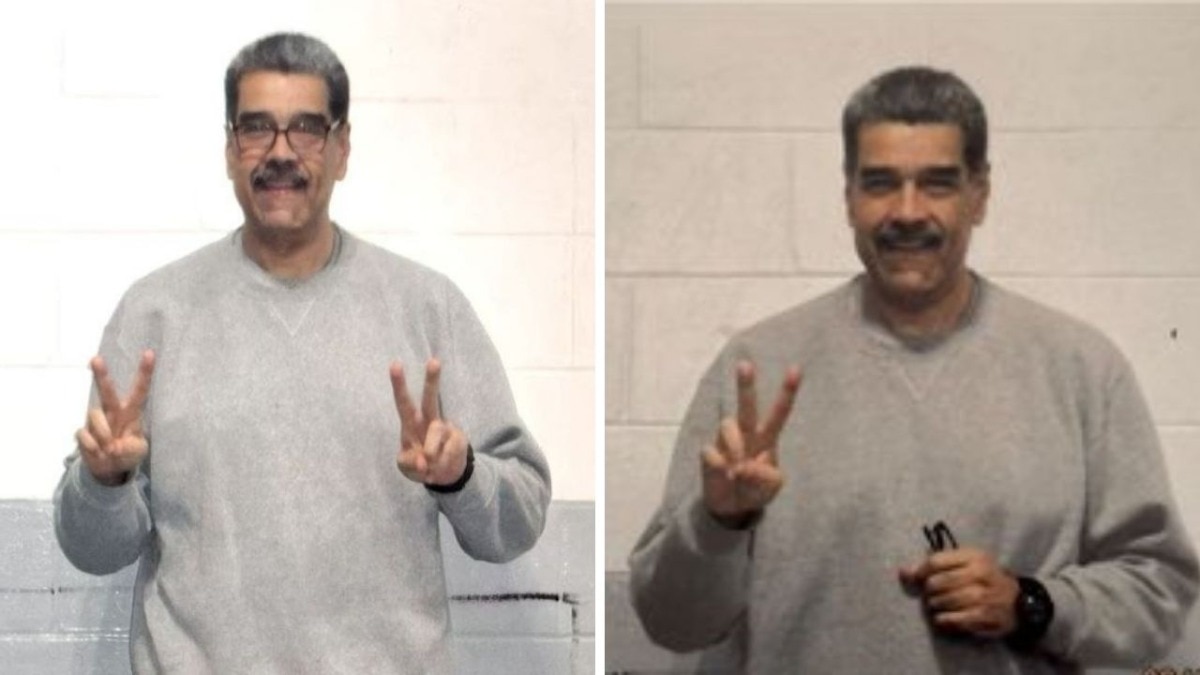
Former Venezuelan President Nicolas Maduro has released photos from a Brooklyn jail, declaring his resolve while his successor Delcy Rodriguez finalizes a landmark oil agreement with the Trump administration.
- Nicolas Maduro released photos from a Brooklyn prison, appearing significantly thinner.
- Interim President Delcy Rodriguez is advancing a massive oil deal with the Trump administration.
- The deal aims to use Venezuelan crude to replenish the US Strategic Petroleum Reserve (SPR).
- The agreement spans 25 years and targets 17 strategic oil fields.
Former Venezuelan President Nicolas Maduro has sent a defiant message from his confinement in a Brooklyn, New York, jail. Sharing photographs from prison, Maduro declared that he is "standing firm" even as his successor, interim President Delcy Rodriguez, moves to solidify a historic oil partnership with the Donald Trump administration.
The photographs, showing Maduro in a grey tracksuit making peace signs, reveal a leader who appears to have lost considerable weight since his capture in January. Maduro and his wife, Cilia Flores, were taken into US custody during a military operation in Caracas and currently face charges of drug trafficking and firearms possession—charges they vehemently deny.
Why This Matters
BozokMedia analysis shows that this development represents a seismic shift in Western Hemisphere geopolitics. While the former regime's leader remains incarcerated, the practical governance of Venezuela is pivoting toward a pragmatic, energy-focused alignment with Washington to prevent total economic collapse.
The intersection of Maduro's personal legal struggle and Venezuela's strategic oil pivot creates a volatile new era for US-Latin American relations.
The timing of Maduro's message coincides with President Trump's announcement of a major energy arrangement. Trump described the incoming Venezuelan crude as a "Gift from Venezuela to the People of the United States," noting it will be used to replenish the US Strategic Petroleum Reserve (SPR), which has hit its lowest levels since 1982.
The Architecture of the Oil Deal
Under the framework announced by Rodriguez, the United States is set to gain majority control over more than 65 billion barrels of Venezuela's proven oil reserves through partnerships with private entities. This is not merely a trade agreement but a long-term structural integration of Venezuela's energy sector into the US economic sphere.
| Agreement Feature | Details |
|---|---|
| Duration | 25 Years |
| Strategic Fields | 17 Oil Fields |
| Production Target | 1.5 Million Barrels/Day |
| Primary US Objective | Replenishing Strategic Petroleum Reserve |
While the US gains significant oversight, Rodriguez has emphasized that Venezuela will retain sovereignty over its natural resources. The deal is expected to involve major players like Chevron, helping to rebuild an industry currently crippled by years of underinvestment and sanctions.
Frequently Asked Questions
1. Why is Nicolas Maduro in a US prison?
He is being held in Brooklyn on charges of drug trafficking and firearms possession following a US military operation.
2. How will the oil deal benefit the United States?
The deal will allow the US to use Venezuelan crude to refill the Strategic Petroleum Reserve, enhancing national energy security.