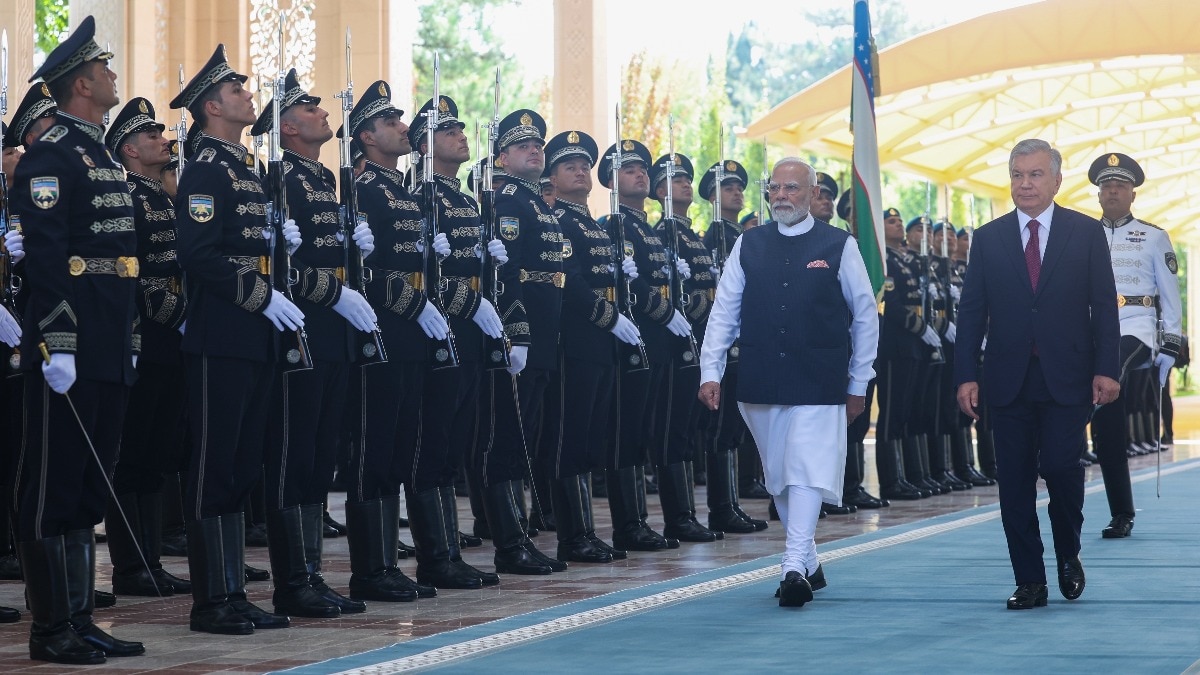
Prime Minister Narendra Modi and President Shavkat Mirziyoyev have upgraded bilateral relations to a Comprehensive Strategic Partnership, focusing on long-term uranium supply and defense co-development.
- India and Uzbekistan upgraded ties to a 'Comprehensive Strategic Partnership'.
- Agreement reached to establish long-term uranium supply for India's nuclear energy.
- Target set to increase bilateral trade from $1 billion to $5 billion by 2030.
- Emphasis on defense co-production and zero tolerance toward terrorism.
In a landmark diplomatic move, India and Uzbekistan have officially elevated their bilateral relationship to a Comprehensive Strategic Partnership. This announcement was made by Prime Minister Narendra Modi following high-level discussions with Uzbek President Shavkat Mirziyoyev in Tashkent, marking the 15th anniversary of their strategic cooperation.
Energy Security: The Uranium Factor
A cornerstone of this upgraded partnership is the energy sector. As India seeks to expand its civilian nuclear power capacity, both nations are working toward a structured, long-term arrangement for the supply of uranium from Uzbekistan. This move is critical for India's transition toward clean energy and reducing dependency on a limited number of suppliers.
The strategic alignment on nuclear fuel ensures that India's energy transition remains resilient against global supply chain disruptions.
Defense and Counter-Terrorism
Beyond energy, the partnership extends deep into the security domain. PM Modi highlighted that the two nations will move toward co-production and co-development within their respective defense industries. Furthermore, both leaders reaffirmed a shared policy of zero tolerance toward terrorism, extremism, and separatism, viewing these as existential threats to regional stability in Central Asia.
Economic Ambitions and Trade Targets
BozokMedia analysis shows that the economic roadmap is equally ambitious. While current bilateral trade has crossed the $1 billion mark, the new framework sets a target to reach $5 billion by 2030. To facilitate this, a Coordination Council led by foreign ministers will be established to streamline market access, banking, and digital payment systems.
Historical Background
The relationship between India and Uzbekistan has evolved from simple trade to a deep-seated strategic alliance. Uzbekistan, often described as being at the 'heart of Central Asia,' serves as a vital gateway for India's engagement with the broader Eurasian region through initiatives like the International North-South Transport Corridor (INSTC).
Why This Matters
This elevation is not merely symbolic. By securing uranium and fostering defense ties, India is effectively anchoring itself in Central Asia. This partnership provides a strategic counterweight in the region and ensures that India's 'Viksit Bharat 2047' vision is supported by stable energy and security corridors.
Frequently Asked Questions
1. What is the primary focus of the new India-Uzbekistan partnership?
The partnership focuses on energy (uranium supply), defense co-development, trade expansion, and counter-terrorism cooperation.
2. How much trade do the two nations aim to achieve by 2030?
The two countries aim to increase their bilateral trade from the current $1 billion to $5 billion by the year 2030.