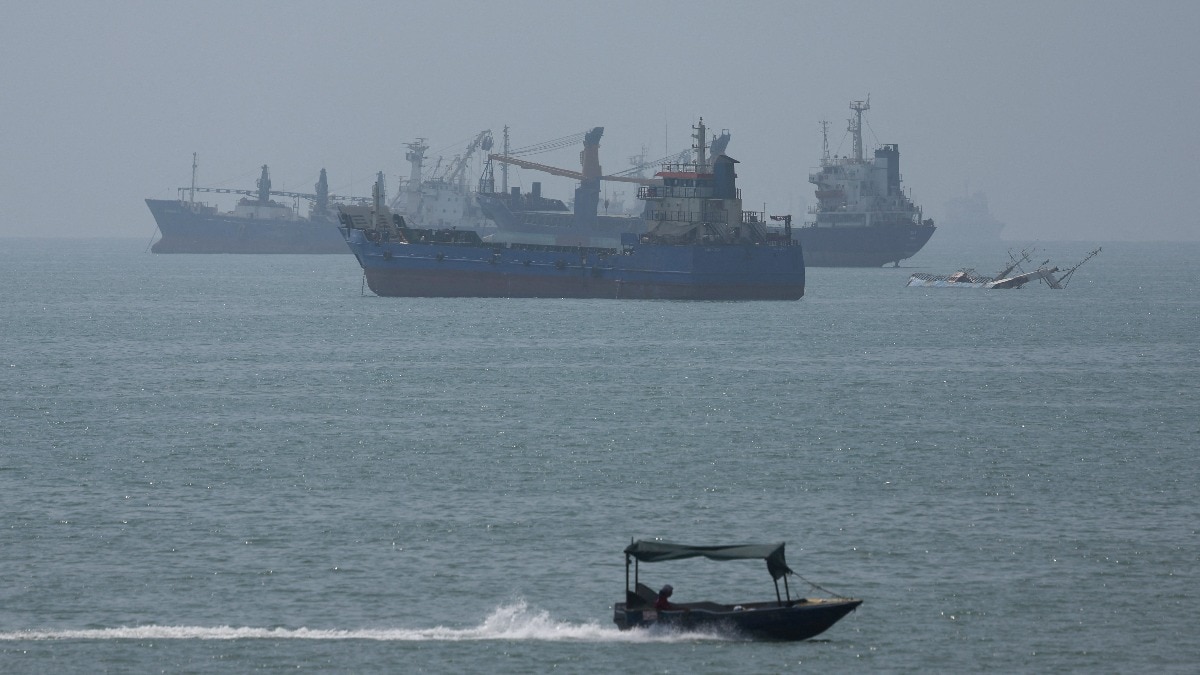
US forces launched targeted strikes on Iran's Larak Island to prevent the deployment of sea mines in the Strait of Hormuz. The Islamic Revolutionary Guard Corps (IRGC) has responded with threats of severe military and economic retaliation.
- US forces targeted two Iranian rocket launchers on Larak Island.
- The strike aimed to preempt the deployment of sea mines in the strategic Strait of Hormuz.
- Iran's IRGC has vowed to punish the 'aggressor' on both military and economic fronts.
- The Strait of Hormuz remains a critical global choke point for oil and gas shipments.
A major escalation in Middle Eastern tensions has erupted as American military forces conducted precision strikes on Larak Island, an Iranian territory. The operation was triggered by intelligence indicating that the Islamic Revolutionary Guard Corps (IRGC) was preparing to launch rockets carrying sea mines into the Strait of Hormuz, a vital maritime artery for global commerce.
According to reports from Axios and Reuters, the US strike specifically targeted two Iranian launchers. This move follows a direct warning from President Donald Trump, who emphasized a 'Zero Tolerance' policy regarding any attempts to obstruct shipping lanes with mines. The administration has signaled that any vessel involved in such activities would be 'immediately and systematically destroyed.'
Why This Matters
BozokMedia analysis shows that this strike represents a significant shift from financial sanctions toward direct kinetic military action. The Strait of Hormuz is a massive geopolitical lever; approximately one-fifth of the world's oil and liquefied natural gas passes through this narrow waterway. Any disruption here doesn't just affect regional stability—it threatens to trigger a global energy crisis and massive economic volatility.
The prevention of mine placement in the Strait of Hormuz is not just a regional security issue, but a direct defense of the global energy supply chain.
Tehran has reacted with fury. Iranian state media, including IRIB and the Tasnim News Agency, reported that the strike resulted in casualties among both military personnel and civilians. The IRGC has officially stated that the attack will be answered by the 'sons of Iran,' promising retaliation that will impact the United States on both economic and military fronts.
Historical Context: The Strategic Importance of Larak
Larak Island, spanning roughly 49 square kilometers, occupies a position of immense strategic value. Located near the coast of Bandar Abbas, it serves as a sentinel over the shipping lanes of the Strait of Hormuz. For decades, the island has hosted critical military installations and missile sites, making it a primary target in any high-stakes confrontation between Western powers and Iran.
| Feature | Strait of Hormuz | Larak Island |
|---|---|---|
| Primary Function | Global Oil Transit Route | Military Base/Strategic Lookout |
| Strategic Risk | Mine deployment/Blockade | Target for airstrikes |
| Global Impact | Extremely High (Energy Prices) | High (Regional Conflict Escalation) |
Frequently Asked Questions
1. Why did the US target Larak Island specifically?
The US targeted the island because it identified IRGC forces preparing to launch sea mines into the Strait of Hormuz from launchers located there.
2. What are the potential consequences of this strike?
The primary risks include a direct military confrontation between the US and Iran, and a sudden spike in global oil prices due to fears of shipping disruptions.


