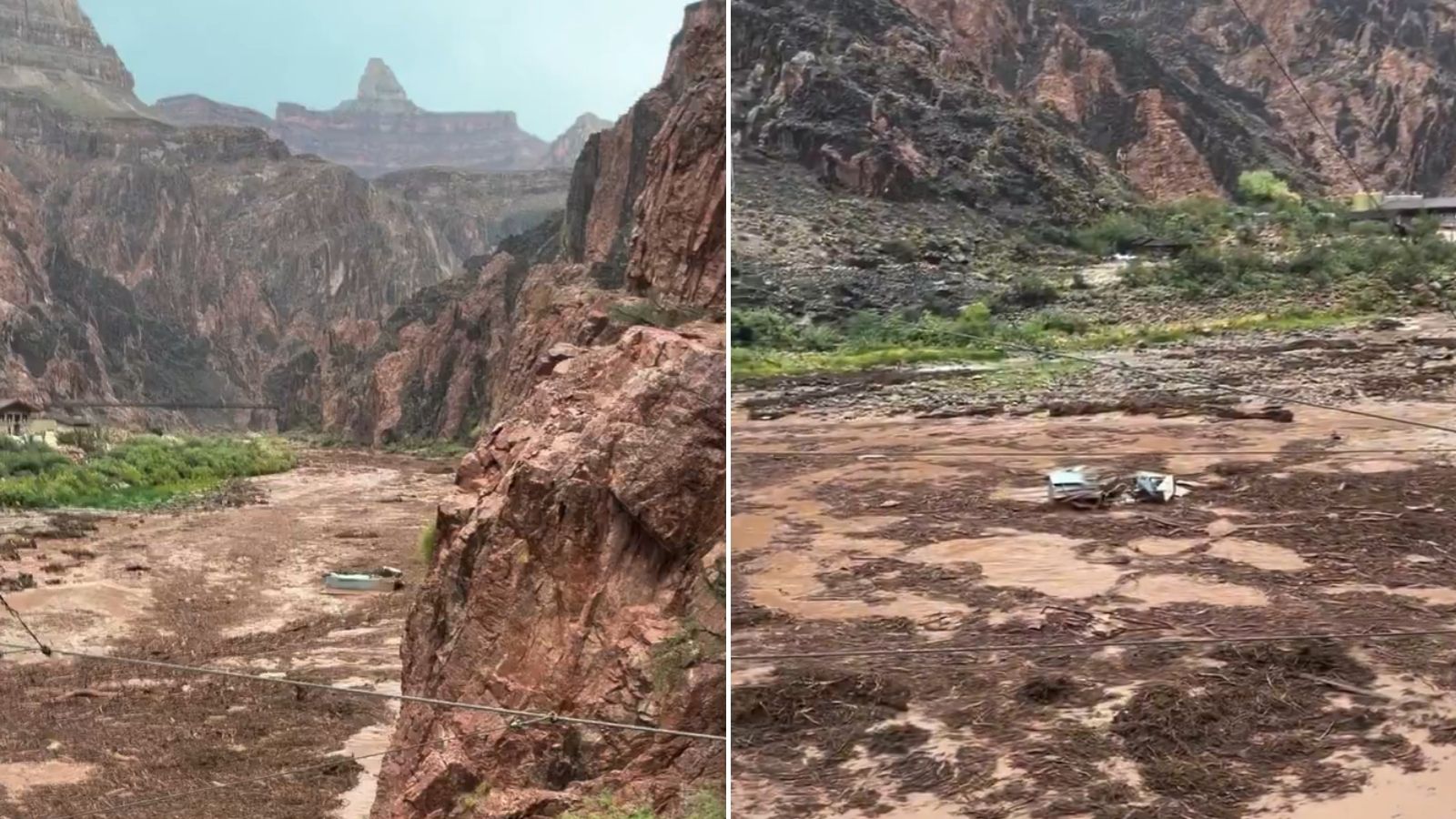
A devastating flash flood at the Grand Canyon National Park has left at least 15 people missing and forced the evacuation of over 60 tourists. The sudden deluge swept heavy debris into the Colorado River and destroyed critical infrastructure, including the park's primary water pipeline.
- A powerful flash flood hit Bright Angel Creek in Grand Canyon National Park, leaving 15 people missing.
- Over 60 tourists were successfully evacuated, but overnight stays have been banned due to destroyed infrastructure.
- The flood completely severed the sole water pipeline supplying residents and visitors in the park.
A catastrophic flash flood struck the iconic Grand Canyon National Park in the United States on Saturday afternoon, causing widespread destruction and leaving approximately 15 people unaccounted for. The deluge originated in Bright Angel Creek, sweeping massive boulders, metal structures, and heavy debris directly into the Colorado River.
According to reports from the Associated Press, the National Park Service (NPS) is actively seeking information on the missing individuals. Emergency response teams acted swiftly to evacuate more than 60 stranded tourists from the affected zones. Videos circulating on social media captured the terrifying power of the torrents as they demolished footbridges and reshaped the canyon's landscape.
In the wake of the disaster, park officials announced an immediate ban on overnight stays at all lodges and hotels within the Grand Canyon National Park. The decision was prompted by severe damage to the park's infrastructure, specifically the destruction of the single water pipeline that supplies fresh water to both tourists and local residents.
The sheer force of the floodwaters has not only compromised human infrastructure but has also significantly altered the natural geography of the area. The creek bed of Bright Angel Creek has widened dramatically, creating new, volatile river rapids that complicate ongoing search and rescue efforts.
Historical Background
The Grand Canyon is globally renowned for its breathtaking vistas, but its unique topography also makes it highly susceptible to sudden and violent flash floods. During the late summer months, monsoonal moisture often triggers intense, localized downpours. Because the arid, rocky desert soil cannot absorb water quickly, rain immediately aggregates into fast-moving torrents that channel through narrow canyon walls, transforming dry washes into deadly rivers within minutes.
Why This Matters
BozokMedia analysis shows that extreme weather events in major national parks pose a dual threat to ecological stability and tourism economies. As global climate patterns shift, aging infrastructure in remote, ecologically sensitive locations like the Grand Canyon is increasingly vulnerable to catastrophic failure. This incident highlights the critical need for resilient engineering in public parks.
"Flash floods in narrow canyon systems are incredibly deceptive; a storm miles away can send a wall of water and debris crashing down with virtually no warning, making rapid evacuation systems a matter of life and death."
| Feature | Flash Floods (Canyons) | Riverine Floods |
|---|---|---|
| Onset Speed | Minutes to hours (extremely rapid) | Days to weeks (gradual) |
| Debris Load | High (boulders, trees, structures) | Low to moderate (silt, mud) |
| Predictability | Low (highly localized) | High (tracked via weather systems) |
Frequently Asked Questions
Q1: Why are overnight stays banned in the Grand Canyon National Park?
A1: The flash flood completely destroyed the sole water pipeline serving the park, leaving facilities without running water for drinking and sanitation.
Q2: What caused the sudden flooding in Bright Angel Creek?
A2: The flood was triggered by intense, localized monsoonal rainfall in the creek's upper catchment area, which quickly overwhelmed the dry terrain.