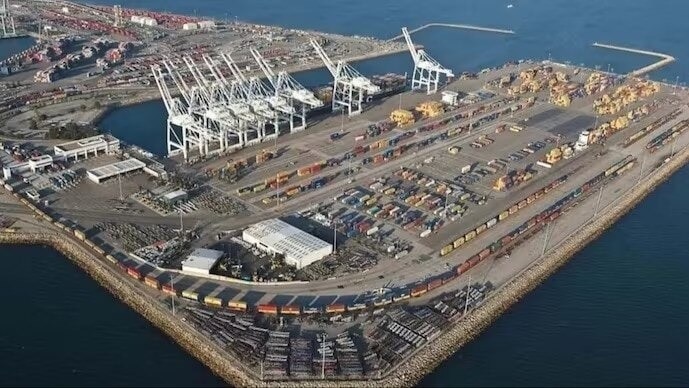
India is exploring strategic alternatives, including a temporary stake transfer, to maintain its presence at Iran's Chabahar port following the expiry of US sanctions waivers. This critical gateway remains New Delhi's primary route to Central Asia, bypassing Pakistan.
- India is seeking a 'sustainable way forward' to continue operations at Chabahar Port despite US sanctions.
- New Delhi is considering temporarily transferring its stake to an Iranian entity to avoid direct US penalties.
- The port is vital for accessing Afghanistan and Central Asia without transiting through Pakistan.
- Cargo movement at the port has surged by over 82% between 2020 and 2025.
India is currently navigating a complex diplomatic tightrope as it seeks a "sustainable way forward" to maintain its involvement in Iran's strategic Chabahar port. Foreign Secretary Vikram Misri, speaking in Bishkek, emphasized that India remains in active discussions with various stakeholders to ensure the continuity of this critical cooperation, despite the volatile geopolitical climate in West Asia.
The urgency stems from the expiry of a US sanctions waiver, which has left India's $120 million investment vulnerable. Reports suggest that New Delhi is weighing a sophisticated maneuver: temporarily transferring its stake in the project to an Iranian entity. This move would theoretically reduce India's direct exposure to US sanctions while preserving the long-term viability of the project, allowing India to return to direct operations once sanctions are eased.
Why This Matters
BozokMedia analysis shows that Chabahar is not merely a commercial venture but a geopolitical necessity. For India, the port is the only viable alternative to reach Afghanistan and Central Asia without relying on Pakistan, which has consistently denied land transit. Furthermore, Chabahar serves as a strategic counterweight to China's influence in the region, specifically the China-backed Gwadar port located just 170 km away.
The struggle for Chabahar is a microcosm of India's broader challenge: balancing its strategic autonomy in the Global South with its critical security partnership with the United States.
Historical Background and Strategic Depth
India's association with Chabahar spans over two decades, with initial talks beginning in 2003. The project gained significant momentum during Prime Minister Narendra Modi's 2016 visit to Iran. By 2024, India Ports Global Limited had solidified this commitment by signing a 10-year agreement to operate the Shahid Beheshti terminal.
Beyond regional access, the port is a linchpin of the International North-South Transport Corridor (INSTC). This multimodal network is designed to connect India to Russia and Europe, drastically reducing transit time and costs compared to the traditional Suez Canal route.
| Feature | Chabahar Port (India) | Gwadar Port (China) |
|---|---|---|
| Primary Goal | Central Asia/Afghanistan Access | CPEC/Indian Ocean Access |
| Strategic Value | Bypassing Pakistan | Direct Link to Western China |
| Connectivity | INSTC Network | Belt and Road Initiative (BRI) |
The economic viability of the port is already evident. Government data reveals a massive spike in cargo handling, jumping from 12.24 lakh tonnes in 2020-21 to 22.32 lakh tonnes in 2024-25—an increase of more than 82%. Walking away now would mean abandoning twenty years of diplomatic and financial investment.
Frequently Asked Questions
Q1: Why can't India just ignore the US sanctions?
India has deep economic and security ties with the US; violating sanctions could lead to penalties affecting other critical sectors, such as defense imports or financial trade.
Q2: What is the role of the INSTC?
The International North-South Transport Corridor is a trade network that links India to Russia and Europe via Iran, offering a faster alternative to sea routes.