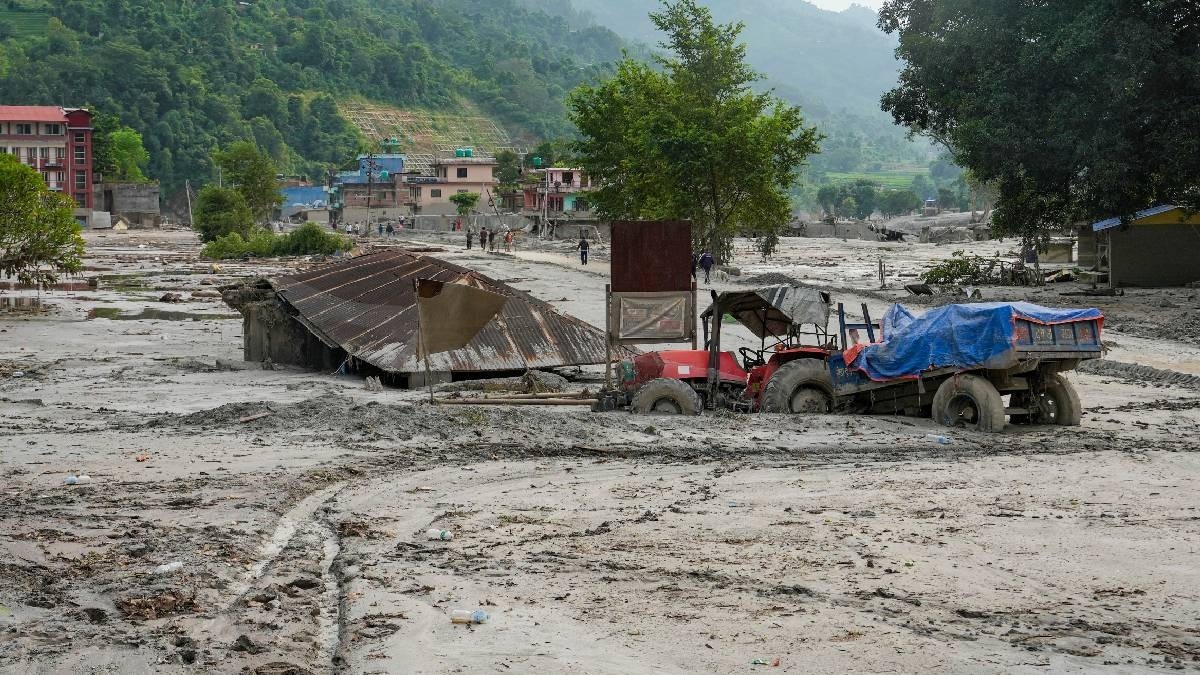
Five days after devastating floods hit Nepal, the death toll has reached 788, with over 2,500 people missing. Rescue operations continue amidst broken bridges and submerged hydropower tunnels.
- The death toll has surged to 788, while 2,500+ people remain missing.
- A critical 130-meter bridge in Gorkha district was washed away by the Trishuli River.
- International experts from India, China, and South Korea are assisting in hydropower tunnel rescues.
- Mass burials are being conducted for unidentified victims.
Five days after the catastrophic floods and landslides struck Nepal, the scale of devastation continues to grow. The official death toll has climbed to 788, and more than 2,500 individuals are reported missing. In many affected areas, the sheer volume of debris and unidentified remains has forced authorities to conduct mass funerals while attempting to preserve forensic evidence for identification.
The rescue efforts are facing immense hurdles due to rising water levels. In central Nepal, the Trishuli River surged violently, washing away the 130-meter-long Ghyalchok-Charauti bridge in the Gorkha district. This vital link to the Prithvi Highway has isolated approximately 400 families and crippled the local agricultural economy, preventing farmers from transporting milk and vegetables to markets.
Why This Matters
BozokMedia analysis shows that the destruction of critical infrastructure, such as the Ghyalchok bridge and the routes connecting to the China border, creates a secondary crisis of economic isolation and delayed humanitarian aid. This event underscores the extreme vulnerability of Himalayan infrastructure to intensified monsoon patterns.
The combination of heavy siltation and flash floods is creating a new, more dangerous pattern of disasters in the Himalayan region.
One of the most complex rescue operations is currently underway within the tunnels of various hydropower projects. In the 'Upper Trishuli-1' project in Rasuwa, the Nepalese Army is working alongside technical experts from India, China, and South Korea. Indian specialists, in particular, are navigating up to three kilometers deep into the tunnels to locate trapped workers.
In the Rasuwa district, the landscape has been fundamentally altered by thick silt and mud. While the main road connecting to the Chinese border was initially blocked, engineers have managed to reopen a 150-meter stretch for traffic to facilitate relief efforts. However, many residential buildings remain buried under debris.
Frequently Asked Questions
Question 1: How many people have been rescued so far?
Answer: According to official reports, approximately 9,435 to 9,500 people have been successfully evacuated to safer locations.
Question 2: Which countries are assisting in the rescue?
Answer: India, China, and South Korea are providing expert technical support to the Nepalese Army for specialized rescue missions.