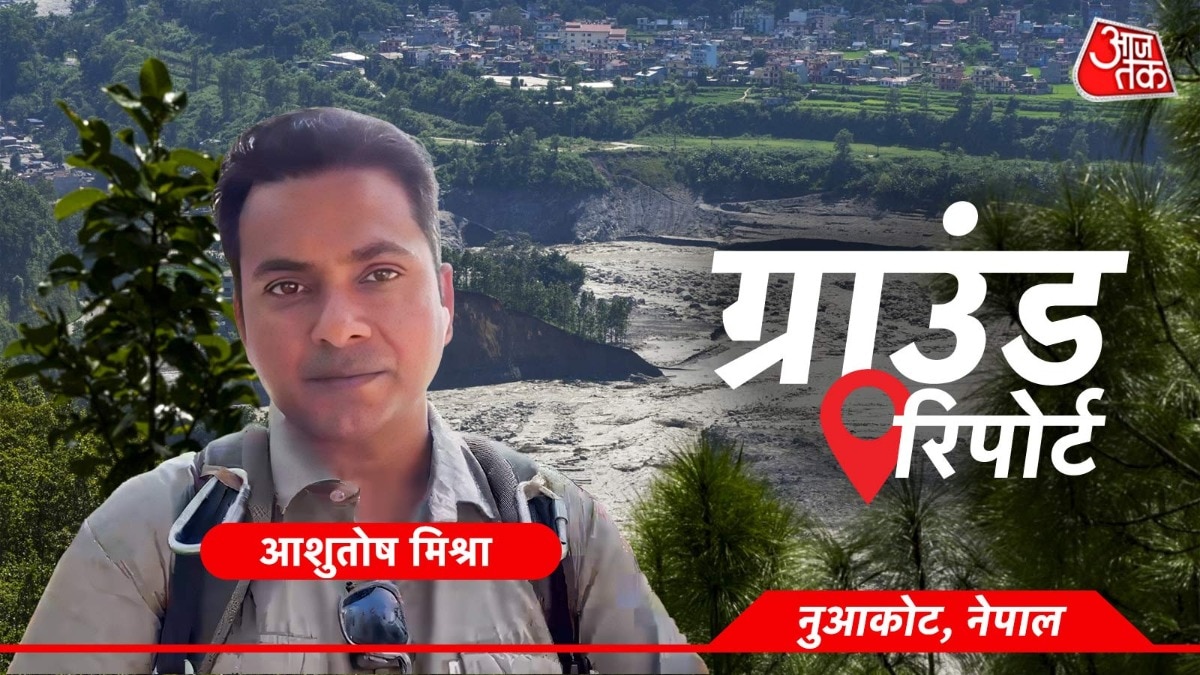
Severe flooding in Nepal's Nuwakot region has left a trail of destruction, with rescue teams recovering personal belongings and bodies from deep mud. The disaster has severed critical infrastructure and claimed hundreds of lives.
- Death toll rises across 8 districts, with Nuwakot reporting 95 fatalities.
- Critical infrastructure, including the Ghyalchok-Charaudi bridge, washed away by the Trishuli River.
- Initial reports point to snow and rock collapses near the Nepal-Tibet border as the trigger.
The ground report from Nuwakot, Nepal, paints a grim picture of total devastation. In the wake of catastrophic floods and landslides, rescue teams are navigating through thick sludge to find the missing. Amidst the rubble, the discovery of children's toys, school books, and family photographs serves as a poignant reminder of the lives shattered in an instant.
The scale of the disaster is staggering, with mud and debris reaching five to six feet high even on the second floors of houses. The Trishuli River, transformed into a torrent of boulders and debris, swept away everything in its path, leaving residents to face the Herculean task of rebuilding their lives from scratch.
Why This Matters
BozokMedia analysis shows that this is not merely a seasonal flood but a manifestation of systemic geological instability in the Himalayan belt. The collapse of rock and ice at the Nepal-Tibet border suggests that glacial lake outburst floods (GLOFs) or massive landslides are becoming more frequent. For the local agrarian economy, the loss of bridges means a complete halt in the supply chain for milk and vegetables, potentially leading to long-term economic distress.
"The increasing frequency of flash floods in the Himalayas is a direct consequence of climate-induced instability, requiring a shift toward 'resilient infrastructure' rather than traditional construction."
The impact extends beyond Nepal's borders. According to Chinese media, 16 people have died on the Chinese side, and approximately 550 people are reported missing in Tibet. Within Nepal, the districts of Chitwan (272), Nawalparasi East (207), and Nawalparasi West (151) have suffered the highest casualties.
Adding to the crisis, the Ghyalchok-Charaudi bridge in central Nepal was recently washed away by the surging Trishuli River. This 130-meter structure was the lifeline for nearly 400 families in the Gorkha district, connecting them to the Prithvi Highway. With this link severed, farmers are now unable to transport their produce to agricultural cooperatives.
| Affected District | Number of Bodies Recovered |
|---|---|
| Chitwan | 272 |
| Nawalparasi East | 207 |
| Nawalparasi West | 151 |
| Nuwakot | 95 |
| Gorkha | 62 |
Frequently Asked Questions
1. What caused the massive flooding in Nepal?
Preliminary investigations suggest that the disaster was triggered by the collapse of snow and rocks near the Nepal-Tibet border, causing a sudden surge of water and debris.
2. How has the destruction of bridges affected the local population?
The loss of key bridges has isolated hundreds of families and blocked the only viable routes for farmers to bring their milk and vegetables to the market.