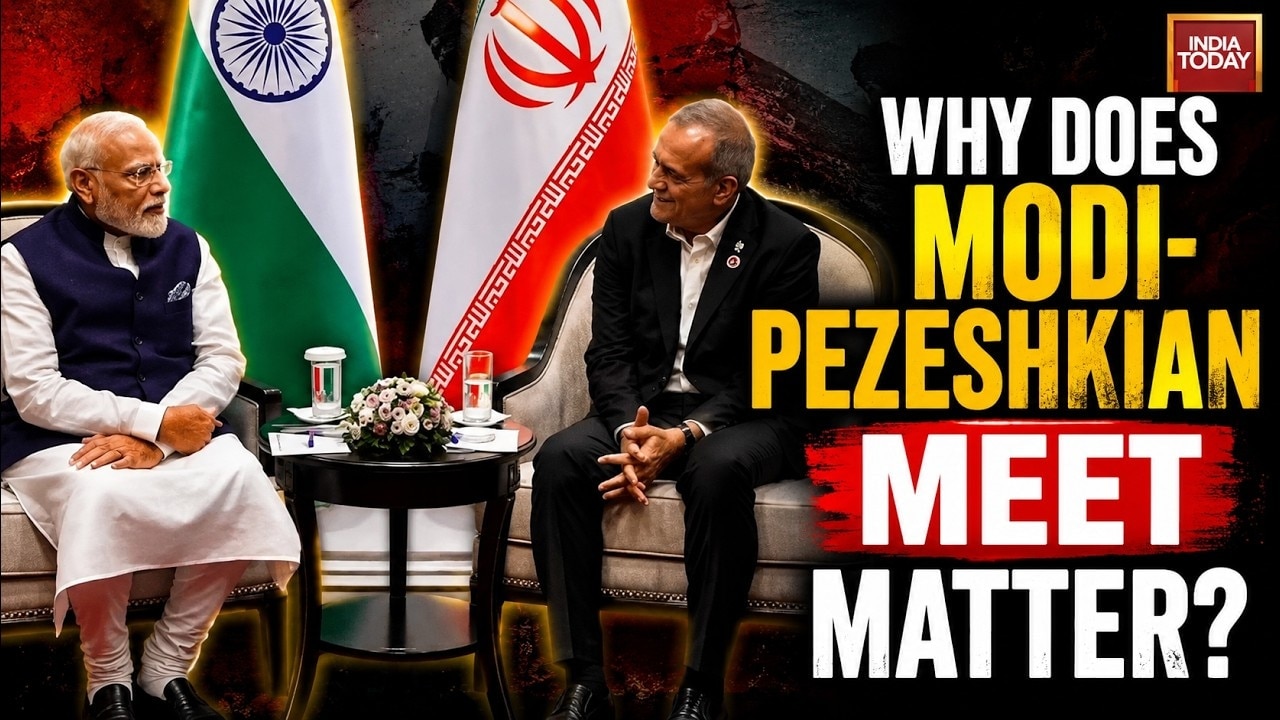
On the sidelines of the SCO Summit, PM Narendra Modi held critical bilateral talks with Iranian President Masoud Pezeshkian, focusing on regional stability, energy corridors, and strategic investments.
- First in-person bilateral meeting between PM Modi and President Pezeshkian amid West Asia escalation.
- Deep discussions on energy security and disruptions in the Strait of Hormuz.
- Emphasis on the safety of Indian seafarers and the strategic importance of Chabahar Port.
During the Shanghai Cooperation Organisation (SCO) summit in Bishkek, Prime Minister Narendra Modi engaged in a high-stakes bilateral meeting with Iranian President Masoud Pezeshkian. This encounter marks the first face-to-face interaction between the two leaders since the escalation of the West Asia crisis, drawing significant attention from Western intelligence and diplomatic circles.
The dialogue primarily revolved around regional security and the pursuit of diplomatic resolutions to ongoing conflicts. Both leaders expressed grave concerns over the instability in West Asia, emphasizing that a peaceful resolution is imperative for global economic health. A critical point of discussion was the Strait of Hormuz, where transit disruptions threaten the flow of oil and LNG shipments vital to India's economy.
Why This Matters
BozokMedia analysis shows that India is walking a tightrope between its strategic partnership with the US and its historical and energy-based ties with Iran. By engaging with Tehran at the SCO, India signals that it will not allow external pressures to dictate its energy security or its strategic access to Central Asia via the Chabahar corridor.
“India's engagement with Iran is a masterclass in strategic autonomy, ensuring that energy pipelines remain open despite global sanctions and regional volatility.“
Furthermore, the safety of Indian seafarers operating in conflict-prone maritime zones was a priority. PM Modi sought assurances for the protection of merchant vessels, highlighting the vulnerability of human capital in these volatile waters. The conversation also touched upon the Chabahar Port, India's crown jewel of investment in the region, which serves as a critical bypass to Pakistani territory.
Historically, the India-Iran relationship has been anchored in a shared desire for regional stability. The Chabahar project is not merely an infrastructure venture but a geopolitical tool that connects South Asia to the Eurasian heartland, providing India a strategic window into the markets of Afghanistan and beyond.
Frequently Asked Questions
1. What were the primary outcomes of the Modi-Pezeshkian meeting?
The meeting reinforced the commitment to diplomatic solutions in West Asia and ensured cooperation on energy security and the development of Chabahar Port.
2. Why is the Strait of Hormuz critical for India?
A vast majority of India's crude oil imports pass through this narrow strait; any blockade or conflict there could lead to an energy crisis in India.