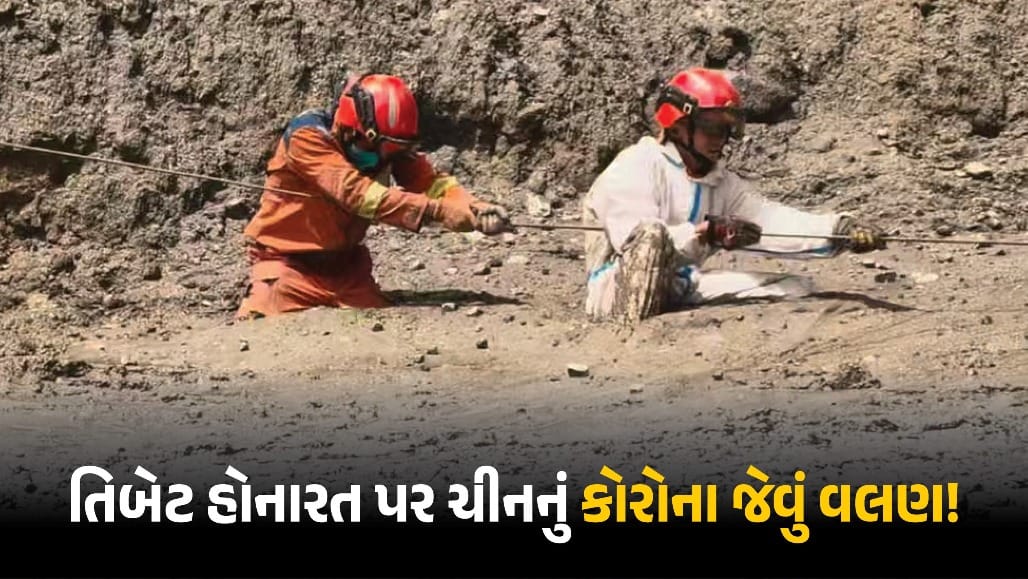
Following a devastating landslide at Gyirong Port in Tibet, China faces accusations of hiding the actual death toll and scrubbing evidence from social media. Authorities have initiated legal action against those reporting higher casualties.
- Devastating landslide strikes Gyirong Port in Tibet's southwestern region.
- China officially claims 16 deaths, while social media reports suggest thousands.
- 10 individuals penalized for 'spreading rumors' regarding casualty figures.
- Widespread removal of amateur videos and photos from digital platforms.
A catastrophic landslide at Gyirong Port in the Tibet region of southwestern China has sparked a renewed international debate over Beijing's transparency. While official state reports maintain a low casualty count, eyewitnesses and digital activists claim a much larger scale of destruction, alleging that the Chinese state is systematically erasing evidence of the disaster.
Reports indicate that China's cyber security apparatus is aggressively scrubbing images and videos from social media that depict the true extent of the devastation. In their place, state-controlled media outlets are broadcasting curated footage of rescue operations, focusing on a narrative of efficiency and control rather than the magnitude of the loss.
Why This Matters
BozokMedia analysis shows that this tactical suppression mirrors the early days of the 2020 COVID-19 outbreak in Wuhan, where medical professionals were silenced for alerting the world to the truth. This recurring pattern underscores a corporate state identity where 'national prestige' outweighs human life and factual accuracy. The control of information is not just a policy but a survival mechanism for the regime's image.
The centralization of information and systemic censorship during natural disasters is a critical failure in crisis management, hindering both international aid and genuine relief efforts.
Chinese authorities have justified their crackdown by claiming that certain internet users are deliberately misleading the public. Users identified as 'Qiu' and 'Liu' were penalized for claiming 1,400 and 3,000 deaths, respectively. Another user, 'Zhang,' suggested that hundreds of construction workers and tourists were present at the site, potentially pushing the death toll over 1,000—a claim the police dismissed as a malicious rumor.
Under Chinese law, sharing 'false information' during a natural disaster carries severe penalties. Minor offenses can lead to 10 days of administrative detention and fines up to 1,000 yuan, while serious cases can result in prison sentences ranging from 3 to 7 years.
| Detail | Official Govt Claim | Social Media/Local Claims |
|---|---|---|
| Death Toll | 16 Persons | 1,000 to 3,000+ Persons |
| Information Status | Controlled & Positive | Censored & Deleted |
| Narrative | Efficient Rescue Ops | Massive Loss & Negligence |
Frequently Asked Questions
Q1: Where is Gyirong Port located?
A: Gyirong Port is a strategic trade and transit point located in the Tibet Autonomous Region of China, near the border with Nepal.
Q2: What are the penalties for spreading rumors in China?
A: Depending on the severity, penalties range from 10 days of detention and fines to 7 years of imprisonment.