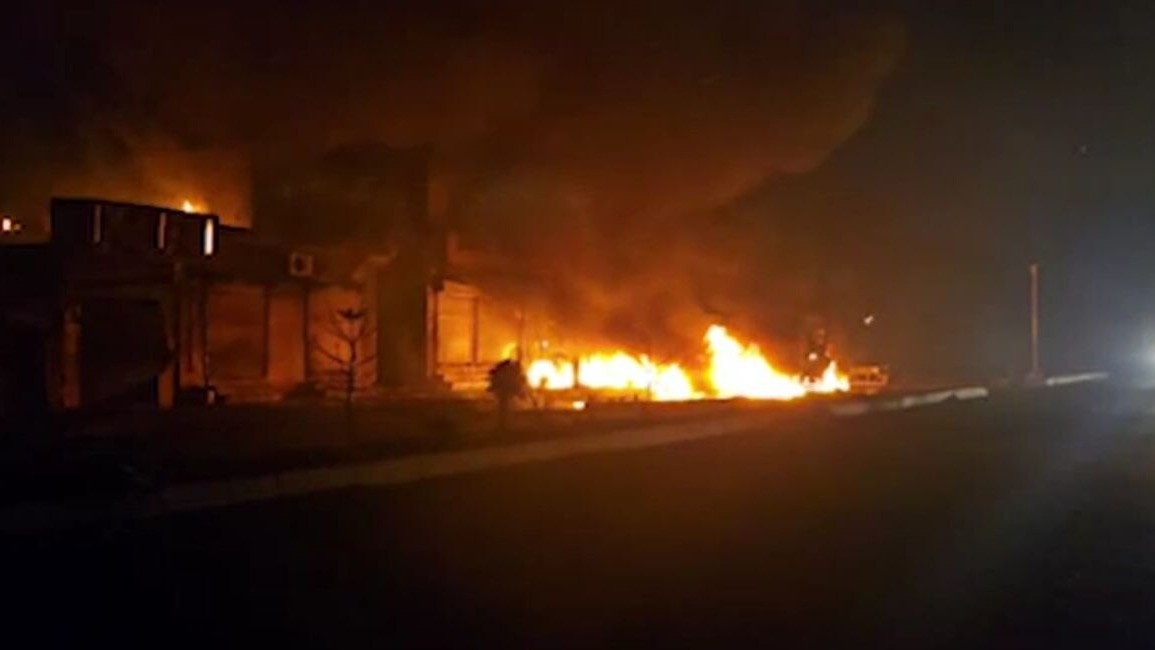
Iranians living abroad are trapped in a harrowing paradox, torn between their hatred for the Tehran regime and their opposition to a devastating foreign war on their homeland.
- The US-Israel war on Iran has deeply polarized the Iranian diaspora between supporters of Reza Pahlavi and anti-war activists.
- Significant civilian casualties, including the bombing of a girls' school in Minab, have challenged the 'humanitarian' justification of the conflict.
- The current intervention evokes historical trauma from the 1953 CIA-MI6 coup against Mohammad Mossadegh.
The conflict that erupted on February 28, characterized by joint US-Israel strikes on Iran, has not only destabilized the global economy and spiked energy prices but has also ignited a fierce ideological war within the Iranian community living abroad. For many, the war represents a cruel paradox: the desire for regime change versus the horror of seeing their ancestral land decimated by foreign powers.
Peyvand Khorsandi, whose family fled to the UK in 1976, embodies this struggle. Despite his father being a target of an Iranian government assassination attempt, Khorsandi vehemently opposes the current war. He argues that the military intervention has inadvertently granted the Tehran government a 'new lease of life' by allowing it to frame the conflict as a defense of the nation against foreign aggression, thereby alienating pro-democracy movements.
The Ideological Divide
The diaspora is largely split into two camps. One side rallies around Reza Pahlavi, the exiled son of the deposed Shah, viewing the US-Israel intervention as a necessary catalyst for the fall of the Islamic Republic. Conversely, critics like Khorsandi view Pahlavi as a tool for foreign interests, specifically the Israeli government, suggesting that the war is driven by 'colonial sensibilities' rather than a genuine desire to liberate the Iranian people.
Why This Matters
BozokMedia analysis shows that this division reflects a broader global trend where the 'Global South' is often treated as expendable in geopolitical chess matches. The conflict highlights the failure of Western powers to distinguish between a repressive government and the civilian population it governs. By utilizing military force, the US and Israel risk cementing the very regime they claim to undermine by fostering a siege mentality among the Iranian public.
The tragedy of the Iranian diaspora is the realization that liberation cannot be imported via foreign missiles.
The humanitarian justifications for the war began to crumble early on, most notably after a US air strike hit an elementary school for girls in Minab, killing at least 170 people, mostly children. While Pahlavi avoided condemning the strike, blaming Tehran for using 'human shields,' the incident served as a turning point for many who had previously supported the intervention.
Historical Background: The Ghost of 1953
The current turmoil is inextricably linked to the 1953 coup masterminded by the CIA and MI6 to overthrow the democratically elected Prime Minister Mohammad Mossadegh. Mossadegh had nationalized Iran's oil reserves, threatening British interests. This historical betrayal created a deep-seated distrust of Western interventions, providing the ideological soil in which the 1979 Islamic Revolution eventually grew.
| Perspective | Pro-Intervention (Pahlavi Camp) | Anti-Intervention (Khorsandi Camp) |
|---|---|---|
| Goal | Rapid regime change via external force | Internal democratic evolution |
| View of West | Liberators and strategic allies | Colonial powers with hidden agendas |
| Impact on People | Necessary sacrifice for future freedom | Catastrophic civilian loss and repression |
Frequently Asked Questions
Q1: Why is the 1953 coup relevant to the current war?
It established a precedent of Western interference in Iranian sovereignty, making many Iranians suspicious that current 'humanitarian' goals are actually covers for resource control.
Q2: How has the Iranian government reacted to the war internally?
Amnesty International reports that Tehran has used the war as a pretext for 'systematic repression,' arresting journalists and activists under the guise of national security.