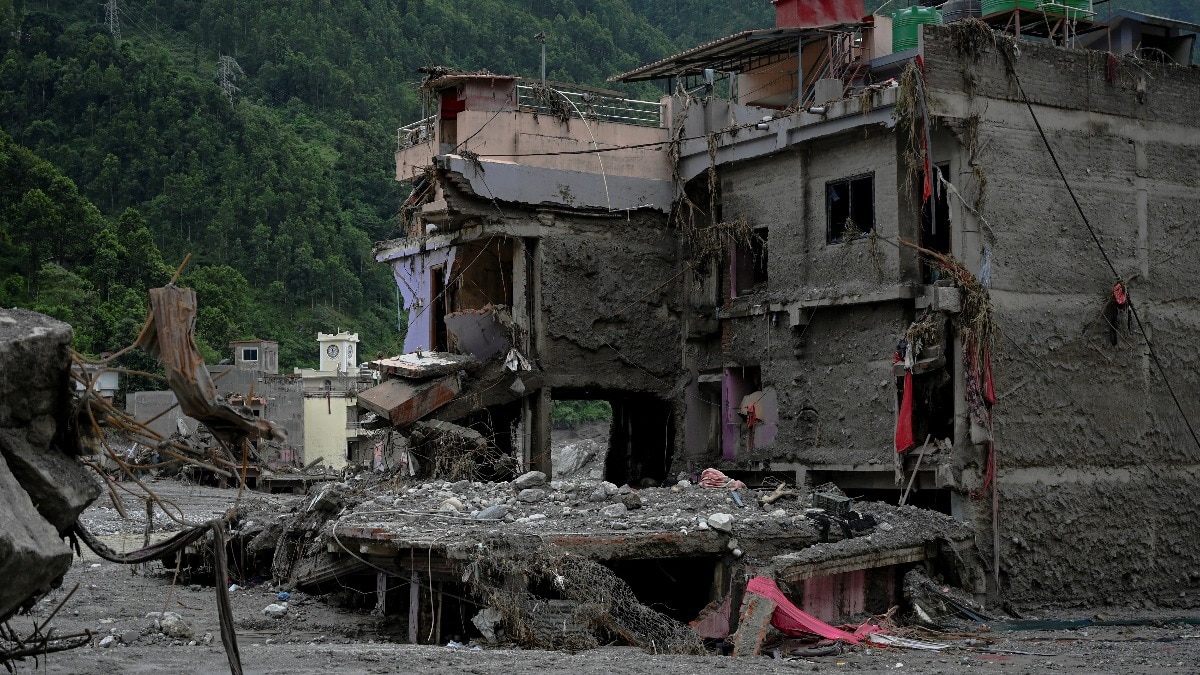
A catastrophic flash flood in Nepal has claimed 962 lives, with nearly 4,000 still missing. The discovery of 23 bodies in a single residence in Nuwakot highlights the unprecedented scale of the disaster.
- Death toll has reached 962, with approximately 3,925 people still missing.
- A single home in Nuwakot yielded 23 bodies, underscoring the flood's intensity.
- Over 900 hydropower workers remain trapped in mud-blocked tunnels.
- UN warns that 65,000 people urgently need water and sanitation support.
Nepal is grappling with one of its deadliest natural disasters in recent history. Following the flash floods triggered on August 26, the official death toll has surged to 962, with authorities fearing the number will soon hit 1,000. The scale of the carnage became painfully evident in Betrawati, Nuwakot, where rescuers recovered 23 bodies from a single household, illustrating the sudden and overwhelming nature of the torrent.
The disaster was precipitated by a massive collapse of ice and rock near the Nepal-Tibet border. This triggered a surge through the Bhote Koshi-Trishuli river system, which acted as a liquid bulldozer, wiping out entire villages, bridges, and critical infrastructure. The flood's path of destruction has left a trail of mud and debris, complicating rescue efforts across northern and central Nepal.
Why This Matters
BozokMedia analysis shows that this event is a stark warning regarding the vulnerability of the Hindu Kush-Himalayan region. The intersection of rapid hydropower development and glacial instability creates a high-risk environment. This tragedy underscores the urgent need for advanced early-warning systems and a rethink of construction permits in high-altitude flood plains.
"The frequency of glacial lake outbursts is increasing; without international cooperation on climate mitigation, these 'once-in-a-century' floods will become annual events."
The rescue operation has entered a critical phase. In the Trishuli 3A and 3B hydropower projects, hundreds of workers are feared trapped. Rescue teams from the Nepal Army are employing controlled blasts and excavators to penetrate thick layers of mud. However, persistent rain and ruined road networks continue to hinder the arrival of heavy machinery.
The humanitarian crisis is equally dire. The United Nations has highlighted that 65,000 people are without basic hygiene and water facilities. Furthermore, the psychological toll is immense, with over 10,000 children requiring psychosocial support after losing their homes or being separated from their parents.
| Metric | Nepal Figures | Tibet Figures |
|---|---|---|
| Confirmed Deaths | 962 | 16 |
| Missing Persons | 3,925 | 546 |
Frequently Asked Questions
Q1: What caused the flash floods in Nepal?
A: The floods were triggered by an avalanche or collapse of ice and rock near the Nepal-Tibet border on August 26.
Q2: How are authorities identifying the victims?
A: Due to decomposition, authorities are using DNA kits, photographs, and personal belongings, supported by 18 Indian forensic experts.
