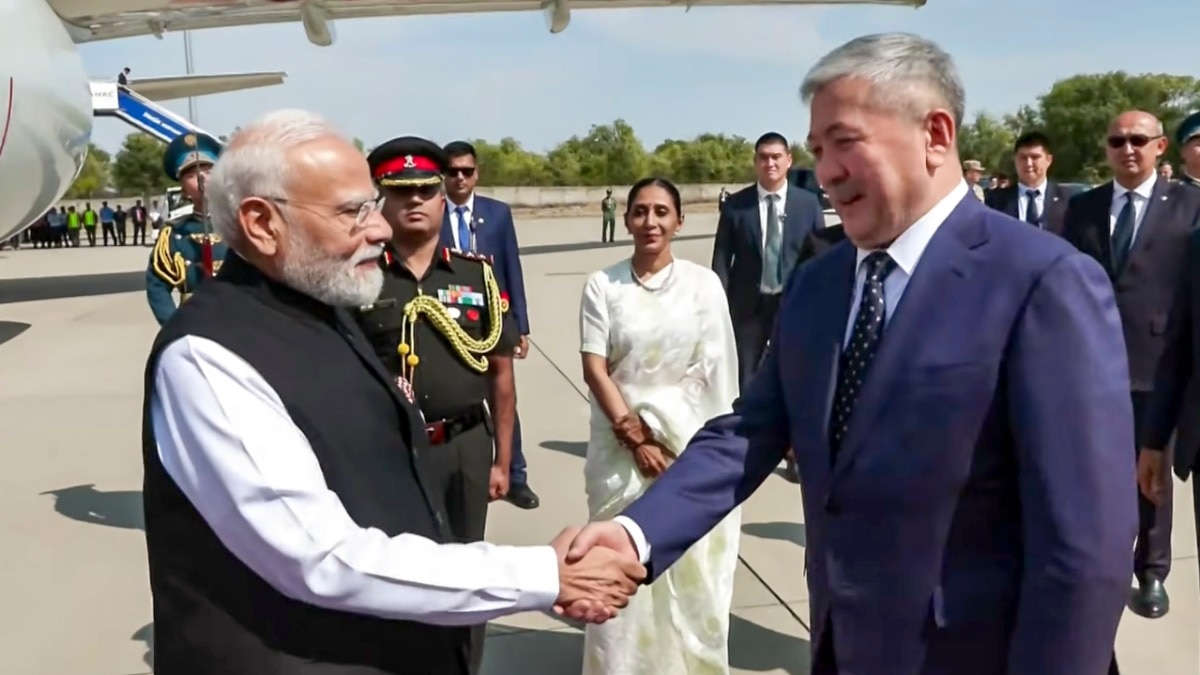
Prime Minister Narendra Modi gifted significant Indian cultural artifacts, including the Mahabharata, Santoor, and traditional handicrafts, to the leaders of Uzbekistan and Kyrgyzstan. This move aims to strengthen cultural ties and highlight India's rich heritage.
- PM Modi presented high-value cultural artifacts to leaders of Uzbekistan and Kyrgyzstan.
- Gifts included the Mahabharata, Santoor, Ladakhi textiles, and premium Kangra tea.
- The initiative leverages India's 'Soft Power' to deepen bilateral relations with Central Asian nations.
During his recent diplomatic visit to Uzbekistan and Kyrgyzstan, Prime Minister Narendra Modi engaged in a masterclass of cultural diplomacy by presenting a curated selection of India's finest literary, musical, and artisanal treasures. These gifts were not merely ceremonial but served as profound symbols of the shared historical and cultural threads connecting India with Central Asia.
In Kyrgyzstan, President Sadyr Japarov was presented with a magnificent 10-volume English translation of the Mahabharata by economist Bibek Debroy. The epic, a cornerstone of Indian philosophy, shares a deep resonance with Kyrgyzstan's own Epic of Manas, both serving as repositories of collective memory and moral values. Additionally, a traditional Tsug-dul blanket from Ladakh, known for its intricate geometric motifs, was gifted to the President.
Why This Matters
BozokMedia analysis shows that by utilizing cultural artifacts, India is effectively strengthening its geopolitical influence through 'Soft Power.' Highlighting shared traditions like epic poetry and musical instruments creates a psychological and emotional bridge that formal treaties alone cannot achieve.
For Uzbekistan, the gifts were equally symbolic. President Shavkat Mirziyoyev received a Santoor (Shata Tantri Veena) crafted from sandalwood. This instrument, deeply rooted in the musical traditions of Jammu and Kashmir, bears a striking resemblance to Uzbekistan's traditional Chang, creating an immediate cultural connection. He was also presented with premium Kangra tea from Himachal Pradesh, showcasing India's agricultural excellence.
The use of heritage-based gifting transforms bilateral meetings from mere political transactions into deep-rooted cultural dialogues.
The diplomatic outreach extended to the families of the leaders as well. The President of Uzbekistan's wife received a marble inlay casket paired with a Banarasi silk stole, representing the combined artistry of Agra and Varanasi. Furthermore, a unique handwritten scoresheet from chess Grandmaster Javokhir Sindarov was gifted, celebrating the rising sporting talent within Uzbekistan.
Historical Background
The historical connections between India and Central Asia are ancient, facilitated by the Silk Road. For centuries, scholars, traders, and monks have traveled these routes, exchanging not just goods, but philosophies, religions, and art forms, creating a shared Eurasian cultural landscape.
Frequently Asked Questions
1. What was the significance of the Mahabharata gift?
It highlights the literary and philosophical parallels between Indian epics and Central Asian oral traditions like the Epic of Manas.
2. Which Indian craft was showcased to the Uzbek leadership?
The gift included sandalwood Santoor, marble inlay work, and Banarasi silk, representing various Indian artisanal traditions.