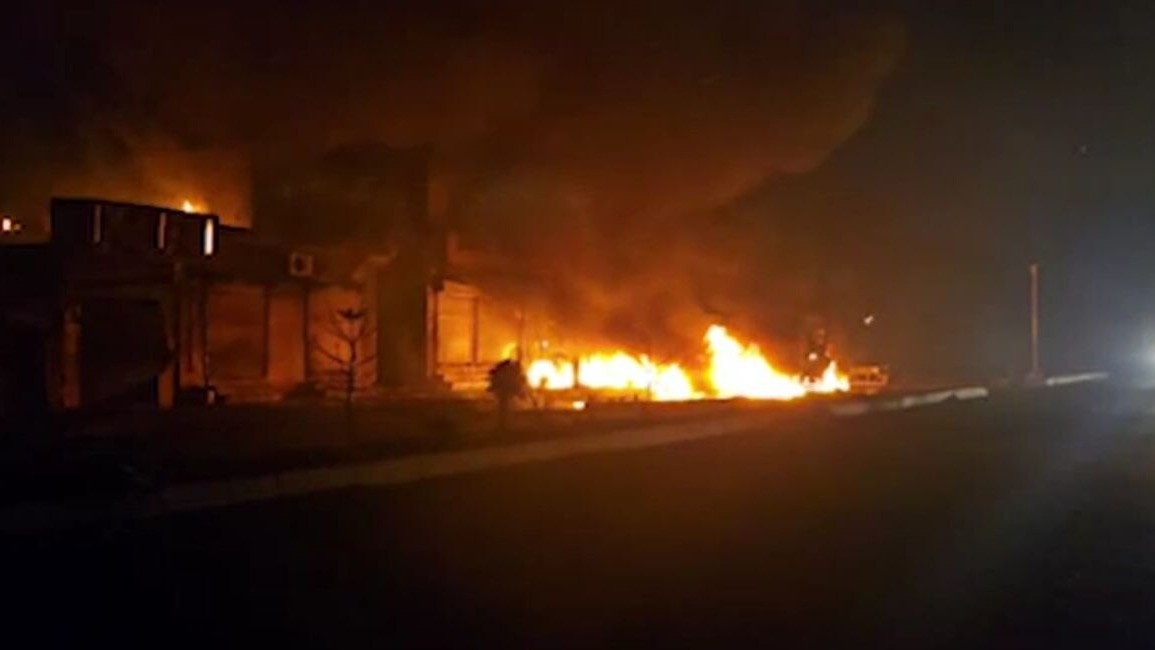
U.S. forces have launched targeted strikes against IRGC targets in Iran following maritime attacks in the Strait of Hormuz. President Trump warned of a 'much harder' response if Tehran retaliates.
- U.S. military conducted strikes against IRGC targets in Iran.
- The operation follows attacks on commercial shipping in the Strait of Hormuz.
- President Trump characterized the strikes as "large and powerful" retaliations.
The U.S. Central Command (CENTCOM) announced on Tuesday that U.S. military forces have initiated strikes against Islamic Revolutionary Guard Corps (IRGC) targets within Iran. The decision comes in the wake of recent attacks on commercial oil tankers and U.S. personnel in the critical Strait of Hormuz, a vital artery for global energy supplies.
President Donald Trump took to Truth Social to describe the operations as "large and powerful." He emphasized that the strikes were a direct response to Iran's attempts to deploy sea mines in the strait and its recent missile attack on a U.S. military facility in Jordan. Trump further escalated his rhetoric, warning that any retaliation from Tehran would be met with a response at a "much harder and higher level," suggesting even larger attacks are prepared.
Why This Matters
BozokMedia analysis shows that this escalation significantly heightens the risk of a full-scale regional war. The Strait of Hormuz is a global energy chokepoint; according to the U.S. Energy Information Administration, approximately one-fifth of the world's oil supply passes through this waterway. Any prolonged conflict here could trigger a massive spike in global fuel prices and economic instability.
The strategic importance of the Strait of Hormuz makes any military action in this corridor a matter of global economic security.
The tension has been building since Sunday, when U.S. forces struck rocket launchers on Iran's Larak Island. This was a preemptive move after CENTCOM detected preparations by Iranian forces to launch rockets carrying sea mines into the shipping lanes. In response, Iran launched missiles at U.S. sites in Jordan, which were intercepted. Additionally, the United Arab Emirates (UAE) reported intercepting an Iranian drone over its territorial waters.
Historical Background
The Strait of Hormuz has long been a flashpoint for geopolitical friction between Washington and Tehran. For decades, Iran has utilized its proximity to this waterway to exert leverage over global energy markets. The current cycle of violence represents one of the most significant military escalations between the two nations in recent history, moving beyond proxy conflicts into direct military engagement.
Frequently Asked Questions
1. What triggered the U.S. military strikes?
The strikes were triggered by attacks on commercial shipping in the Strait of Hormuz and a missile attack on a U.S. base in Jordan.
2. How has the U.S. Embassy responded to the situation?
The U.S. Embassy in Qatar issued a security alert, warning of unforeseen escalations and advising Americans in the region to exercise extreme vigilance.