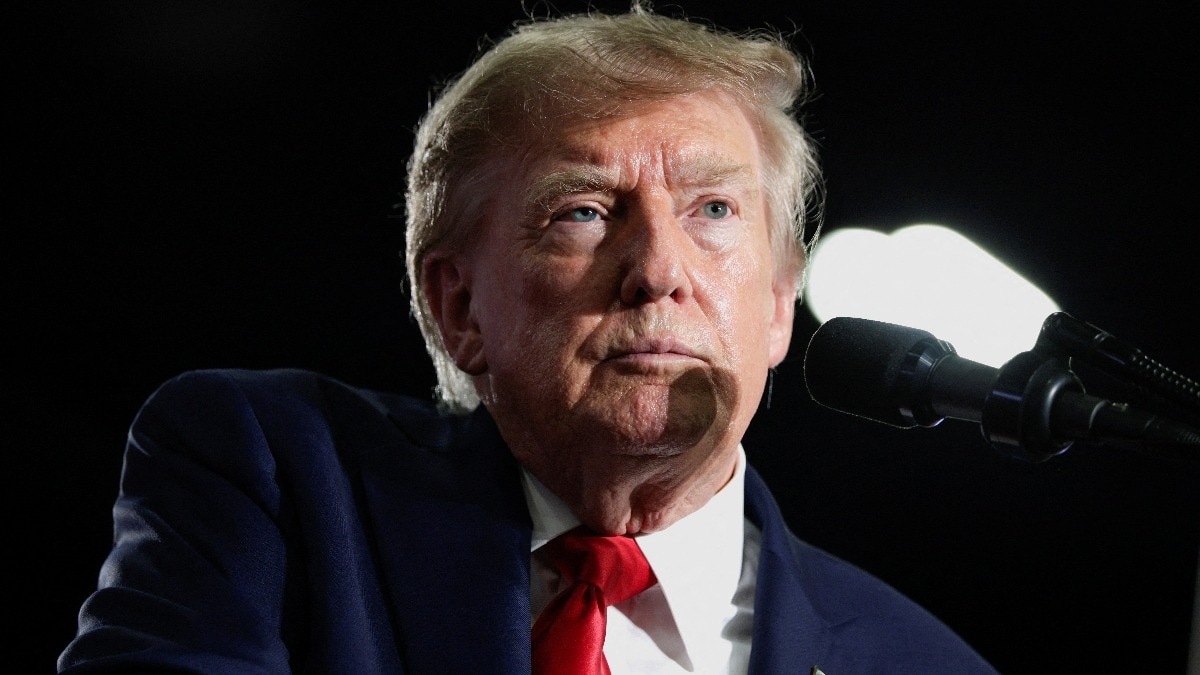
U.S. President Donald Trump has sparked international debate by suggesting that the strategically vital Strait of Hormuz should be renamed the 'Trump Strait,' claiming the waterway is now under American control.
- Donald Trump suggested renaming the Strait of Hormuz to 'Trump Strait.'
- Trump claimed the waterway is currently under U.S. control.
- The Strait of Hormuz is a critical global choke point for oil and gas supplies.
U.S. President Donald Trump has once again ignited a global firestorm with a provocative social media post. Suggesting a radical change to maritime geography, Trump questioned whether the Strait of Hormuz should be renamed the 'Trump Strait.' In his post, he asserted that since the waterway is now under American control, a name change would be appropriate.
Expanding on his post, Trump wrote, "Should we rename the Strait of Hormuz to TRUMP STRAIT??? It would be even 'hotter' than America itself! Thanks for paying attention to this." Signing off as 'President DONALD J. TRUMP,' the statement has sent ripples through diplomatic circles and global energy markets alike.
Why This Matters
The Strait of Hormuz is not merely a body of water; it is the jugular vein of the global energy economy. Connecting the Persian Gulf to the Gulf of Oman and the Arabian Sea, it serves as the primary transit route for a massive portion of the world's oil and gas supplies. Any disruption or shift in control within this narrow passage can lead to immediate and catastrophic volatility in international energy prices.
BozokMedia analysis shows that this move is likely a calculated piece of political theater designed to reinforce the 'America First' doctrine. By claiming control over such a vital maritime artery, Trump is signaling a desire for unprecedented dominance over global trade routes, regardless of the diplomatic fallout.
Trump's proposal is less about geography and more about projecting absolute American hegemony over the world's most critical energy choke points.
Historical Background
For centuries, the Strait of Hormuz has been a focal point of geopolitical tension. Its strategic importance has escalated with the rise of the petroleum era. Historically, the region has been a theater of conflict between regional powers and global superpowers, particularly involving Iran and the United States, making it one of the most militarized and sensitive maritime zones on Earth.
Comparison: Current Status vs. Trump's Proposal
| Feature | Current Status (Strait of Hormuz) | Trump's Proposal (Trump Strait) |
|---|---|---|
| Control | Multilateral/Regional influence | Claimed U.S. Control |
| Significance | Global Energy Corridor | 'Hot' and U.S.-dominated route |
| Naming Basis | Historical/Geographical | Personal/Political Branding |
Frequently Asked Questions
1. Can a President unilaterally rename an international strait?
No. Renaming a major international waterway involves complex international maritime laws and would require widespread global recognition and consensus.
2. How does this impact global oil prices?
Statements suggesting a shift in control over the Strait often lead to market speculation, potentially causing temporary spikes in crude oil prices due to perceived geopolitical risk.