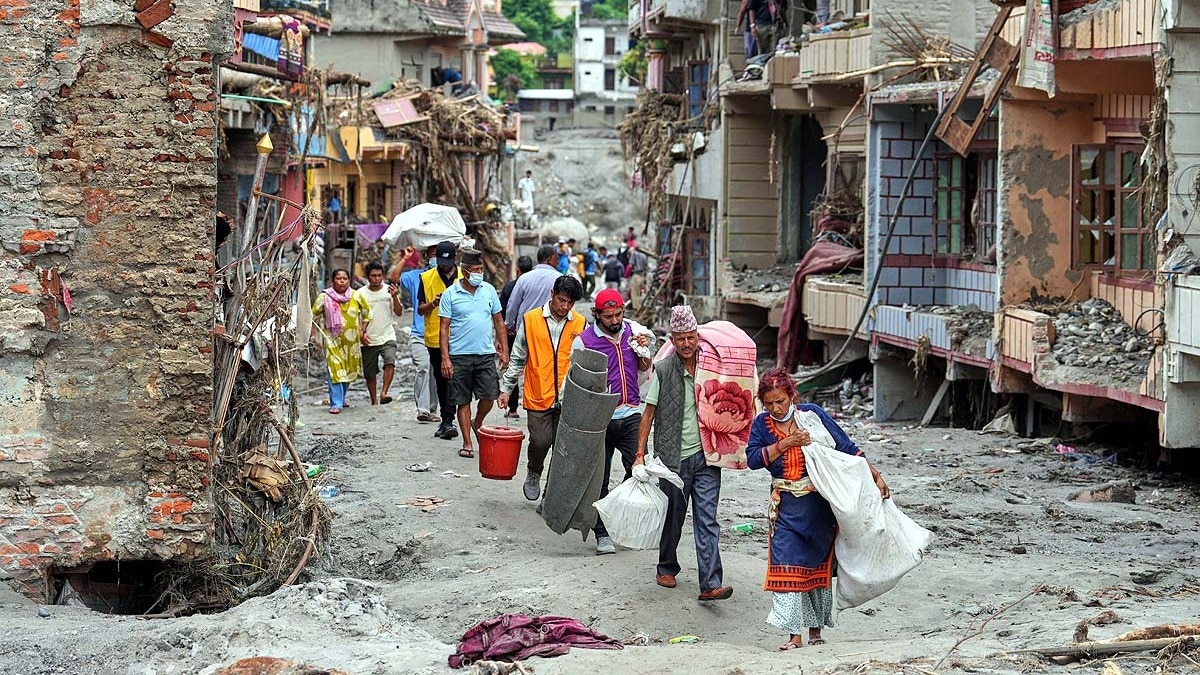
A massive flash flood triggered by glacier and mountain collapses in Nepal's high Himalayas has claimed over 1,000 lives and left thousands missing.
- Glacier and rock collapses near the Nepal-China border triggered sudden flash floods.
- Death toll exceeds 1,000, with approximately 3,900 people reported missing.
- Eight districts heavily impacted, including significant damage to hydropower projects.
On August 26, Nepal witnessed an unprecedented natural disaster as sudden flash floods ravaged the high Himalayan regions. The catastrophe originated near the Nepal-China border, where a massive section of glaciers and mountains collapsed. This deluge, carrying a lethal mix of soil, ice, boulders, and debris, surged through the Bhote Koshi, Trishuli, and Narayani rivers, devastating eight districts including Rasuwa, Nuwakot, Dhading, Gorkha, Tanahun, Nawalparasi East, Nawalparasi West, and Chitwan.
Preliminary scientific investigations suggest this was not a standard monsoon flood. The suddenness was caused by a massive landslide and glacier breach in the high altitudes. When this debris entered the river systems, the water velocity increased exponentially. In a terrifying display of nature's power, the water level of the Trishuli River rose by an estimated 9 meters in just 30 minutes, leaving residents virtually no time to evacuate to safer ground.
Why This Matters
BozokMedia analysis shows that this event highlights the extreme vulnerability of the Himalayan ecosystem. The combination of debris-laden water and rapid rising levels transforms a regular flood into a high-velocity mudflow capable of wiping out entire settlements, bridges, and critical infrastructure in minutes.
The sudden surge in river levels, combined with massive debris flow, makes these Himalayan flash floods among the most unpredictable and deadly natural disasters.
The impact on Nepal's economy is profound, particularly regarding its energy sector. Numerous hydropower projects were hit by the deluge, with reports indicating that approximately 639 employees are missing, some believed to be trapped in tunnels. The destruction of roads and bridges has also hindered rescue operations, making it difficult for relief teams to reach remote mountainous areas.
Massive rescue operations are currently underway, led by the Nepal Army, Police, and Armed Police Force. Utilizing helicopters for inaccessible terrains, rescue teams have successfully evacuated over 11,000 individuals. International assistance has also arrived, with China providing drones and DNA testing equipment to assist in identifying victims and locating the missing.
As the search for the missing continues, the immediate focus is shifting toward public health. The destruction of sanitation and clean water systems has raised alarms regarding the potential outbreak of waterborne diseases in the affected districts.
Frequently Asked Questions
Q1: What caused the sudden flood in Nepal?
A: The flood was a flash flood triggered by the collapse of glaciers and mountains near the Nepal-China border, which sent massive amounts of debris into the river systems.
Q2: Which districts are most affected?
A: The most severely impacted districts include Rasuwa, Nuwakot, Dhading, Gorkha, Tanahun, Nawalparasi East, Nawalparasi West, and Chitwan.