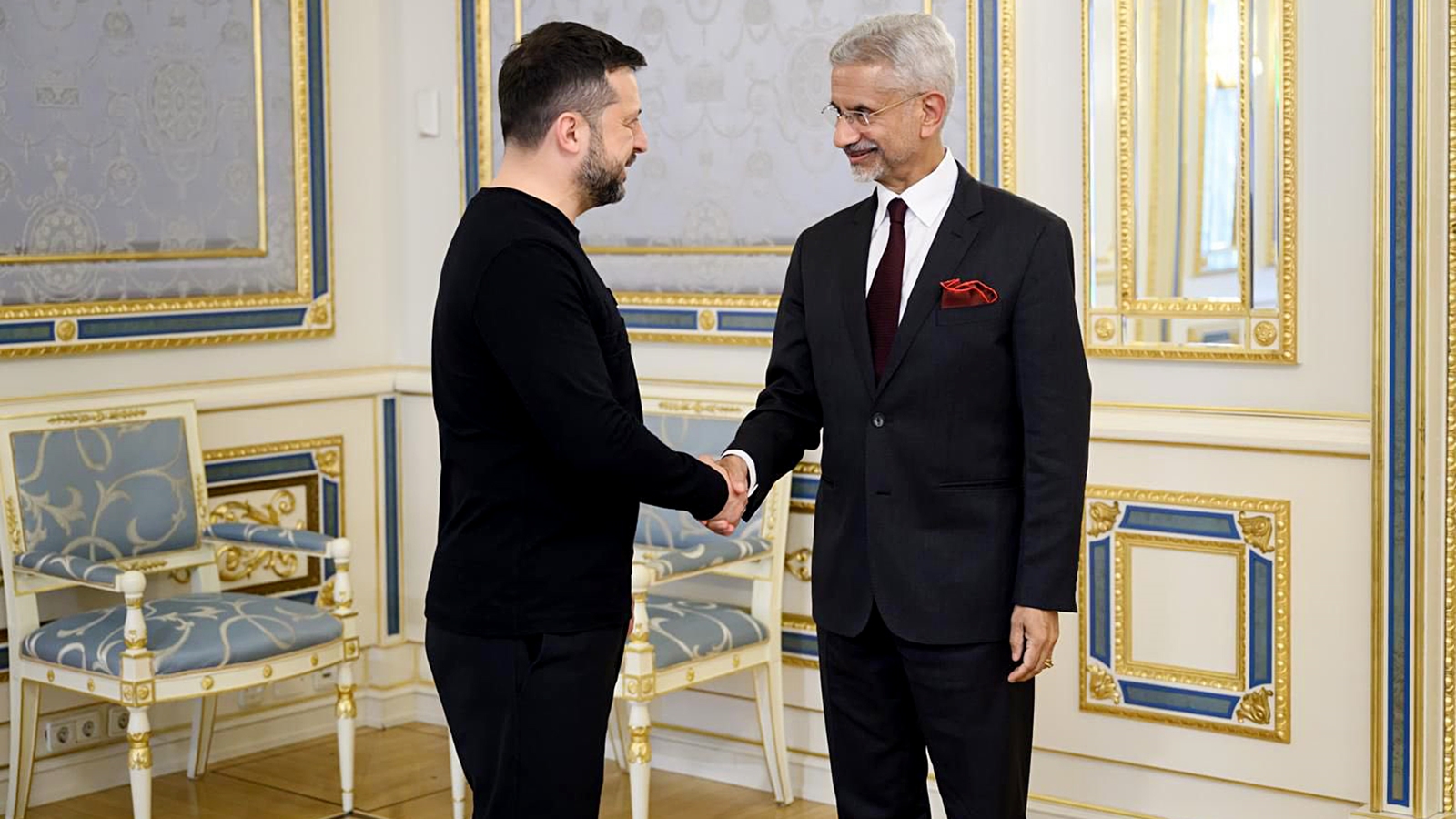
External Affairs Minister S Jaishankar emphasized that diplomacy, not oil sanctions, is the key to ending the Russia-Ukraine conflict during his visit to Kyiv.
- EAM S Jaishankar stated that stopping Russian oil imports won't dissolve the conflict.
- India advocates for 'dialogue and diplomacy' to end the war.
- The visit marks the first dedicated bilateral trip by an Indian EAM to Ukraine.
- Concerns were raised regarding the safety of Indian seafarers in the Black Sea.
In a decisive diplomatic move, India's External Affairs Minister S Jaishankar has reinforced India's stance on the ongoing Russia-Ukraine conflict. During his historic bilateral visit to Kyiv, Jaishankar asserted that the cessation of Russian oil purchases would not 'dissolve' the war. He maintained that the path to peace lies strictly through dialogue, diplomacy, and negotiations.
A Masterclass in Strategic Balancing
Jaishankar’s visit comes at a critical juncture in global geopolitics. While Prime Minister Narendra Modi is scheduled to meet Russian President Vladimir Putin at upcoming SCO and BRICS summits, Jaishankar is simultaneously engaging with Ukrainian leadership, including President Volodymyr Zelenskyy and Foreign Minister Andrii Sybiha. BozokMedia analysis shows that India is skillfully navigating its 'strategic autonomy' to prevent being cornered by Western sanctions while maintaining its ties with the Global South.
Defending India's decision to import Russian crude, the Minister highlighted the immense challenge of ensuring fuel security for 1.4 billion citizens. He noted that while India respects Ukraine's position, it expects mutual respect for its own national interests.
This conflict will be solved by dialogue and diplomacy, not by who is or isn't buying oil.
Human Cost and Global Shipping Risks
A significant portion of the discussions centered on the safety of commercial maritime routes. Jaishankar raised alarms over attacks on shipping in the Black Sea, specifically noting the casualties among Indian seafarers. He emphasized that disruptions in these routes are causing a ripple effect, leading to food, fuel, and fertilizer shortages across the Global South.
Why This Matters
India's refusal to join Western-led energy sanctions while actively participating in peace dialogues positions New Delhi as a crucial mediator. As the war enters its fifth year, India's ability to balance its energy needs with its aspiration for global leadership will define its future role in the international order.
Frequently Asked Questions
1. What was the primary focus of Jaishankar's visit to Kyiv?
The visit focused on deepening bilateral cooperation in sectors like pharma and tech, and discussing approaches to end the conflict.
2. Why did Jaishankar mention Indian seafarers?
He highlighted the human cost of the war, noting that several Indian sailors have lost their lives due to maritime hostilities in the Black Sea.