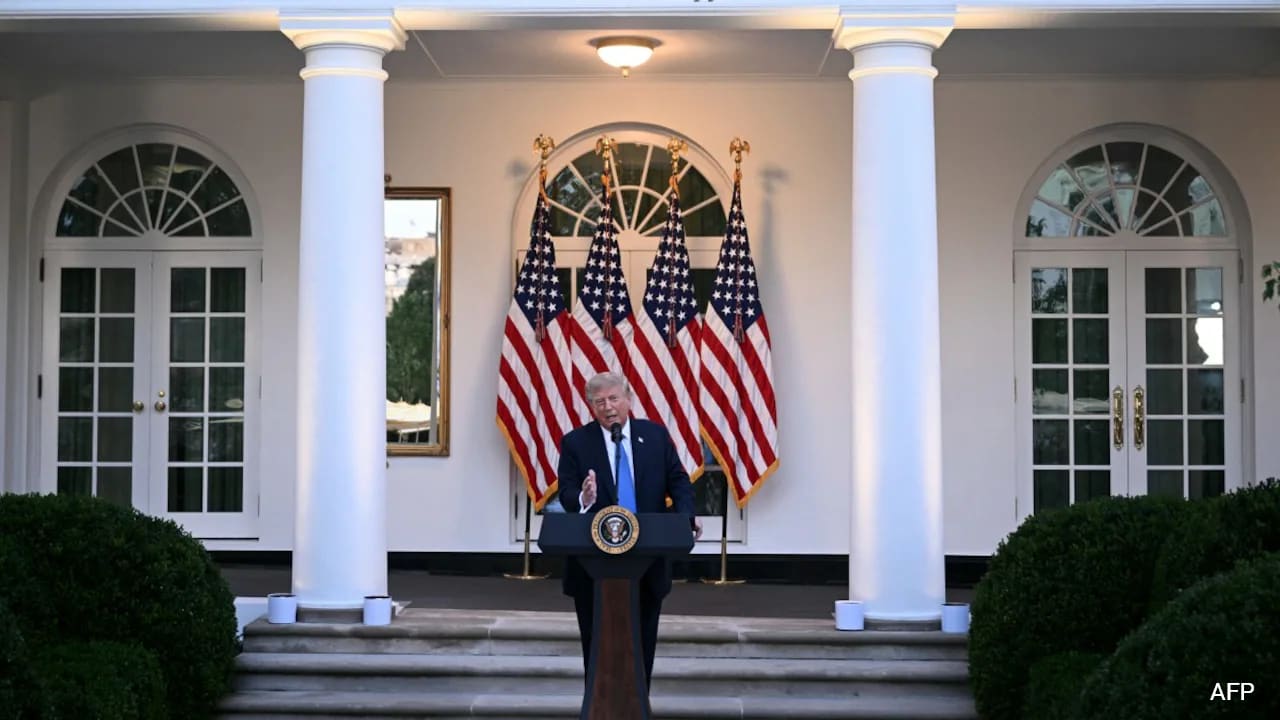
Former US President Donald Trump has made bold claims regarding the United States' total surveillance dominance over Iran. He asserted that American intelligence tracks every move within the nation, including failed attempts to rebuild military infrastructure along the strategic Strait of Hormuz.
- Donald Trump claims US intelligence maintains near-total surveillance over Iranian military activities.
- Recent strikes allegedly dismantled newly built Iranian radar and missile systems along the Strait of Hormuz.
- The rhetoric underscores the ongoing geopolitical tension and economic choking strategies aimed at Tehran.
In a series of highly provocative statements, former US President Donald Trump has boasted about the unparalleled surveillance capabilities of the United States military and intelligence apparatus over Iran. Trump claimed that the level of monitoring is so intense that Iranian officials "can't even go to the bathroom" without Washington's knowledge. This rhetoric comes amid escalating tensions in the Middle East, highlighting the deep-seated intelligence war between the two nations.
According to Trump, Iran has been actively attempting to reconstruct its degraded military infrastructure, specifically targeting radar systems, missile launchers, and mine-dropping capabilities. However, he asserted that recent US-led or coordinated operations successfully neutralized these efforts. "Our strikes took out all of the new equipment that they tried to build along the Strait of Hormuz," Trump stated, emphasizing the strategic importance of the maritime chokepoint.
Why This Matters
A BozokMedia analysis shows that Trump's statements are not merely political posturing but reflect a long-standing doctrine of maximum pressure. By publicly highlighting such invasive surveillance capabilities, the US seeks to project absolute deterrence. The Strait of Hormuz remains the world's most critical oil transit chokepoint, and any disruption there has immediate global economic ramifications, making surveillance of this corridor a top national security priority for Washington.
"The public disclosure of such granular surveillance capabilities, whether slightly exaggerated or not, serves as a psychological warfare tool designed to demoralize Iranian command structures and reassure regional allies like Israel and the Gulf states." - Dr. Marcus Vance, Senior Defense Analyst.
| Metric / Capability | United States Presence | Iran Regional Capability |
|---|---|---|
| Surveillance Tech | Advanced satellite constellations, high-altitude UAVs (Global Hawk), cyber intelligence | Localized radar networks, coastal surveillance, asymmetric reconnaissance drones |
| Strategic Focus | Securing global energy corridors, deterring state-sponsored proxy groups | Securing territorial waters, asymmetric defensive positioning along the Strait of Hormuz |
| Primary Assets | Fifth Fleet, carrier strike groups, regional military bases (Bahrain, Qatar) | Islamic Revolutionary Guard Corps (IRGC) navy, fast attack craft, anti-ship missiles |
Historical Background of US-Iran Intelligence Rivalry
The intelligence and cyber warfare between the United States and Iran has historical roots dating back decades, intensifying significantly after the 1979 Islamic Revolution. Over the last two decades, this shadow war has transitioned into the digital and space domains. Programs like the joint US-Israeli 'Stuxnet' cyberattack, which targeted Iran's nuclear facilities, demonstrated the depth of Western penetration into Iranian state infrastructure. Trump's latest remarks build upon this legacy of high-tech espionage and targeted military strikes, such as the 2020 assassination of Iranian General Qasem Soleimani, which relied heavily on real-time intelligence tracking.
The Strait of Hormuz has repeatedly served as the primary theater for these confrontations. As a narrow waterway through which a fifth of the world's petroleum passes, any attempt by Iran to deploy naval mines or anti-ship missiles is met with immediate counter-surveillance and defensive positioning by the US Navy's Fifth Fleet. The continuous cycle of Iranian reconstruction and subsequent US disruption remains a defining feature of the Persian Gulf's security landscape.
Frequently Asked Questions
Q1: What did Donald Trump claim about US surveillance over Iran?
A1: Donald Trump claimed that US intelligence maintains such a high level of surveillance over Iran that they cannot perform basic daily functions without US knowledge, specifically noting that their military reconstruction efforts along the Strait of Hormuz were immediately detected and neutralized.
Q2: Why is the Strait of Hormuz highly contested?
A2: The Strait of Hormuz is a narrow, strategic waterway crucial for global energy security, as a massive portion of the world's oil supply transits through it. Control and surveillance of this area are vital for preventing economic disruptions.