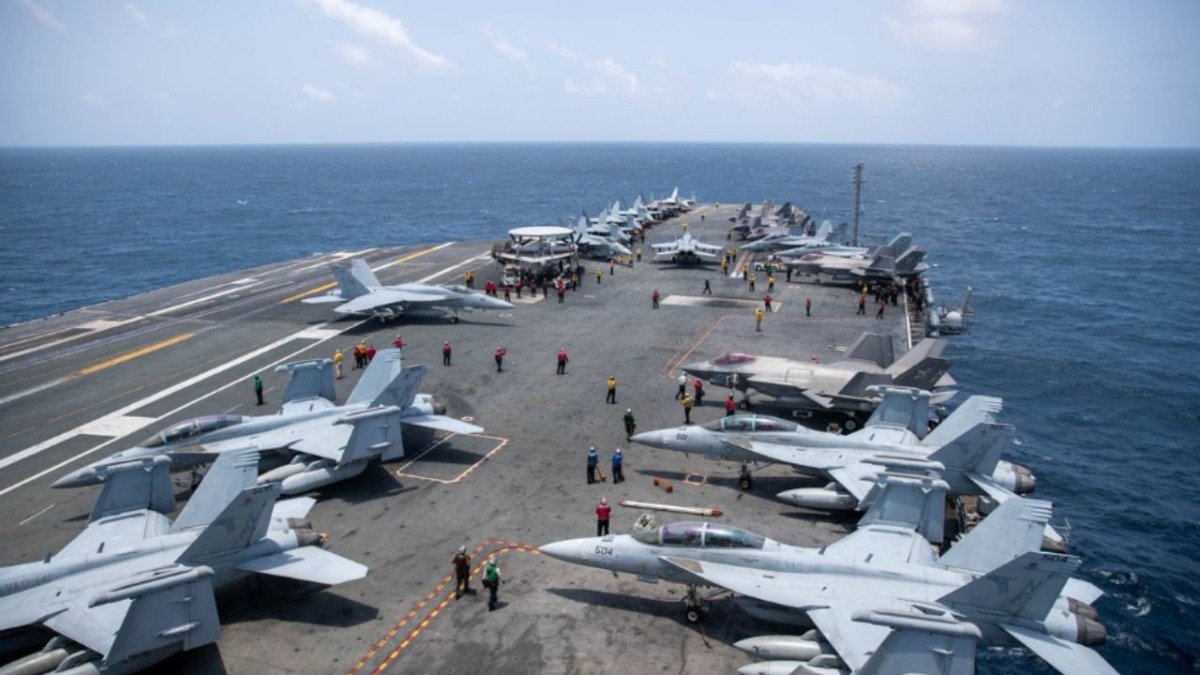
The United States has extended its military troop deployments in the Middle East until 2027, citing an ongoing conflict with Iran. This move places increased pressure on American servicemembers through longer tours and strains the Navy, signaling a more sustained military campaign.
- The US has extended its military deployments in the Middle East until 2027 due to the ongoing conflict with Iran.
- Approximately 50,000 US troops remain deployed in the region, increasing strain on servicemembers and their families.
- The US Navy faces significant pressure, with 19 warships operating in the region, leading to prolonged sea tours.
- President Donald Trump is maintaining both economic pressure and aggressive military options, including airstrikes and ground forces.
- This extension signals Washington's preparation for a sustained military campaign rather than a limited intervention.
Six months after the US launched its military campaign against Iran, what was initially conceived as a limited and decisive operation is now evolving into a much longer conflict. According to a report by The Wall Street Journal, Defense Secretary Pete Hegseth is extending troop deployments across the Middle East into 2027. This extension compels American servicemembers to endure longer tours, placing significant pressure on the military.
To keep military options open for President Donald Trump, approximately 50,000 US troops are still deployed across the Middle East. Warships, fighter squadrons, air-defense units, and paratroopers remain involved in missions linked to the conflict and the increasingly tense situation around the Strait of Hormuz. This extensive presence underscores the depth of US commitment in the region, highlighting the volatile geopolitical landscape.
The extended deployments are already being felt by troops and their families, with strain beginning to show across the military's equipment and maintenance schedules. Army air-defense units that previously served nine-month rotations are now being kept in the region for as long as 12 months, according to the report. Some units that had been scheduled for posts in Europe and the Pacific have already spent more than a year in the Middle East, adding to concerns about how long servicemembers can maintain the current pace of operations.
The pressure is also building within the Navy. The US currently has 19 warships operating in Middle Eastern waters, including two aircraft carriers and 13 guided-missile destroyers, according to a Navy official cited in the report. Some destroyer crews that would normally have regular periods away from the region are instead spending several months at sea at a stretch. The conflict has already produced some of the longest US Navy deployments in recent decades. The USS Gerald R. Ford spent 11 months at sea before returning home in May, making it the longest-deployed American aircraft carrier since the collapse of the Soviet Union.
The USS Abraham Lincoln is also heading home after another extended deployment, having dropped anchor in Thailand, with difficult conditions placing additional pressure on servicemembers. The crew of the USS Theodore Roosevelt is preparing for an unusually long deployment as well. Navy officials have indicated that the carrier could be sent to the Middle East, although its final destination has not been announced. If it is assigned to Iran-related operations, it could remain in the region well into next spring.
For sailors and Marines, the logistical situation has made life at sea even harder. Fighting has disrupted normal Navy resupply operations in the Middle East, forcing ships to rely heavily on Diego Garcia, the remote US-UK military base in the Indian Ocean. That has meant fewer opportunities for sailors to receive mail and care packages or spend time away from their ships, according to the report. The extended distances and long deployments could also leave the Navy facing a significant maintenance burden later.
Why This Matters
This extension of US military deployment in the Middle East carries significant implications for the regional and global geopolitical landscape. BozokMedia analysis shows that this move not only highlights Washington's preparation for a protracted conflict with Iran but also impacts the security equilibrium in the region. It is likely to escalate tensions, potentially forge new alliances, and have unforeseen consequences on energy markets. It also demonstrates the resolve of US foreign policy through military and economic pressure, aimed at disrupting Iran's nuclear program and potentially inducing regime change.
Bryan Clark, a former senior US Navy official and now a senior fellow at the Hudson Institute, stated that the deployment pattern suggests Washington is preparing for a sustained campaign rather than a short intervention.
While the US military maintains its presence, Trump has increasingly relied on economic pressure in an effort to push Tehran towards negotiations. Behind the scenes, however, the US President has also been reportedly discussing with senior aides whether the war should be declared over. Trump has told aides that he believes continued economic pressure could eventually force Iran to dismantle its nuclear program or lead to the collapse of its government.
"I like our position now much better, with almost total control of the Hormuz Strait, and their economy totally collapsing," Trump wrote on social media. "They are just playing out the inevitable. When are the Iranian people going to rise up and fight?" At the same time, the Pentagon has been keeping more aggressive military options available. Trump was briefed last month on possibilities that included stepped-up airstrikes, deploying ground forces to seize Iranian islands near Hormuz, and attacking a fortified site known as Pickaxe Mountain, which could potentially be used for covert nuclear work. Such operations would require a substantial military commitment, making the decision to keep forces in the region longer especially important.
Frequently Asked Questions
- Why is the US military extending its deployment in the Middle East?
- What are the implications of these extended deployments for US servicemembers and the Navy?

