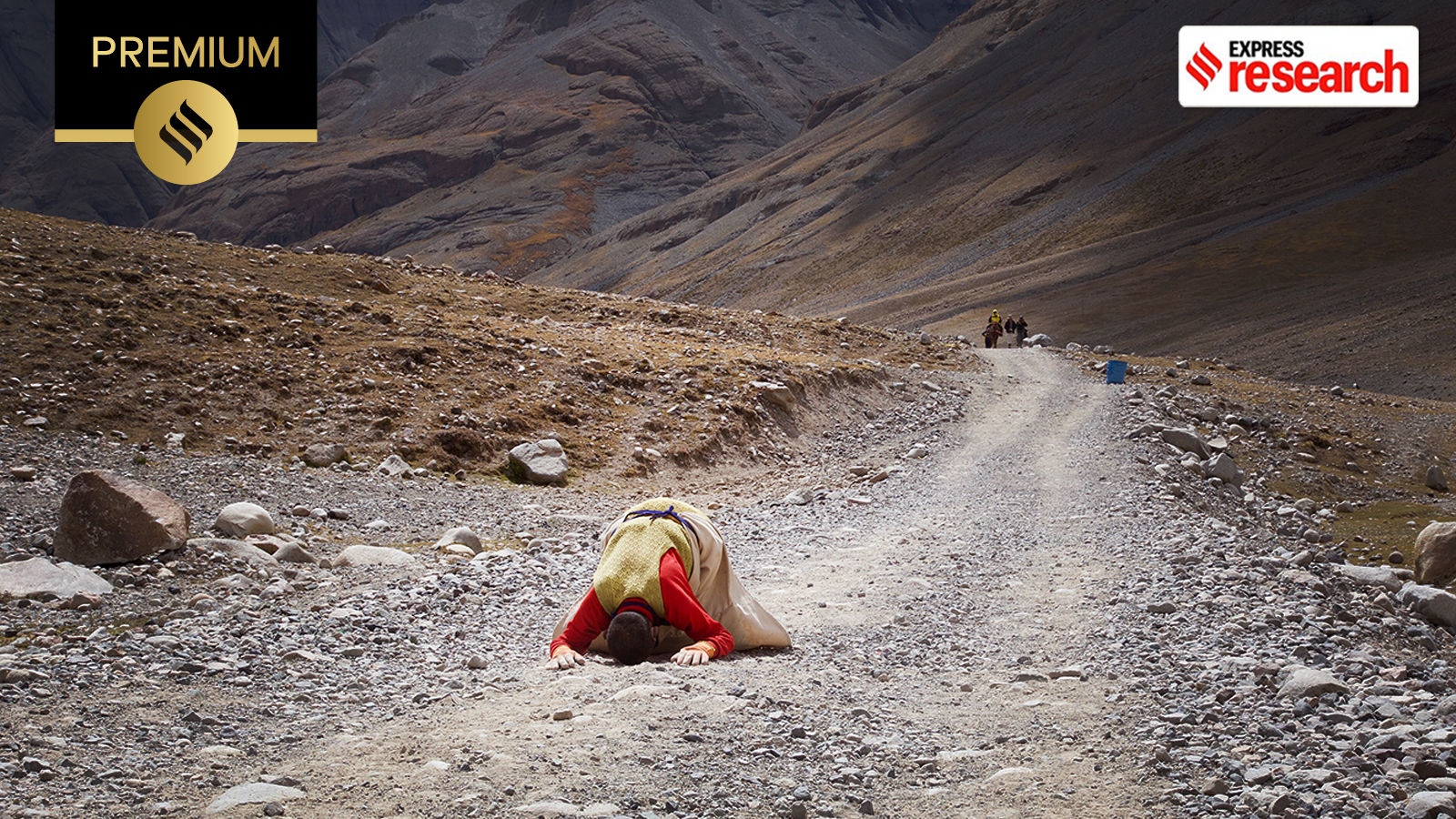
Once an arduous trek through treacherous terrain, Mount Kailash is being reshaped by modern infrastructure, sparking a debate between spiritual access and ecological preservation.
- Modern infrastructure and roads are transforming the once-difficult pilgrimage to Mount Kailash.
- Ecological concerns are rising due to unregulated tourism and mountain blasting for development.
- Historical research suggests the mountain's status as a major pilgrimage site evolved significantly over time.
For centuries, a journey to Mount Kailash meant enduring the most punishing landscapes of the Himalayas. Standing at an imposing 6,660 meters, this snow-clad peak has long been a beacon for seekers. However, the era of physical hardship is being replaced by an era of accessibility, as roads and infrastructure projects transform the route into a modern pilgrimage circuit.
This shift has not come without significant friction. Sandesha Rayapa, a faculty member at Jawaharlal Nehru University and a member of the indigenous Rung community, warns that the 'natural disasters' frequently striking the Himalayas are often intensified by human choices. The push to make every remote peak accessible through blasting and unregulated tourism is placing unprecedented stress on the delicate Himalayan ecosystem.
Why This Matters
BozokMedia analysis shows that the Mount Kailash narrative is no longer just about religious devotion; it has become a complex geopolitical and environmental flashpoint. The tension between the desire for spiritual accessibility and the necessity of ecological preservation represents a microcosm of the global struggle between rapid development and environmental sustainability.
Every time a calamity strikes the Himalayas, we must ask how much of the devastation is intensified by our insistence on making every remote mountain accessible.
The mountain holds profound significance across multiple faiths: it is the abode of Lord Shiva for Hindus, associated with Demchok for Tibetan Buddhists, and the site of liberation for the first Jain Tirthankara, Rishabhdev. Yet, historians like Alex McKay suggest that the mountain's current status as a global spiritual epicenter is a relatively modern phenomenon. His research indicates that in early antiquity, the focus was often more on Lake Manasarovar than the peak itself.
Historical Background
Contrary to popular belief, ancient Vedic and Puranic texts do not always center on 'Kailasa' as a specific geographical destination. While the mountain serves as a powerful metaphor for purity in Indic literature, historical evidence suggests it was primarily visited by renunciates rather than mass pilgrims until more recent centuries. The transition from a metaphorical ideal to a tangible, mass-tourism pilgrimage site is a product of colonial history, shifting borders, and modern transportation.
Frequently Asked Questions
1. Is Mount Kailash sacred to multiple religions?
Yes, it is highly revered by Hindus, Buddhists, Jains, and the Bönpo tradition.
2. What is the main environmental threat to the region?
The primary threats include unregulated tourism, excessive waste, and infrastructure development that involves blasting mountains.