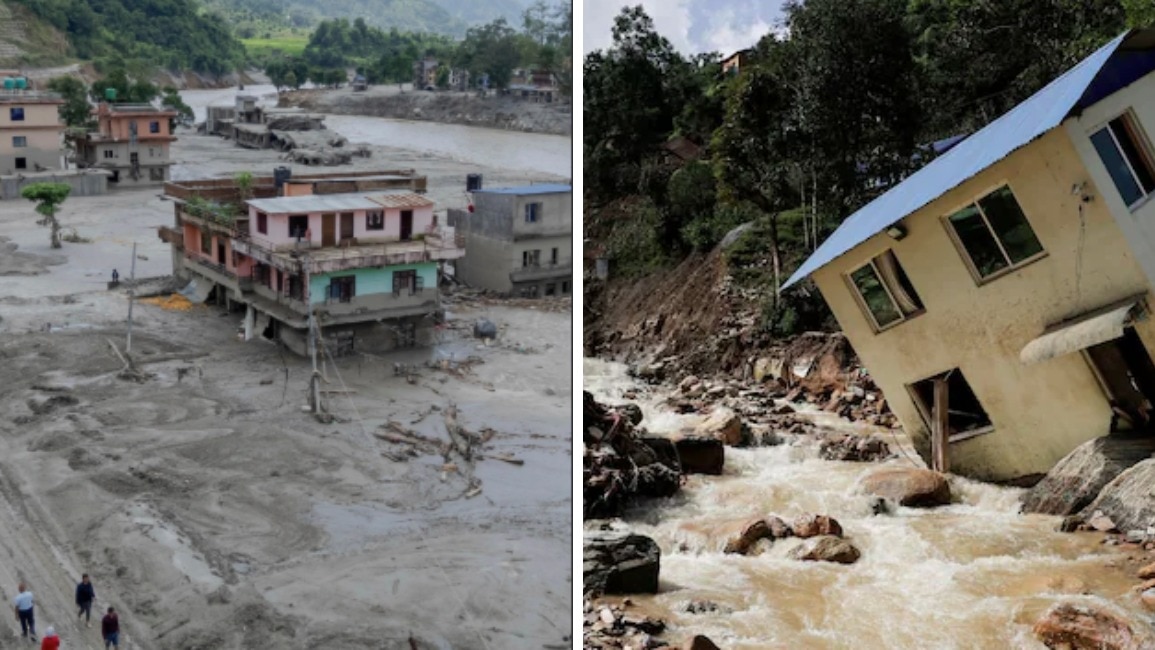
In a major humanitarian move, the Indian government will allow relatives of missing persons from the Nepal floods to submit DNA samples in India for identification purposes.
- Death toll in Nepal floods has crossed 1,259, with 5,000 still missing.
- India will facilitate DNA profiling for first-degree biological relatives.
- Services will be provided by CFSL, SFSL, and NABL-accredited labs.
- Profiles will be matched with unidentified bodies in Nepal via DNA profiling.
The devastating flash floods that struck Nepal on August 26 have left a trail of destruction, claiming over 1,259 lives and leaving approximately 5,000 people missing. In a significant step toward humanitarian relief, the Government of India has announced that DNA profiles of close relatives of the missing can be prepared within India to assist in identification efforts.
According to the Ministry of External Affairs (MEA), this initiative targets the first-degree biological relatives—including parents, children, and siblings—of those missing in the floods. These DNA profiles will then be cross-referenced with unidentified bodies recovered in Nepal to provide closure to grieving families.
Technical Framework and Laboratory Support
The identification process will leverage India's advanced forensic infrastructure. The Central Forensic Science Laboratory (CFSL), State Forensic Science Laboratories (SFSL), the National Forensic Sciences University, and various NABL-accredited laboratories will be made available for this purpose. Following the technical recommendations of the Nepal Police, Autosomal STR DNA profiling will be utilized to ensure the highest level of accuracy in identification.
The deployment of advanced forensic DNA profiling in cross-border disaster management marks a significant evolution in regional humanitarian cooperation.
Why This Matters
BozokMedia analysis shows that in large-scale natural disasters involving landslides and flash floods, traditional identification methods often fail due to the state of remains. By integrating the forensic capabilities of both nations, India is addressing a critical gap in disaster response, ensuring that the biological reality of the victims is recognized through scientific precision.
To streamline the process, the Nepal Police has provided a dedicated email address ([email protected]) for receiving DNA profiles. Furthermore, the Indian Embassy in Kathmandu can be reached at ([email protected]) for coordination. A helpline number, +977 9841 6160 95, has also been activated by the Nepal Police for immediate assistance.
Historical Background
The current crisis was triggered by a massive avalanche of snow and rocks near the Nepal-Tibet border on August 26. This event caused sudden flash floods that swept through northern and central Nepal, destroying entire villages and causing unprecedented geological shifts in the region.
Frequently Asked Questions
Question 1: Who is eligible to provide DNA samples?
Answer: Only first-degree biological relatives, such as parents, children, and siblings, are eligible to provide samples.
Question 2: Which laboratories will handle the samples?
Answer: Samples will be processed at CFSL, SFSL, and NABL-accredited laboratories across India.