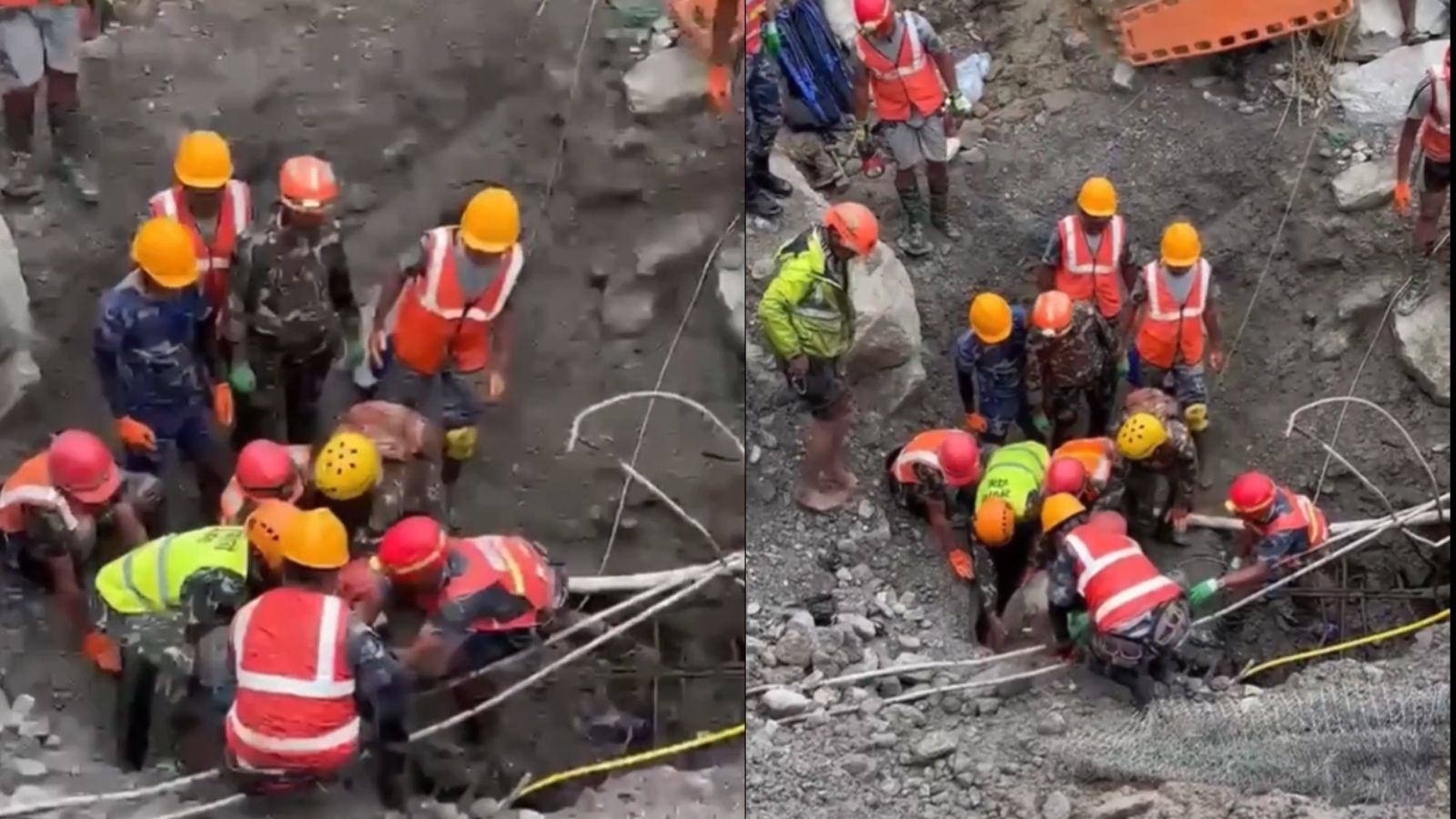
In a miraculous rescue operation, two workers have been pulled alive from a deep hydropower tunnel in Nepal nine days after a devastating flash flood hit the region.
- Two workers rescued from a depth of 170 meters in the Trishuli 3A Hydropower Plant.
- Survivors identified as Sanjaya Shah (NEA Foreman) and Kabir Maharjan.
- Disaster triggered by a glacier collapse on the Nepal-China border.
- Search operations continue for approximately 30-40 potentially trapped individuals.
In a dramatic turn of events, two workers have been pulled alive from a hydropower tunnel in Nepal, nine days after a catastrophic flash flood that claimed over 1,200 lives. The rescue operation took place at the Trishuli 3A hydropower project, one of the most severely impacted sites following last week's disaster, according to Army spokesperson Brig Gen Raja Ram Basnet.
The first survivor, identified as Sanjaya Shah, a mechanical foreman with the Nepal Electricity Authority (NEA), was extracted amidst emotional scenes. Local footage showed Shah covered in mud, being carried to safety by rescuers. Shortly after, a second worker, Kabir Maharjan, was also successfully brought to the surface. Both men were located at a staggering depth of 170 metres inside the submerged tunnel.
Why This Matters
BozokMedia analysis shows that this rescue highlights the extreme difficulty of disaster response in mountainous terrain. As climate change accelerates glacier melting in the Himalayas, the frequency of 'Glacial Lake Outburst Floods' (GLOFs) is increasing, posing an existential threat to regional energy infrastructure and human life.
The successful extraction of these workers provides a critical psychological boost to the families of the hundreds still missing.
The disaster was triggered by the sudden collapse of a melting glacier on the border between Nepal and China-controlled Tibet. This triggered a massive surge of water, debris, and mud that swept through the river valley, destroying multiple hydropower installations across the region.
Rescue efforts faced immense hurdles as thick layers of mud and boulders blocked the tunnel entrances, making it nearly impossible to locate the trapped workers for the first six days. However, hopes were renewed early Friday morning when rescuers reported hearing voices emanating from deep within the tunnel structures.
The scale of the tragedy remains immense. Local authorities report that approximately 900 workers remain missing across 12 different hydropower projects in Nepal, with an estimated 500 of them believed to be trapped in various tunnels. Specialized army units and engineering teams are working around the clock to clear debris and continue the search.
Frequently Asked Questions
Question 1: How deep were the workers found?
Answer: The workers were rescued from a depth of approximately 170 metres inside the tunnel.
Question 2: What caused the flash flood in Nepal?
Answer: The flood was caused by the collapse of a melting glacier on the border between Nepal and Tibet.


