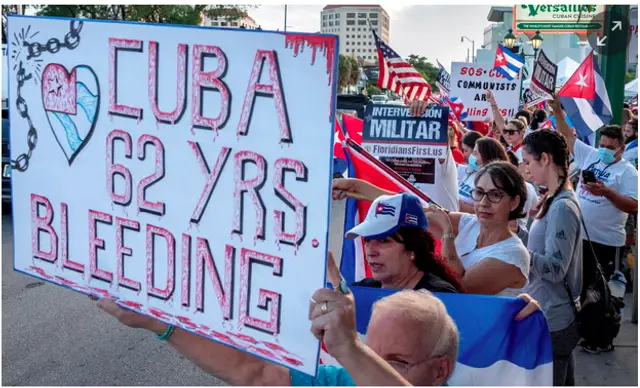
The US administration has announced sweeping new sanctions targeting Cuba's energy infrastructure and economy. US Secretary of State Marco Rubio explicitly stated the goal is to dismantle the communist government.
- US has imposed new sanctions on Cuba's energy sector and infrastructure.
- Secretary of State Marco Rubio confirmed the goal is regime change.
- Cuba has condemned the move as 'economic genocide.'
Washington: The US administration has announced a new wave of sanctions designed to cripple Cuba's economic sector and exacerbate its ongoing energy crisis. Beyond restricting oil and electrical systems, the measures specifically target the maintenance of essential infrastructure within the energy sector.
A critical component of this move is the total ban on Abapeti (Oil Industry Supply Import Company), the entity responsible for importing technical equipment and spare parts. This restriction comes at a vital moment when Cuba was attempting to restore functionality to aging power grids to mitigate widespread blackouts.
Why This Matters
BozokMedia analysis shows that these sanctions represent a strategic shift from containment to active destabilization. By targeting the very utilities that sustain civilian life, the US is creating a pressure cooker environment intended to trigger domestic unrest.
The objective is to utilize economic warfare to facilitate an internal uprising and force a change in governance.
US Secretary of State Marco Rubio made the administration's intentions explicit on social media, stating that the goal is to end communist rule. He further emphasized that President Trump and himself remain resolute in their stance regarding Cuba, noting that sanctions will continue to target the family of Raul Castro and other high-ranking officials.
The Cuban government has responded with fierce condemnation. Cuban Foreign Minister Oscar Pérez Oliv Fraga described the US maneuvers as an attempt at 'economic genocide.' Similarly, Cuba's Ambassador to Mexico, Eugenio Martínez Enríquez, labeled the moves as 'neo-fascist,' arguing that the US is trying to starve the population to incite a rebellion.
Historical Background
The geopolitical tension between the US and Cuba has spanned decades, rooted in the Cold War era. While economic embargoes have been a staple of US policy for years, the current rhetoric regarding direct regime change and targeting specific infrastructure marks a significant escalation in diplomatic hostility.
Frequently Asked Questions
1. What is the primary target of the new US sanctions?
The sanctions primarily target Cuba's energy infrastructure, specifically the import of spare parts and technical equipment through companies like Abapeti.
2. How has the Cuban government reacted?
Cuba has termed the sanctions 'economic genocide' and a 'neo-fascist' attempt to destabilize the nation through starvation and crisis.