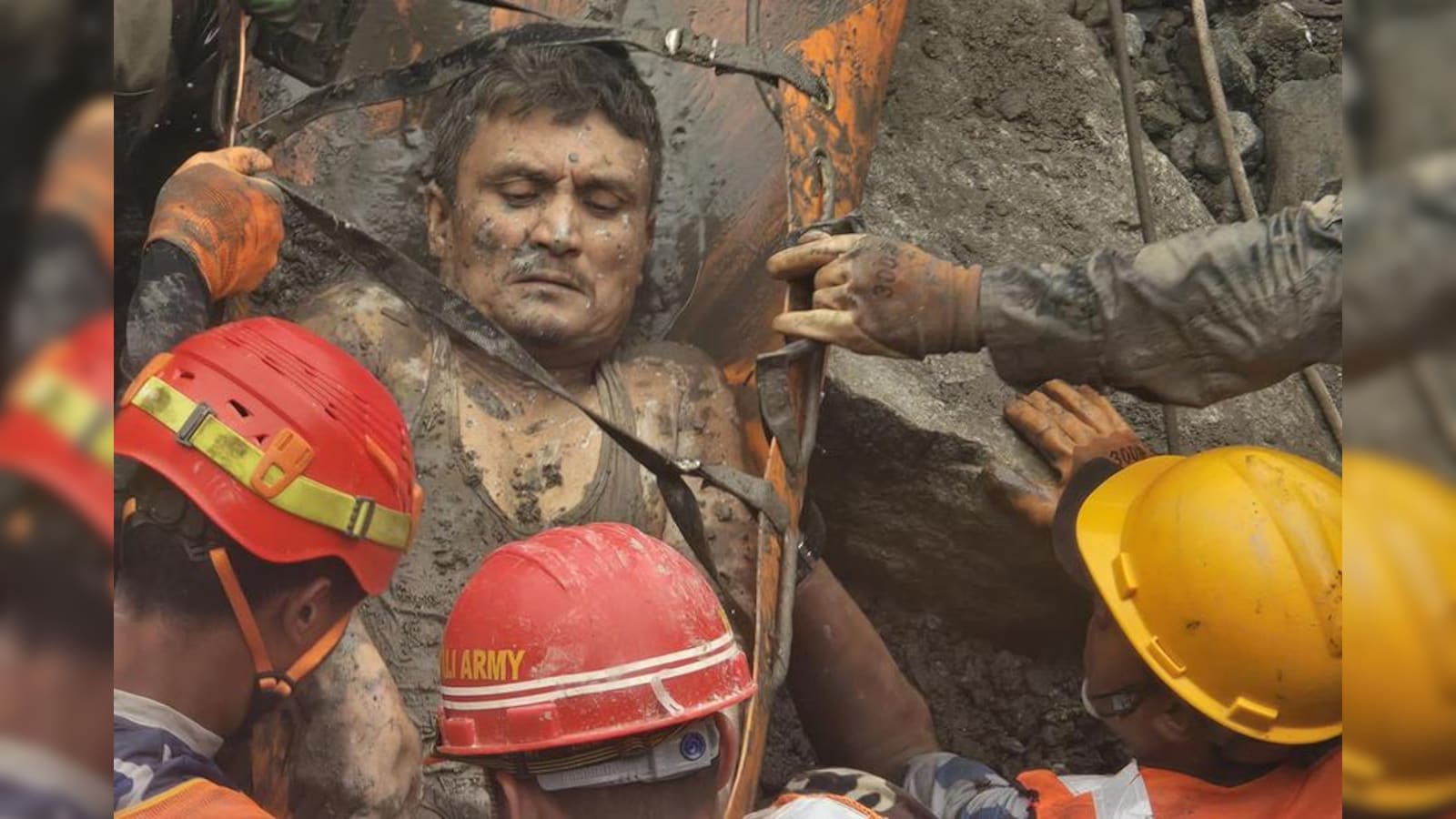
The rescue of two workers from the Trishuli 3A tunnel in Nepal is being hailed as a global anomaly. Expert Arnold Dix describes the operation as a textbook-rewriting event.
- Two workers, Sanjay Sah and Kabir Maharjan, were successfully rescued from the Trishuli 3A tunnel after 9 days.
- Expert Arnold Dix termed the operation "extraordinary," noting the unprecedented scale of simultaneous tunnel rescues.
- The discovery of "Goldilocks zones" has renewed hope for finding the remaining 35 trapped workers in this tunnel.
- Rescue teams are using explosives to clear boulders the size of cars to reach deeper sections.
The rescue of two power plant workers from the Trishuli 3A tunnel site in Nepal is being described by experts as nothing short of a miracle. Renowned tunnel rescue specialist Arnold Dix, who has been providing remote guidance from Sydney, stated that the operation is "extraordinary" and represents a scenario the world has never witnessed before.
A Battle Against Nature and Debris
The crisis began on August 26, when devastating flash floods in the Bhote Koshi River caused massive landslides, sealing the Trishuli 3A hydropower tunnel with boulders and sludge. For ten grueling days, the workers were trapped in pitch darkness without electricity. The Nepal Army and rescue teams have been working tirelessly, using excavators to clear debris and pumping clean air through pipes to prevent toxic gas buildup.
Dix highlighted the extreme difficulty of the mission, noting that rescuers had to use explosives to break apart rocks the size of cars—a method rarely required in standard tunnel rescue operations. The scale of the disaster, involving multiple destroyed power stations, has made this a unique global challenge.
Why This Matters
BozokMedia analysis shows that this operation serves as a critical case study for future disaster management in mountainous regions. As extreme weather events increase globally, the ability to identify and access safe pockets within collapsed infrastructure will become a vital skill for international rescue organizations.
"This rescue rewrites the textbooks as never before have we had a situation where multiple power stations have been destroyed and rescue ops have been mounted across several tunnels simultaneously." — Arnold Dix
The Science of Survival: Goldilocks Zones
A pivotal aspect of this mission has been the identification of "Goldilocks zones." These are specific pockets within the tunnel or power station where conditions—such as oxygen levels and temperature—are just right for human survival. The successful rescue of the two men proves that these zones exist, providing a strategic roadmap for locating the remaining missing personnel.
| Metric | Details |
|---|---|
| Survivors Rescued | 2 (Sanjay Sah & Kabir Maharjan) |
| Estimated Trapped (This Tunnel) | ~35 Workers |
| Total Missing (River Valley) | ~150 Workers |
| Primary Rescue Method | Excavators, Air Pipes, & Explosives |
Frequently Asked Questions
Question 1: How did the survivors endure the darkness for 10 days?
Answer: They relied on their immense willpower and any minimal food or water supplies they could scavenge within the dark, unpowered tunnel.
Question 2: Is the search for other workers still ongoing?
Answer: Yes, the rescue operation is intensified following the proof that survival pockets exist within the debris.