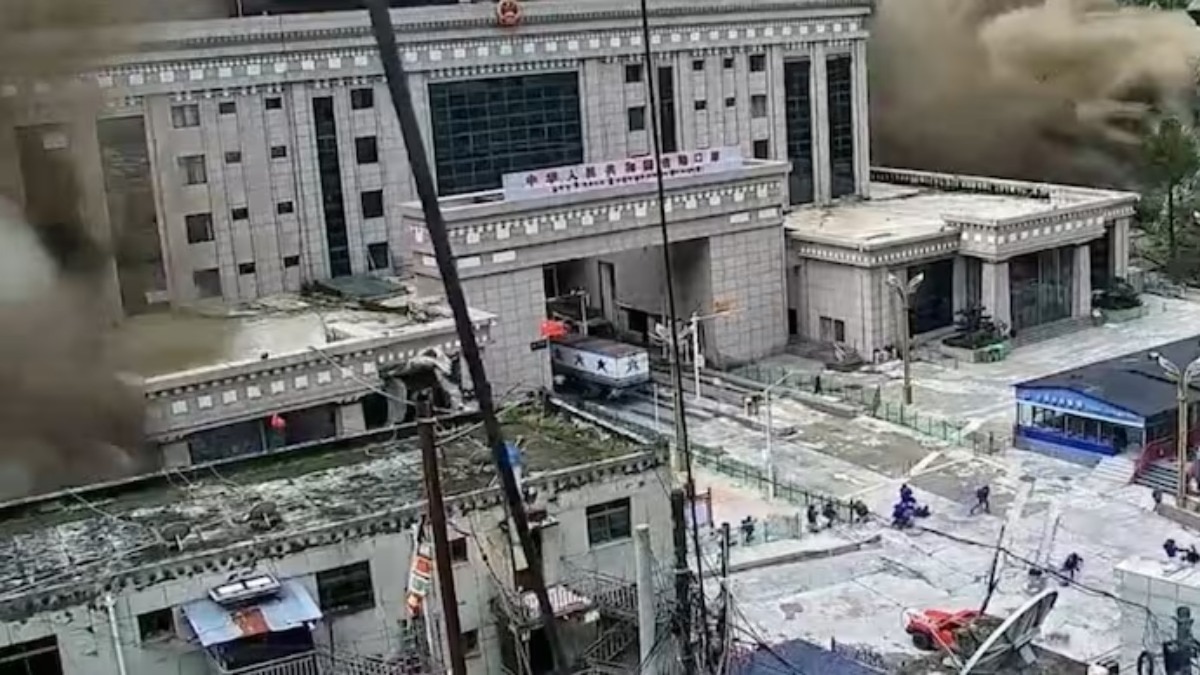
China has released its first official casualty count following the devastating landslide and flood in the Girong region near the Nepal border. 31 bodies have been recovered from the immigration building, while 531 people remain missing.
- Landslide and flash floods hit the Girong region near the Nepal-China border on August 26.
- 31 bodies recovered from the Immigration and Customs building.
- 531 individuals are currently reported missing.
- Damage to the G-216 highway is severely hindering rescue operations.
The scale of devastation at the China-Nepal border has reached critical levels. Following the massive landslide and subsequent flash floods that struck the Girong region on August 26, Chinese authorities have released their first official casualty figures. The disaster has struck the heart of border operations, specifically targeting the Immigration and Customs infrastructure.
According to official reports, rescue teams have recovered 31 bodies from the wreckage of the Immigration and Customs building. The situation remains dire as 531 people are still unaccounted for. Search and rescue teams have recovered 987 pieces of personal belongings from the site, which officials hope will assist in the identification of the missing individuals.
Why This Matters
BozokMedia analysis shows that the destruction of critical border infrastructure like the Girong port facilities could lead to significant disruptions in cross-border trade and movement between China and Nepal. The loss of life and the scale of missing persons highlight the extreme vulnerability of high-altitude border zones to climate-induced disasters.
The catastrophic loss at the Girong border facility underscores the urgent need for resilient infrastructure in geologically unstable mountainous regions.
Rescue efforts are currently facing a massive logistical hurdle due to the destruction of the G-216 highway. This vital artery, which provides access to the Girong port, has been partially washed away by the floods, making it nearly impossible for heavy rescue machinery to reach the epicenter. Furthermore, inspections have identified 58 high-risk zones along the route where secondary landslides could occur at any moment.
The crisis is compounded by a total blackout in the area, as floodwaters have knocked out the electricity supply, complicating nighttime search operations. While the administration has established two emergency shelters for displaced residents, the sheer number of victims and the damaged terrain pose a continuous challenge to relief workers.
Frequently Asked Questions
Question 1: Where exactly did the landslide occur?
Answer: The landslide and subsequent flooding occurred in the Girong region, located on the border between China and Nepal.
Question 2: What is delaying the rescue mission?
Answer: The primary delays are caused by the broken G-216 highway and the complete lack of electricity in the affected area.